Part 7
My mother’s first jail call came through Patricia.
“She wants you to know she forgives you,” Patricia said.I stared at her across the hospital room.
Lily slept against my chest, milk-drunk and soft, one tiny fist tucked under her chin. Outside the window, snow reflected bright winter light. Marcus sat in the chair beside the bed, eyes shadowed from no sleep. “She forgives me?” I repeated. Patricia’s mouth tightened. “That was my reaction too.” “For what?” “For letting things get out of hand.” Marcus stood and walked to the window. I could see his shoulders rising and falling. Patricia continued, “I told her all communication goes through attorneys and that any attempt to contact you directly violates the order further. I’m not passing future emotional messages unless they contain legal substance.” “Good.” Jennifer did not call. According to Brandon, who reached out through Patricia, she was spiraling in custody. She kept telling jail staff that her baby had been taken from her. Her baby. Not niece. Not newborn she had held for less than an hour after a crime. Her baby.
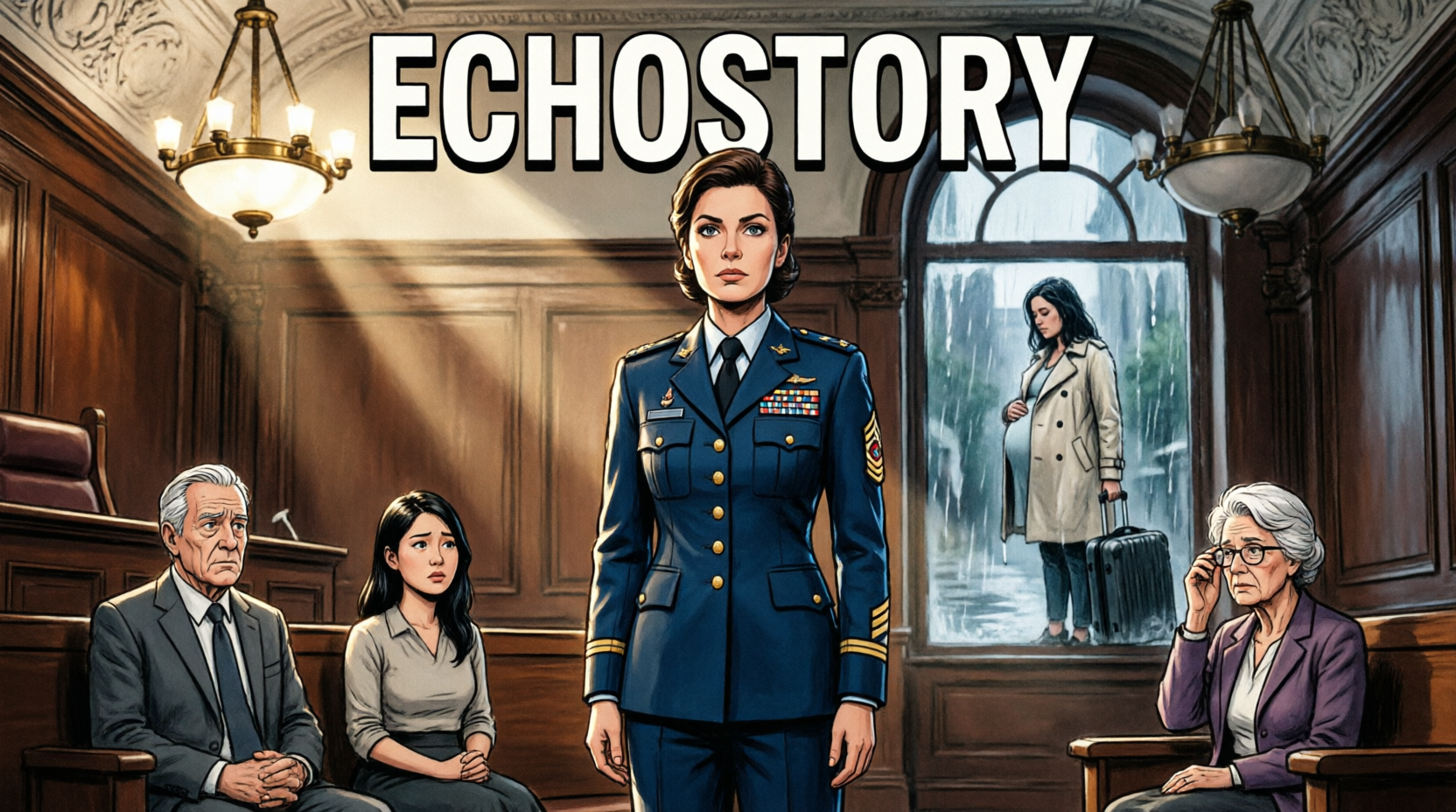
Brandon sounded hollow when Patricia put him on speaker. “I’m testifying,” he said. “I gave the police everything. The recordings, notes, dates. I’m sorry, Claire.” “You helped us.” “I was married to her.”
“That doesn’t make you responsible for what she chose.”
He was quiet.
“I keep thinking if I’d gotten her away from your parents earlier…”
Marcus spoke then. “They were never going to let grief heal. They weaponized it.”
That was exactly it.
My parents had taken Jennifer’s loss, something real and devastating, and fed it until it grew teeth. Instead of therapy, they gave her entitlement. Instead of support, fantasy. Instead of helping her mourn the baby she lost, they pointed at mine and said, That one can fix you.
The charges were filed within days.
Kidnapping.
Assault.
Conspiracy to commit kidnapping.
Custodial interference.
Violation of a protective order.
My mother faced the heaviest charges because she physically ripped Lily from me and carried her out. Jennifer was charged as an accomplice. My father, who had impersonated Marcus to get hospital information and blocked my path during the abduction, faced conspiracy, custodial interference, and obstruction-related counts.
The hospital launched its own investigation.
The volunteer who gave out my room number was removed immediately. The hospital administrator visited me with red-rimmed eyes and formal apologies. I did not scream at her. I was too tired. Also, part of me understood that systems are made of people, and people make mistakes.
But my daughter had been stolen through that mistake.
So when Patricia said we could include the hospital in civil claims later, I said yes.
Compassion and accountability can stand in the same room.
We left the hospital three days after Lily’s birth.
Not through the front entrance.
Security took us through a private corridor to an employee exit. Marcus carried the car seat. I walked slowly, every step pulling at my stitches. Rachel carried bags and scanned corners like a secret service agent in leggings.
Outside, cold air hit my face.
Lily slept beneath a knitted hat.
I had imagined bringing my baby home as a soft moment. Photos by the door. Maybe flowers. Maybe happy tears.
Instead, we drove away from the hospital like fugitives.
At home, the apartment had changed.
The crib was still there. The yellow walls. The tiny clothes folded by size. The rocking chair Marcus had assembled wrong twice before getting it right. But now every shadow looked like a hiding place. Every hallway sound made me stiffen. I could not sleep unless Lily’s bassinet was pressed directly beside the bed.
Rachel stayed.
For three weeks, she cooked, did laundry, opened the door only after checking the camera, and sat with me during the strange midnight hours when hormones and terror made my thoughts feel unsafe.
One night, while Lily slept on my chest, I whispered, “What if she remembers?”
Rachel looked at my newborn daughter, then at me.
“She’ll remember being loved.”
That became my lifeline.
The trial took eight months to begin.
Eight months of diapers, legal prep, court hearings, postpartum recovery, nightmares, and learning how to be a mother while still feeling like a hunted animal.
My extended family split exactly how Patricia predicted.
Some relatives believed the evidence. Aunt Karen, my mother’s younger sister, called me crying after seeing the charges.
“I should have seen this years ago,” she said. “The way your mother treated you. The way Jennifer always came first. I thought it was favoritism, not sickness.”
“Favoritism can be sickness,” I said.
She testified for the prosecution later, describing comments my mother had made about Jennifer deserving “a living child” and me being “too selfish to understand sacrifice.”
Other relatives chose denial.
One cousin emailed me: Your mother made a mistake in a moment of grief.
I replied: She planned a kidnapping for months.
He did not answer.
My parents’ defense attorney tried to build a narrative around postpartum confusion and family misunderstanding. He suggested I had agreed to let Jennifer hold the baby, then panicked. He called my mother “overzealous.” He called Jennifer “grief-stricken.” He called my father “a concerned grandfather.”
The prosecutor, Angela Ruiz, was not impressed.
In our preparation meeting, she spread the evidence across a conference table.
Hospital footage. Audio recordings. Restraining order. ER photos. Witness statements. Security logs. The fake call my father made pretending to be Marcus. My torn stitches documented after the abduction. Police bodycam from my parents’ house, including my mother screaming that Lily belonged to Jennifer.
Ruiz tapped the stack.
“They can call this grief all they want. This is planning.”
When the trial began, Lily was eight months old.
I left her with Rachel and Marcus’s mother during court. The first morning, I stood outside the courthouse bathroom, pressing my palms to the sink, trying not to throw up.
Marcus stood behind me.
“You don’t have to be strong every second,” he said.
“I know.”
“Do you?”
I looked at myself in the mirror. My face was thinner than before pregnancy. My eyes older. But beneath the exhaustion, something steady had grown.
“I just have to tell the truth.”
The courtroom smelled like wood polish and old air.
My mother wore navy and pearls. Jennifer wore pale gray and cried before the jury entered. My father wore a suit I recognized from Jennifer’s wedding.
He looked at me once.
I looked through him.
The prosecution played the hospital video on the second day.
There I was on screen, exhausted in a hospital bed, newborn Lily on my chest. My mother entering. My father blocking. Jennifer hovering. My mother lunging. My baby ripped from my arms.
The courtroom went silent except for my recorded scream.
No.
Give her back.
One juror covered her mouth.
Another looked away.
My mother stared at the screen with no remorse, only irritation, like the footage was rude for existing.
That was when I knew she would never understand.
And that was when I stopped needing her to.
Part 8
Testifying felt like stepping onto a bridge built over fire.
Angela Ruiz asked gentle questions first.
My name. My age. My relationship to the defendants. My daughter’s name. Lily. Saying it in that courtroom felt like placing a candle in the middle of a storm.
Then came the history.
I described the favoritism, but carefully. The prosecutor had warned me not to sound like I was trying to put my whole childhood on trial, even though sometimes I wanted to. I spoke about patterns only as they related to what happened: Jennifer always being centered, my parents asking me to prioritize her pain, their escalating demand that I surrender my baby.
“Did you ever agree to give your child to Jennifer?” Ruiz asked.
“No.”
“Did you ever suggest Jennifer could adopt your child?”
“No.”
“Did you ever invite your parents or sister to the hospital?”
“No.”
“Why not?”
“Because there was a restraining order, and because I was afraid they would try to take her.”
My mother shook her head at the defense table.
The jury saw it.
Ruiz played one of Brandon’s recordings.
My mother’s voice filled the courtroom.
Once Jennifer is holding the baby, Claire will look cruel trying to take her away.
My father: We’ll say she’s hysterical after birth.
Jennifer: What if she never forgives us?
Mom: She’ll come around. She always does.
Hearing that last sentence almost broke me.
She always does.
The whole story of my life, summarized in three words.
I had always come around. After insults. After neglect. After being forgotten, dismissed, used, blamed. I came around because family required it, because peace demanded it, because my parents had trained me to mistake surrender for maturity.
But Lily had changed the ending.
The defense attorney rose for cross-examination.
His name was Harold Voss, and he had the smooth, expensive tone of a man who believed confusion could be manufactured if he spoke slowly enough.
“Mrs. Lee, you were under significant physical stress when your mother entered the room, correct?”
“I had just delivered a baby.”
“So yes.”
“Yes.”
“You were exhausted?”
“Yes.”
“Emotional?”
“Yes.”
“In pain?”
“Yes.”
“Is it possible you misunderstood your mother’s intentions?”
“No.”
He smiled faintly. “You don’t think exhaustion can affect perception?”
“I think video helps.”
A few jurors shifted.
Voss tried again.
“Your sister had suffered a devastating pregnancy loss, correct?”
“Yes.”
“And you knew she was fragile?”
“Yes.”
“You knew seeing your baby might be painful for her?”
“Yes.”
“Yet you denied her even the chance to hold the child.”
“My daughter was less than an hour old, and Jennifer had spent months planning to take her.”
His smile disappeared.
He moved closer. “Isn’t it true you resented Jennifer long before this?”
I looked at my sister.
She was crying again, but her eyes were dry whenever the jury looked away.
“I resented being asked to disappear for her,” I said. “I did not resent her grief.”
“Convenient distinction.”
“No,” I said. “An important one.”
When I stepped down, Marcus squeezed my hand. His palm was damp.
Brandon testified after me.
Jennifer would not look at him.
He described the conversations, the planning, the way my mother fed Jennifer’s belief that my baby was owed to her. He admitted he had recorded his wife and in-laws because he feared they would commit a crime.
Voss tried to paint him as a bitter divorcing husband.
Brandon looked tired but steady.
“I filed for divorce because my wife wanted to kidnap a newborn,” he said. “Not the other way around.”
Aunt Karen testified on day five.
She spoke about decades of imbalance. About my mother saying Jennifer “needed winning more” than I did. About family dinners where my pregnancy was discussed like a problem to solve. About a phone call after Christmas when my mother said, “Claire is being stubborn, but babies don’t remember who holds them first.”
That line chilled the courtroom.
My father testified against legal advice.
I think pride made him do it. He had spent his life believing his voice could organize reality. Maybe he thought the jury would hear him and understand that he was the rational one, the father trying to hold a family together.
He said he never intended harm.
He said he believed Jennifer’s mental state was dangerous.
He said he thought I was overwhelmed and would later be grateful.
Angela Ruiz approached him with the calm of a blade.
“Mr. Porter, did you impersonate Marcus Lee when calling the hospital?”
He hesitated. “I may have allowed a misunderstanding.”
“Did you state you were the patient’s husband?”
“I was trying to obtain information about my grandchild.”
“Answer the question.”
“Yes.”
“Did you know there was a restraining order preventing you from going near Claire or the baby?”
“Yes.”
“Did you go anyway?”
“Yes.”
“Did you block Claire from following your wife after she took the baby?”
“I was trying to calm the situation.”
“You physically prevented a mother who had just given birth from reaching her newborn.”
He said nothing.
Ruiz played the bodycam footage from my parents’ house.
My father’s voice: This is a family matter. We’ll sort it out privately.
An officer: Sir, this is a kidnapped infant.
My mother screaming: She belongs to Jennifer!
Jennifer sobbing: Don’t take my baby!
The jury heard everything.
My mother did not testify.
Jennifer did.
It was a disaster.
Her attorney clearly wanted fragile, grieving, sympathetic. What the jury got was entitlement wrapped in sorrow.
Jennifer said she had lost everything. She said seeing me pregnant was torture. She said my parents promised they could fix it. She said when she held Lily, “it felt right.”
Ruiz asked, “Did Lily’s mother consent to you holding her?”
Jennifer cried harder. “Claire never cared about what I needed.”
“That wasn’t my question.”
“No.”
“Did you understand Lily was not your child?”
Jennifer stared at her.
“She should have been.”
The courtroom went silent.
Ruiz let that answer breathe.
“No further questions.”
Closing arguments came on a rainy Thursday.
The defense spoke of grief, family bonds, confusion, and a terrible misunderstanding.
Ruiz stood and showed the jury a still image from the hospital video: my mother’s hands around Lily, my face twisted in horror, Jennifer reaching toward the blanket.
“This is not confusion,” she said. “This is possession. This is what happens when entitlement becomes a plan and a plan becomes a crime.”
The jury deliberated four hours.
Guilty on all counts.
My mother screamed when the first verdict was read.
Jennifer collapsed forward, sobbing.
My father closed his eyes.
I did not cry.
Not until I got home and lifted Lily from Rachel’s arms.
Then I cried into my daughter’s soft hair while she patted my cheek with one sticky hand, unaware that a jury had just confirmed what I already knew.
She was mine.
She had always been mine.
And no one who tried to steal her would be allowed to call it love ever again.
Part 9
Sentencing was the first time my mother looked old to me.
Not weak. Never weak. My mother’s version of aging was not softness but resentment settling into the lines around her mouth. She wore a dark suit and pearls again, because she still believed presentation could bargain with consequence. Jennifer wore no makeup and kept twisting a tissue in her lap. My father sat between them, as if proximity could still make them a family unit instead of three defendants waiting for punishment.
The judge, Maren Whitfield, had watched the whole trial with a face that revealed very little. At sentencing, she revealed enough.
Before she spoke, victim impact statements were read.
Marcus went first.
He talked about missing the first hour of Lily’s life because he had moved the car and returned to find her gone. He talked about nightmares where elevator doors closed before he could reach them. He talked about watching me bleed through hospital sheets while police searched for our newborn.
His voice cracked only once.
“When I became a father,” he said, “I expected to protect my daughter from strangers. I did not expect to protect her from her grandmother.”
Rachel read hers next, even though she was not technically a victim under the charges. The judge allowed it because she had been part of our safety plan and postpartum care.
Rachel looked directly at my mother.
“You called it family,” she said. “But family does not hunt a pregnant woman. Family does not kick her. Family does not stalk her hospital. Family does not rip a baby from her mother’s arms. You were not family that day. You were a threat.”
Then it was my turn.
I held the paper, but I barely looked at it.
“I spent most of my life believing love was something I had to earn by giving in,” I said. “If Jennifer was sad, I had to be smaller. If my parents were angry, I had to apologize. If peace was needed, I had to pay for it. When I became pregnant, they decided my daughter was the next payment.”
My mother looked away.
I continued.
“But Lily is not a debt. She is not therapy. She is not a replacement for the child Jennifer lost. She is a person. My daughter. Marcus’s daughter. She was less than one hour old when you turned her into an object to be taken.”
Jennifer sobbed loudly.
I did not stop.
“I do not forgive you. I do not want reconciliation. I do not want letters, apologies, explanations, or future contact. The only mercy I ask from this court is for my daughter to grow up safe from the people who believed grief gave them ownership of her.”
The courtroom was silent when I sat down.
My mother’s attorney argued she was a grieving grandmother who acted out of emotional distress.
Jennifer’s attorney argued profound psychological instability after miscarriage.
My father’s attorney argued he was a passive participant overwhelmed by stronger personalities.
Judge Whitfield took notes, then folded her hands.
“The entitlement displayed in this case is extraordinary,” she said. “The defendants did not act in a single impulsive moment. They planned. They threatened. They assaulted a pregnant woman. They violated a restraining order. They exploited a hospital error and physically removed a newborn from her mother’s arms.”
My mother stared straight ahead.
The judge continued.
“Grief may explain pain. It does not excuse crime. Love may motivate concern. It does not justify possession. No person in this courtroom had the right to decide that one woman’s loss entitled her to another woman’s child.”
My mother received eighteen years.
Jennifer received twelve.
My father received eight, with two years suspended under conditions that meant he would serve six if he behaved.
My mother shouted that the judge was destroying her family.
Judge Whitfield looked at her and said, “You destroyed it before you entered my courtroom.”
They were taken away in handcuffs.
I watched without satisfaction.
But I did feel release.
Civil cases followed.
Against my parents and Jennifer. Against the hospital for the privacy breach. Patricia handled everything. The hospital settled quickly and quietly, funding a trust for Lily’s future and agreeing to revise security procedures for protected patients. I made them put the policy changes in writing before accepting.
My family fought harder.
The civil trial was shorter than the criminal one. Liability was almost impossible to dispute after conviction. The question was damages.
The jury awarded nearly $800,000 across emotional distress, assault, medical trauma, security costs, therapy, and punitive damages.
My father sold the family house.
The white siding, black shutters, porch swing, fireplace mantel full of Jennifer’s photographs—all of it gone. A young couple bought it and painted the door green. I never drove by, but Aunt Karen told me.
Jennifer lost her marriage completely. Brandon finalized the divorce and moved away. Eventually, he remarried someone kind and quiet, and years later I heard they had twins. I wished him peace.
My mother’s library board removed her name from everything. My father’s accounting firm forced early retirement before he went to prison. Jennifer lost her pharmaceutical job. Their friends vanished with the speed of people afraid scandal might be contagious.
The story made local news first.
Then national.
Grandmother kidnaps newborn from hospital to give to grieving daughter.
I hated the headline because it sounded almost like a fairy tale if you did not know the blood under it.
For a few weeks, strangers debated us online. Some understood. Some said grief made people crazy. A few said I should have been more compassionate toward Jennifer.
I learned not to read comments.
We moved three months after sentencing.
Portland.
Marcus received a job offer there, and we took it like a lifeboat. We sold what we could, packed what mattered, and flew west with Lily sleeping against my chest. Our new house was small, blue, and tucked on a street lined with maple trees. The backyard had enough room for a garden and, eventually, a swing set.
The first night, I stood in the nursery we painted pale yellow and listened to rain tapping the roof.
No one knew our address except trusted people.
No one from my old family had a key, a claim, or a path in.
For the first time since I saw two pink lines, I slept without dreaming of doors opening.
Lily grew.
She smiled early, laughed loudly, and developed a passionate hatred for peas. Her hair came in dark and soft. She loved the rescue dog we adopted when she was eighteen months old and called him Bo before she could say most other words.
Marcus’s parents became the grandparents every child deserves: respectful, adoring, and deeply committed to asking before doing. Rachel visited every few months and became Aunt Rachel in every way that mattered. Aunt Karen sent birthday books and never asked me to reconsider contact.
My mother sent letters through her lawyer.
I did not read them.
Patricia summarized only what was legally relevant.
“She still thinks she was helping,” Patricia told me once.
“Of course she does.”
Jennifer found religion in prison, according to family gossip. She wrote one letter saying she forgave me for “not understanding her grief.”
I returned it unopened.
My father’s first parole packet included a statement about family healing. Patricia handled that too. I submitted opposition.
Parole denied.
People sometimes think peace comes when punishment happens.
It does not.
Peace came slowly, in ordinary pieces.
Lily’s first steps across the living room rug.
Marcus making pancakes shaped like stars.
Rachel and I drinking wine on the porch after Lily fell asleep.
Therapy sessions where I learned to grieve the parents I never had without inviting the real ones back.
One evening, when Lily was three, she climbed into my lap with frosting on her chin from her birthday cupcake.
“Mommy,” she said, pressing a sticky hand to my cheek. “You happy?”
I looked across the yard at Marcus laughing with Rachel, our dog chasing bubbles, Marcus’s parents cleaning up paper plates, the rain holding off just long enough for one perfect afternoon.
“Yes,” I said. “I’m very happy.”
And I realized I meant it without flinching.
Part 10
Lily was seven when she first asked why I did not have a mommy.
We were in the car after school, rain blurring the windshield, her backpack open beside her with papers spilling out like leaves. She had just drawn a family tree in class. Marcus’s parents were there. Rachel was there because Lily insisted “aunt counts even when not blood.” Aunt Karen was there. Bo the dog was there too, despite my explanation that dogs did not usually go on family trees.
But my parents were not.
Neither was Jennifer.
“Everyone has a mommy,” Lily said from the back seat. “Even grown-ups.”
I turned down the radio.
“Yes.”
“So where is yours?”
I had prepared for this question in therapy. Preparation did not make it easy.
“She is not part of our life because she made very unsafe choices.”
Lily frowned at her reflection in the window. “Like touching a stove?”
“More serious than that.”
“Like stealing?”
“Yes,” I said. “Like stealing.”
She thought about it. “Did she say sorry?”
“No.”
“Would sorry fix it?”
I looked at her in the rearview mirror. Seven years old. Bright eyes. Missing front tooth. The child people had tried to turn into a cure, now asking the clean moral questions adults spend lifetimes complicating.
“No,” I said. “Some things need more than sorry. Some things mean a person cannot be trusted near you.”
She nodded slowly.
“Did she steal from you?”
I gripped the steering wheel.
“She tried to steal you.”
Silence filled the car.
Lily looked down at her shoes.
“When I was a baby?”
“When you were just born.”
“Did you get me back?”
The question was so innocent I almost had to pull over.
“Yes,” I said. “Immediately.”
“Because you’re my mommy.”
“Yes.”
“And Daddy helped?”
“Yes.”
“And Aunt Rachel?”
“Yes.”
She nodded again, satisfied with the structure of rescue.
“Then she can’t come.”
“No,” I said. “She can’t.”
That was enough for then.
Truth came in layers as Lily grew.
At ten, she learned there had been a court case.
At twelve, she learned Jennifer had wanted to raise her.
At fourteen, she read the judge’s sentencing statement but not the hospital transcript. At sixteen, with her therapist present, she read everything.
The recordings.
The restraining order.
The hospital report.
My statement.
The footage transcript, though not the video itself at first.
When she reached the part where my mother said, Once Jennifer is holding the baby, Claire will look cruel trying to take her away, Lily set the papers down.
“She thought I was a thing.”
“Yes.”
“Like a doll.”
“Yes.”
She looked at me then, and I saw anger rise in her, not wild or reckless, but righteous.
“I’m glad you didn’t forgive them.”
“So am I.”
“Do people think you should?”
“Some people.”
“Those people are stupid.”
I laughed, startled.
Her therapist hid a smile behind her mug.
When my father was released, Lily was nine. He attempted contact once through a cousin. Patricia sent a warning so sharp I almost framed it. He did not try again. He died when Lily was thirteen, alone enough that the funeral notice reached us through Aunt Karen three weeks late.
I felt sadness, but not loss.
My mother remained in prison until Lily was almost eighteen. Jennifer was released two years before her due to credits and overcrowding. She moved to Arizona, according to Aunt Karen, and joined a church where nobody knew the story at first.
Then someone found the old news articles.
She moved again.
My mother wrote one final letter before her release, asking to meet Lily as part of “healing the generational wound.”
Lily was old enough to decide whether to read it.
She did.
Then she handed it back.
“She doesn’t say my name like I’m a person,” she said. “She says my granddaughter.”
I nodded.
“I don’t want to meet her.”
“You don’t have to.”
“Ever?”
“Ever.”
My mother got out when Lily was in college.
She was barred from contact. Older. Poorer. No house. No husband. No daughter willing to answer. Jennifer did not take her in for long. Their shared fantasy had curdled into blame years earlier. My mother blamed Jennifer for needing too much. Jennifer blamed my mother for making promises she could not keep.
That was the thing about delusion.
When reality finally broke through, they did not become wiser.
They became resentful that the dream had not obeyed.
Lily chose law.
Not family law, to my surprise, but child advocacy and medical-legal policy. She said she wanted to understand the gaps people fall through when institutions trust the wrong voice. Her college essay was about hospital security, newborn safety, and the difference between privacy as paperwork and privacy as protection.
She did not write, I was the baby.
She wrote, No system should rely on a vulnerable person being strong enough to survive its failure.
I cried when I read it.
Marcus said, “She gets that from you.”
I said, “She gets it from us.”
Lily graduated with honors. Rachel screamed loudest at the ceremony and claimed seniority as “first aunt.” Marcus’s parents cried. Aunt Karen brought flowers. I looked at my daughter crossing the stage, tall and sure, and thought of my mother telling me she would belong to Jennifer.
No.
She belonged to herself.
That was the victory.
Years later, Lily and I returned once to Connecticut.
Not to see my family. Never that.
She had been invited to speak at a conference on patient privacy and newborn security. I went with her. The hotel was twenty minutes from the town where I grew up, and on the last morning, she asked if I wanted to drive past the old house.
I thought about it.
Then I said yes.
The house had a green door now. Children’s bikes lay in the driveway. The porch swing was gone. A dog barked from inside. It looked like any other house, which felt both unfair and freeing.
“That’s where you grew up?” Lily asked.
“Yes.”
“Does it hurt?”
I watched a little girl run across the front window, laughing at something I could not hear.
“Less than it used to.”
“What do you feel?”
I considered the question.
“Like I escaped a place that never knew how to love me.”
Lily reached across the console and took my hand.
“You built a better one.”
I squeezed her fingers.
“I had help.”
She smiled. “I know.”
We drove away.
No dramatic music. No confrontation. No mother appearing on the sidewalk begging. No Jennifer sobbing in the street. Just the road opening ahead and my daughter beside me, free from a house that had tried to claim her before she could even open her eyes.
That night, after her conference speech, Lily asked me if I ever regretted pressing charges.
We were walking back to the hotel through cold spring air. Streetlights reflected on wet pavement.
“No.”
“Not even because they went to prison?”
“No.”
“Not even Jennifer?”
I stopped walking.
“I am sorry Jennifer lost her baby. I am sorry grief broke something in her. But she tried to take you. She chose that. My compassion for her pain does not outweigh my responsibility to protect you.”
Lily looked at me for a long moment.
Then she said, “I’m glad you’re my mother.”
No sentence has ever given me more peace.
My mother died when Lily was twenty-five.
Aunt Karen called gently. There would be no service beyond a small burial. Jennifer did not attend. My father was already gone. The family that had once revolved around my mother’s will had scattered into silence.
I did not go.
Neither did Lily.
That evening, I sat on my porch in Portland with tea cooling in my hands. Marcus came outside and sat beside me.
“How are you?” he asked.
“I don’t know.”
He waited.
“I think I’m grieving the last chance for her to become someone else.”
He put his arm around me.
“She was never going to.”
“I know.”
But knowing and grieving are different.
A week later, Lily sent me flowers.
The card said: Thank you for choosing me before I could choose myself.
I kept that card in my nightstand.
I still have it.
Now Lily is grown. Marcus and I are older. Rachel still visits and still gives advice nobody asked for. Bo is gone, but a new rescue dog sleeps in sun patches by the kitchen door. Our house is full of photographs: Lily covered in birthday frosting, Lily holding a debate trophy, Lily graduating, Lily laughing with Marcus, Lily and me on the Oregon coast with wind tangling our hair.
There are no photos of my parents.
No photos of Jennifer.
Not because I pretend they never existed, but because I refuse to decorate my home with people who tried to turn love into ownership.
When people hear the story, they often ask about forgiveness.
They want a softer ending. A tearful reunion. A prison apology. A final hospital bedside scene where everyone admits wrong and I release decades of pain.
That is not my ending.
My ending is better.
My ending is my daughter growing up knowing no one gets to claim her body, her life, or her future because they are sad. My ending is a marriage that survived terror and became steadier. My ending is chosen family around a table, laughing so loudly the dog hides under a chair. My ending is a woman I raised walking into courtrooms and hospitals and policy meetings to make systems safer for other mothers and babies.
My parents called me selfish.
They were right, in the way broken people misuse words.
I was selfish enough to keep my child.
Selfish enough to believe my daughter was not a cure for my sister.
Selfish enough to call the police.
Selfish enough to let consequences fall on people who had spent my whole life avoiding them.
If that is selfishness, I hope Lily inherits it.
I hope she carries it like a shield.
I hope every child does.
Because sometimes the bravest word a mother can say is no.
No, you cannot have my baby.
No, grief does not excuse harm.
No, family does not mean surrender.
No, I will not forgive people who would do it again if consequences disappeared.
They lost their freedom because they tried to take mine.
They lost their family because they treated family like ownership.
They lost Lily because she was never theirs to lose.
And we gained everything by refusing to hand her over.
A life.
A home.
A future.
A daughter who knows she was wanted, protected, fought for, and loved from the first breath she took.
That is justice.
That is peace.
That is the only ending I ever needed.