Part 7
Spring returned the way it always did in that neighborhood—quietly, without asking permission, softening the edges of everything that had been sharp. The maple out back pushed out new leaves like it had never watched strangers stand on the porch with papers. The street filled with dog walkers and strollers again. The normalcy was almost rude, like the world expected Tessa to be done with the whole thing now that the orders were stamped and the deeds were corrected.
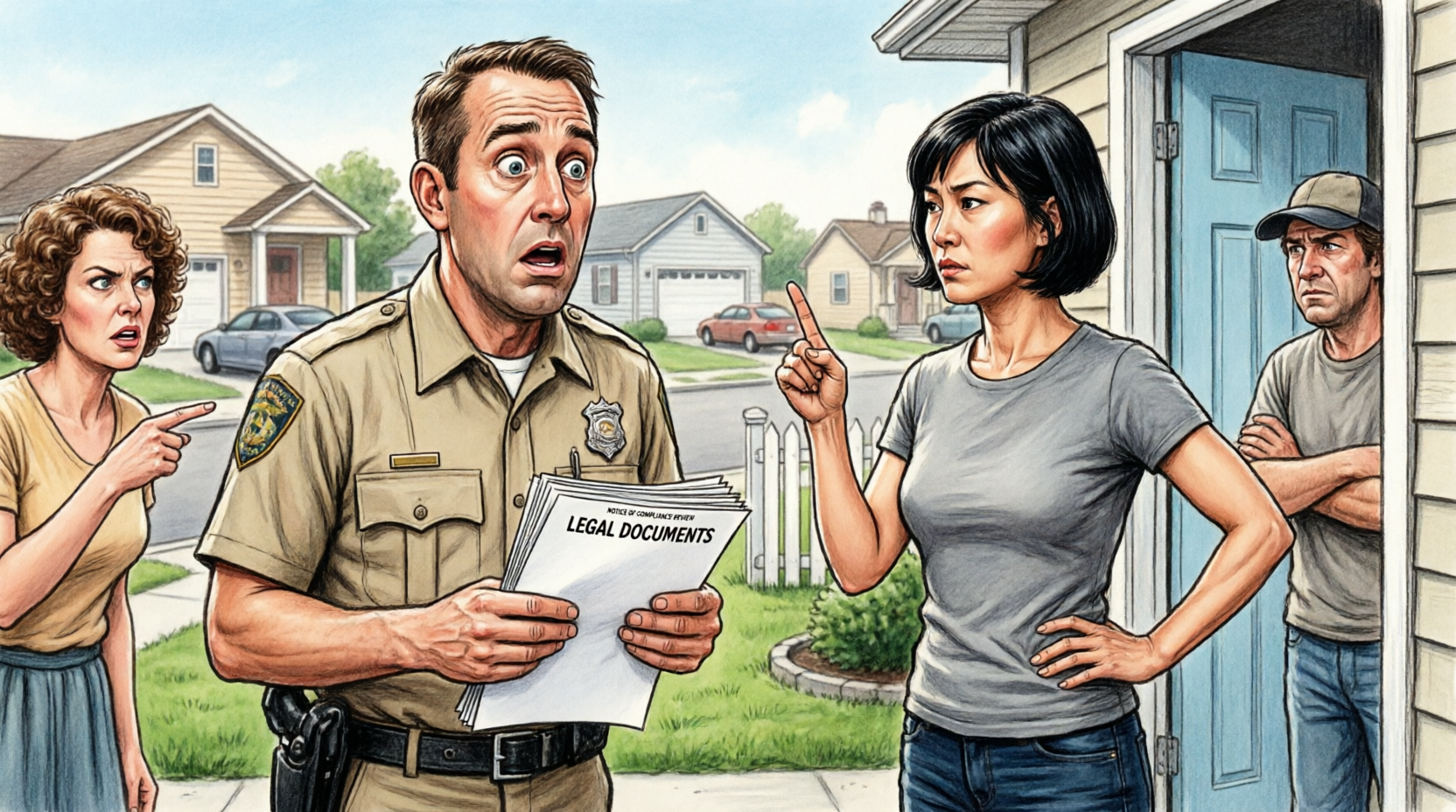
But her body didn’t move on just because a courthouse had.
For a while, she couldn’t sleep through the night. Not because she thought her parents would break in—cameras and locks made that unlikely—but because her nervous system had learned a lesson it refused to unlearn: safety could be revoked by paperwork, and paperwork could arrive at 6 a.m.
So she built routines the way people build fences.
On Mondays, she checked her parcel record online, even though Keisha told her she didn’t have to. On Tuesdays, she reviewed the restraining order dates and the injunction language, not because she was obsessive but because she’d learned words were weapons and shields depending on who held them. On Fridays, she walked the perimeter of the property and looked at the cameras like they were small, silent witnesses.
Marisol teased her gently about it over dinner one night.
“You’re acting like you’re running a bank,” Marisol said, chewing thoughtfully.
Tessa poked at her salad. “Banks get robbed because people think the vault is enough.”
Marisol’s eyes softened. “And you learned your vault needed alarms.”
Tessa didn’t answer right away. In the kitchen light, the tile grout looked like little lines drawn to keep everything in place. She remembered her mother’s voice through the door: You don’t want to ruin lives over paperwork. She remembered the lie collapsing in court, the notary’s whisper of no.
“I learned my parents were willing to make me homeless,” she said finally.
Marisol set her fork down. “Yeah.”
Silence stretched, comfortable and heavy.
“What do you do with that?” Tessa asked.
Marisol leaned back. “You stop trying to fix them. You fix what you can. And you live.”
Living sounded simple until you tried it after survival became your default setting. The first time Tessa caught herself planning a weekend without thinking about legal deadlines, she felt guilty, like she was being careless. The second time, she felt something like relief. By the third time, she realized the guilt wasn’t hers. It was leftover training.
She started with the house. Not the defensive things—those were already installed—but the gentle things her grandfather had always done to make a home feel like a place that welcomed you instead of demanding you perform.
She restored the old porch swing that had been hanging half-broken for years. She sanded it herself, her hands steady, the work repetitive enough to quiet her brain. When she hung it back up, she sat on it at dusk with a mug of tea and watched the street lights flicker on, one by one.
She planted herbs in the back garden: basil, rosemary, thyme. The smell of dirt and green life under her fingernails helped remind her that time didn’t only pass in court dates. It passed in seasons.
At work, she surprised herself by saying no more often. Not in a dramatic way. Just calmly, like she was allowed.
When a manager asked her to take on an extra project with impossible deadlines, she said, “I can’t do that without dropping something else. Which one do you want me to drop?”
The manager blinked, recalculated, and chose something.
Tessa realized she’d spent her whole life letting people demand everything from her—especially her parents—because refusing felt like danger. Now, refusing felt like a skill.
Then, on a Thursday in early May, she received an email from Keisha with an attachment titled Final Judgment and Notice of Entry.
Short message beneath it: Title cleared. Injunction remains. You’re officially done with the civil side.
Officially done.
Tessa stared at those words longer than she expected to. Done was supposed to feel like a finish line. Instead, it felt like standing in a quiet room after a loud party and realizing you could finally hear your own thoughts.
She printed the judgment, placed it in her fireproof pouch, and closed the drawer.
Then she did something she hadn’t done since her grandfather died.
She went to his grave.
The cemetery was small and well-kept, the kind with old trees and stone benches. She found his headstone near a row of lilacs. The engraved letters were clean: Harold Ward. Beloved father. Beloved grandfather.
Tessa knelt and brushed away a few leaves. Her throat tightened, the way it always did when she let herself feel anything without rushing to manage it.
“I kept it,” she said out loud, voice low. “I kept the house.”
A breeze moved through the lilacs. Nothing magical happened. No sign. No warm hand on her shoulder.
But she felt it anyway—the quiet certainty of being aligned with what he’d wanted for her, not what other people demanded.
“I’m sorry it got ugly,” she said. “But I didn’t start it. I finished it.”
She sat on the grass for a while, letting time pass without turning it into a task.
On the drive home, she stopped at a coffee shop she’d never tried before. That was the kind of choice she used to ignore—new places, small risks—because her mind had been too crowded with danger.
Inside, she ordered a latte and sat by the window. The barista called her name and said, “Have a good day, Tessa,” like it meant nothing more than politeness.
It meant something to her.
Back home, a small envelope waited in her mailbox. Return address: County District Attorney’s Office.
Her stomach tightened out of habit, then steadied as she opened it.
Inside was a notice: the criminal case had concluded with a plea agreement and conditions, including restitution for Tessa’s legal fees and an extended no-contact order. It wasn’t poetic justice. It was procedure.
But it was real.
That night, she sat on her porch swing again, the envelope on her lap, and watched the street settle into darkness. She thought about what her mother had said, what her father had believed, and what they’d tried to steal.
Then she thought about the deputy’s face changing at the top line of the writ—how even a stranger in uniform could recognize something wrong when it stared him in the face.
She wondered how many people didn’t get that moment. How many people opened the door to authority and lost before they even understood the rules.
The thought sat with her, uncomfortable and persistent.
Marisol had once told her, You fix what you can.
Maybe this was something she could.
Part 8
The idea didn’t arrive like a lightning bolt. It arrived like a slow drip that eventually soaked through everything.
At first, it was just curiosity. Tessa found herself reading about unlawful detainers late at night, not because she needed to anymore, but because she kept thinking about the courthouse line, the people clutching folders like life preservers. She remembered the man in the wrinkled suit staring at his hands. The teenager staring at his shoes. The woman with swollen eyes.
She began to notice how often the system depended on people not knowing what to ask.
Not knowing what standing meant. Not knowing what service required. Not knowing that a signature could be challenged, that a deed could be flagged, that urgency didn’t have to become panic.
One Saturday, she attended a free legal clinic at the public library. She sat in the back at first, anonymous, listening as volunteer attorneys explained basics: landlord-tenant laws, restraining orders, small claims. The room was filled with ordinary people, not dramatic, just tired. People who didn’t want revenge. People who wanted stability.
After the session, she approached the coordinator, a woman named Janet with silver hair and a clipboard that looked like it ran her life.
“I’m not a lawyer,” Tessa said, “but I’ve been through an emergency stay and a fraudulent deed situation. I know how to gather documentation and build a record.”
Janet studied her face carefully, like she was deciding whether Tessa was offering help or looking for a stage.
“I don’t want to talk on a microphone,” Tessa added, a quick instinctive defense. “I just… I know what mattered. And I know what doesn’t.”
Janet nodded slowly. “People need that. They need someone who’s been there who doesn’t treat them like they’re stupid for not knowing the language.”
A month later, Tessa was volunteering twice a week. She didn’t give legal advice; she helped people organize. She showed them how to make timelines, how to keep photos of documents, how to request certified copies, how to identify key lines on paperwork. She taught them to write calmly, cleanly, in forms that begged for clarity.
Marisol came with her sometimes, mostly because she liked being useful and because she wanted to keep an eye on Tessa in the way friends did when they were quietly proud.
“You’re good at this,” Marisol said one evening as they packed up folders.
Tessa shrugged. “I’m good at being calm when other people want you to break.”
“That’s a skill,” Marisol said. “Not everyone gets it the easy way.”
Tessa didn’t correct her. There had been nothing easy about learning it, but she understood what Marisol meant: she wasn’t using her pain to hurt anyone. She was using it to build something.
She started bringing snacks to the clinic—granola bars, fruit, bottled water—because she remembered what it felt like to sit in a courthouse hungry, waiting for your life to be called like a docket item. It wasn’t a grand gesture. It was a small kindness that made people’s shoulders drop.
One night after a long clinic session, she came home to find a familiar patrol car idling at the curb. Deputy Romero stood on the sidewalk, not on her porch, hands visible, posture open.
Tessa felt her body flash cold for a split second before her brain caught up.
He gave a small nod when he saw her. “Ms. Ward.”
“Deputy,” she said, cautious.
Romero shifted his weight. “I’m off-duty. I’m not here on official business. I just… wanted to check in.”
Tessa’s eyes narrowed slightly. “Why.”
Romero exhaled. “We’ve had a few calls lately. People getting served at addresses they don’t live at. Papers being claimed delivered when they weren’t. Your case… it made some of us start paying closer attention.”
Tessa stared at him. “Are you saying—”
“I’m saying the civil unit is reviewing procedure,” Romero said carefully. “More training. More verification when things look off. It’s not perfect, but… you made noise in a way the system could hear.”
Tessa felt a slow, strange warmth. Not pride exactly. Something steadier.
“I didn’t do it to change the system,” she said.
“I know,” Romero replied. “But you did.”
He hesitated, then held out a small card. “If you’re doing those clinics… the sheriff’s office has pamphlets about civil process and what to do if you think you weren’t properly served. Not legal advice, just information. If you want, I can get you a stack.”
Tessa took the card. “Okay,” she said quietly.
Romero nodded. “Also… your parents haven’t been around, right?”
“No,” Tessa said. “The orders are holding.”
Romero’s jaw tightened. “Good.”
He turned to leave, then glanced back once. “For what it’s worth, Ms. Ward… you handled that morning better than most people handle any morning.”
Tessa watched him walk back to his car and drive off, the street returning to quiet.
Inside, she sat at her kitchen table and opened her laptop. She pulled up a blank document and began typing a checklist for people facing emergency situations:
What to do if a deputy shows up.
What to photograph.
What to ask.
Who to call.
What to bring.
How to stay calm.
She titled it simply: First Day Packet.
It wasn’t for social media. It wasn’t for attention. It was for the person who opened a door at 6 a.m. and felt their life fall out from under them.
She printed copies and brought them to the clinic.
The first time she handed it to a woman with trembling hands, the woman stared at it like it was a map out of the dark.
“Thank you,” the woman whispered.
Tessa nodded. “You’re not crazy,” she said. “You just weren’t taught the rules.”
And maybe that was the real future her parents never anticipated: that their attempt to erase her would make her someone who could help other people stay in their own lives.
Part 9
The call came on a Tuesday in October, almost a full year after the morning of the writ.
It was from an unknown number, and for a moment Tessa’s thumb hovered over decline. Habit. Self-protection. The part of her that remembered threats in one-line texts.
Then she saw the voicemail indicator and decided she’d rather control the moment than let it sit.
She answered.
“Tessa?” a woman’s voice said, tentative and familiar in a way that made Tessa’s stomach drop.
Diane.
Tessa didn’t speak. Silence was her boundary now, and she didn’t break it just because someone else was uncomfortable.
“It’s your mother,” Diane said, as if Tessa didn’t know.
Tessa finally replied, voice flat. “You’re violating the no-contact order.”
“I’m not calling to threaten you,” Diane said quickly. “I’m not— I just—”
Tessa waited.
Diane’s breath hitched. “Your father… he’s in the hospital.”
That sentence did what sentences always did: it tried to pull Tessa back into the family gravity that had shaped her childhood. Emergencies were their favorite doorway.
Tessa kept her voice calm. “If you need to notify me of a family medical event, you can have your attorney contact mine.”
Diane’s voice sharpened with frustration. “He might die.”
Tessa stared at the wall across from her kitchen table, the place where she’d once stacked evidence like bricks.
“What do you want from me,” Tessa asked, quiet and direct.
A pause, then Diane’s voice softened into something that sounded almost like the truth.
“He keeps saying he did what he had to do,” Diane said. “But… he’s scared. And he keeps asking if you hate him.”
Tessa felt anger rise, then settle into something colder. Of course he was asking about hate. Hate was a comfortable emotion for people who couldn’t face accountability. Hate let them make you the villain again.
“I don’t hate him,” Tessa said. “I don’t trust him.”
Diane’s voice cracked. “You don’t understand what it was like after your grandfather died. Everything felt… unstable.”
Tessa’s laugh was small and sharp. “You tried to call me unstable in court.”
Silence.
Diane swallowed audibly. “I know.”
Tessa leaned back in her chair and let herself feel the weight of the moment without letting it steer her. This was the crossroads she’d dreaded without naming: the point where the past knocked again, not with a deputy, but with family.
“What do you want,” Tessa asked again.
Diane’s voice went smaller. “He wants to see you. Just once.”
Tessa closed her eyes.
In her mind, she saw her father on the sidewalk telling her to pack. She saw him in court, jaw set, refusing to look at evidence. She heard his voice through the door: Tomorrow the notary will say you signed.
She thought about the people at the clinic now—their trembling hands, their quiet gratitude. She thought about the map she’d built from her own worst morning.
Then she opened her eyes and made a choice that belonged only to her.
“I’ll go,” she said, “with conditions.”
Diane’s inhale was sharp. “Anything.”
Tessa’s tone stayed steady. “You don’t get to speak to me alone. Keisha will be present, or Marisol, or both. If the hospital won’t allow that, then it doesn’t happen. Second, you do not talk about the house. Ever. Third, you do not ask me to forgive you. You don’t get that as a demand.”
Diane’s voice trembled. “Okay.”
“And,” Tessa added, because truth mattered, “after this, the no-contact order stays in place. This is not a reunion.”
Diane whispered, “Okay.”
Tessa hung up and immediately called Keisha.
Keisha listened without interruption, then said, “You’re allowed to go. You’re allowed not to go. Either way, you document. Either way, you protect yourself.”
“I want closure,” Tessa said, surprised by her own honesty. “Not forgiveness. Closure.”
Keisha’s voice softened slightly. “Then we’ll do it correctly.”
Two days later, Tessa walked into the hospital with Keisha beside her and Marisol behind them like quiet reinforcement. Diane waited in the lobby, eyes red, posture tense. She looked older than Tessa remembered from court. Not fragile—just worn.
They rode the elevator in silence.
Mark lay in a hospital bed with monitors clicking softly. His skin looked thinner. His jaw was still his jaw, stubborn even under fluorescent light.
When he saw Tessa, his eyes filled with something that might have been fear, might have been regret, might have been self-pity. With Mark, motives tangled.
“Tessa,” he said, voice hoarse.
Tessa stood at the foot of the bed, hands at her sides. She didn’t step forward. She didn’t touch him. She didn’t offer comfort she didn’t feel.
“I’m here,” she said.
Mark swallowed. His eyes moved to Keisha, then Marisol, then back to Tessa.
“You brought… your people,” he rasped.
“Yes,” Tessa said. “Because you taught me to.”
Diane flinched like the words slapped her.
Mark’s eyes tightened. “I didn’t want it to go that far,” he said.
Tessa’s expression didn’t change. “You forged a lease.”
Mark’s gaze dropped.
“You recorded a fraudulent deed.”
His throat worked. He didn’t deny it. That was new.
Diane whispered, “Mark—”
Tessa held up a hand, not to silence Diane, but to keep control of the moment. “Let him speak,” she said.
Mark’s voice was quieter. “Your grandfather… he promised—”
Tessa cut him off gently, but firmly. “He didn’t. The record is the record.”
Mark’s eyes flashed with old anger, then faded, replaced by exhaustion. “You always think you’re right,” he muttered.
Tessa nodded once. “In court, facts are right. Not feelings. Not promises you claim someone made.”
Mark stared at her for a long time. Then, for the first time in Tessa’s memory, he looked small.
“I’m sorry,” he said.
The words were rough, like they’d scraped his throat on the way out. They weren’t polished. They weren’t strategic. They might have been real.
Tessa felt the moment land inside her, heavy but not healing in the way movies promised.
“I accept that you said it,” she replied. “I’m not giving you more than that.”
Mark blinked, as if he wanted a different script. “Do you… hate me?”
Tessa’s voice stayed calm. “No. I’m done with you.”
Diane made a small sound, like grief.
Mark closed his eyes. A tear slipped down the side of his face. He didn’t wipe it away.
Tessa watched him, not with triumph, not with cruelty—just with a quiet clarity. This was the end she’d earned: not reconciliation, not a restored family, but the removal of their power to define her.
She leaned slightly forward, just enough to be heard. “You don’t get to take my house,” she said. “And you don’t get to take my life. That’s over.”
Mark didn’t respond. Maybe he couldn’t. Maybe he finally understood he’d lost.
Tessa turned to Diane. “I hope you get help,” she said, because the truth was Diane had always been the architect of softness used as control. “But you won’t get it from me.”
Diane’s eyes filled. “Tessa—”
Tessa shook her head. “No.”
She turned and walked out with Keisha and Marisol, her footsteps steady down the hospital hallway.
In the elevator, Marisol exhaled. “You okay?”
Tessa stared at the closing doors. “I’m clear,” she said.
And that was the feeling, more than anything else: clarity.
Weeks later, she sat on her porch swing in a sweater, the air sharp with approaching winter. The First Day Packet was now being used at three different clinics in the county. Deputy Romero had dropped off stacks of pamphlets and nodded once, like approval without making it sentimental.
Tessa sipped tea and watched the street lights flicker on.
Her phone buzzed with a message from Janet at the clinic: New client, emergency stay situation, says your checklist helped her keep calm.
Tessa looked at the message and felt something settle in her chest.
Not vengeance. Not victory.
Purpose.
She went inside, locked the door, and turned off the porch light.
The house was quiet, but it wasn’t lonely.