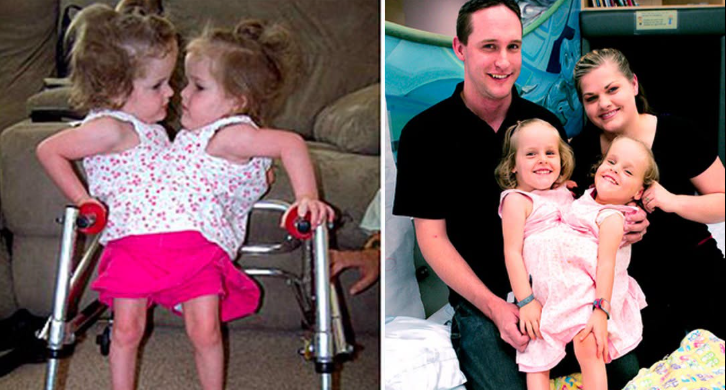
Kendra and Maliyah Herrin were four years old when they lay in separate beds for the first time. The beds were side by side in a Utah intensive care unit. One sister had the kidney they had shared since birth. The other would need dialysis until she was ready for another operation.
Their mother, Erin, was already planning to give Maliyah one of her own kidneys.
For four years, every step took two
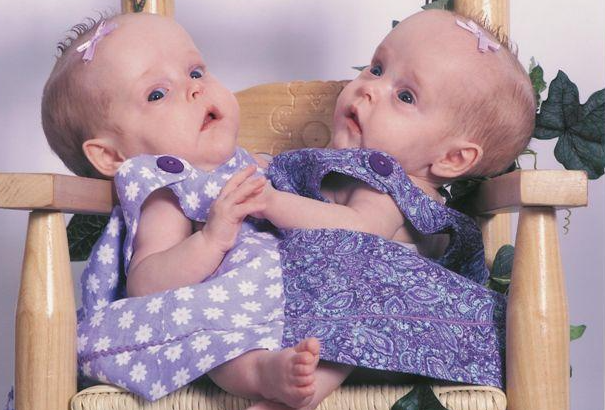
Born in Utah in 2002, Kendra and Maliyah were joined at the abdomen and pelvis. They shared a liver, part of their intestine, a pelvis and one functioning kidney. They had two legs between them, and each sister controlled one. A step across the room took coordination from both girls.
Before surgery, the twins talked about things they wanted to do afterward. They wanted to sleep in bunk beds and ride bikes. Kendra had a particular bike in mind. She wanted a princess bike, and she wanted to go fast.
Their parents, Erin and Jake, talked with the girls about the operation. The family had years to consider what separation would mean, and the doctors had to plan for two different recoveries. The kidney was in Kendra’s body. Once the sisters were separated, Maliyah would lose access to it. Doctors waited until she was older and better able to undergo a transplant.
The operation lasted through the night
In August 2006, the girls were taken into surgery at Primary Children’s Medical Center in Salt Lake City. The team had to divide shared organs, reconstruct each girl’s pelvis and close the surgical wounds. Each sister would keep the leg she had always controlled.
By late that evening, the twins had been physically separated. Hours of reconstruction still lay ahead. Maliyah was moved into intensive care the following morning. When the surgeons finished with Kendra, they put her bed next to her sister’s. The operation had lasted about 26 hours.
In September, family, friends and neighbors welcomed the girls home with balloons. There were purple ones for Kendra and yellow ones for Maliyah. The twins wanted to see their new beds. Soon Kendra was playing on the computer and Maliyah went out in a stroller. Both girls played with their little brothers.
Home still meant physical therapy, hospital visits and, for Maliyah, dialysis three times a week. The next operation was already part of the family’s plans.
Eight months later, their mother went into surgery too
On April 3, 2007, Erin donated her right kidney to Maliyah, who had just turned five. Erin went home first. Maliyah stayed in the hospital for further recovery and to give doctors time to adjust her medication. Later that month, she went home too.
The kidney worked for several years. When it eventually failed, Maliyah returned to dialysis. In an update in April 2018, the family described two years of waiting and repeated treatments. That May, Maliyah received a second kidney transplant. The family reported that the operation had gone better than they had expected.
The sisters had their own stories to tell
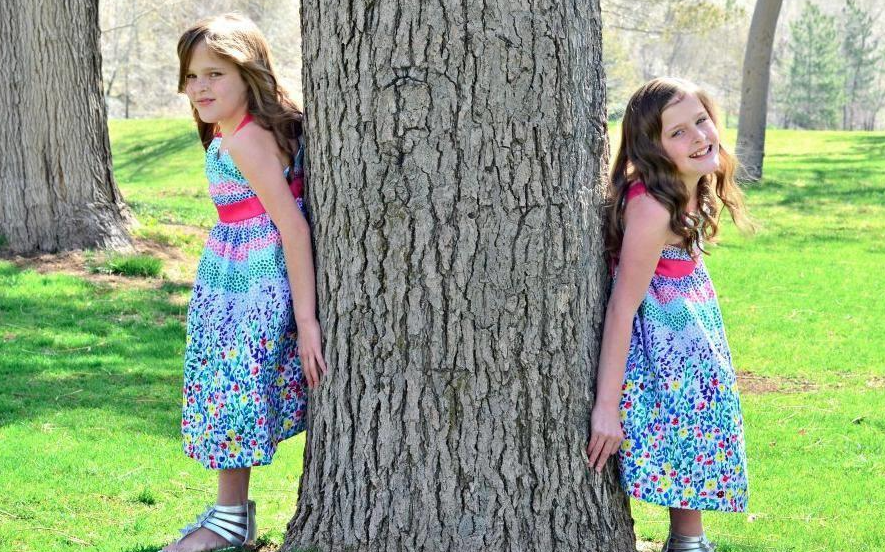
As children, both girls faced additional surgeries and learned ways to move independently. In 2010, a reporter documented Kendra practicing her balance on a new prosthetic leg. The same report showed Maliyah jumping on the trampoline at home. Each sister had her own way of getting around.
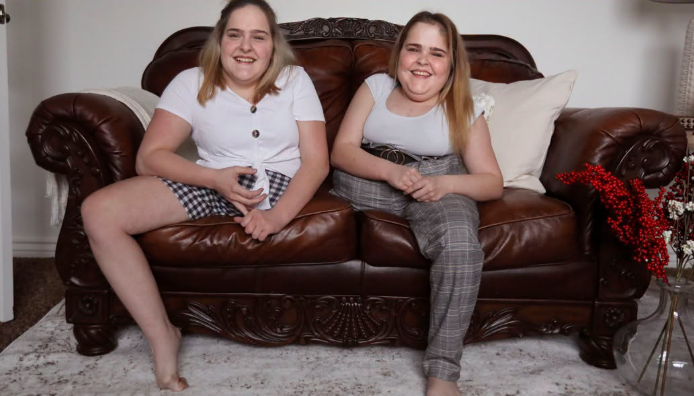
By 2019, they were high school seniors. When they spoke to the Deseret News, they talked about disability, inclusion and what it felt like when strangers took pictures without permission. They still remembered a man who photographed them at Disney World. The trip had been arranged through Make-A-Wish, and years later that encounter was still part of what they remembered about it.
Before the operation, people asked Kendra what she wanted to do after she and Maliyah were separated. The adults were thinking about dialysis, reconstruction and recovery. Kendra was thinking about a princess bike. She wanted to see how fast she could go.
PART 2: THE LIFE BEYOND THE HEADLINES
Years later, the girl who had wanted a princess bike had a driver’s license.
In their December 2019 interview with the Deseret News, Kendra shared that she had started driving. The sisters were approaching adulthood, and independence was becoming a practical question: how to get around, manage their equipment and make more decisions for themselves.
Kendra had also earned certification as a phlebotomist and was considering work drawing blood. Maliyah was still deciding what she wanted to do.
There was room for both answers.

After a childhood with so many medical decisions, choosing a future did not have to happen on anyone else’s schedule.
Their differences showed up in smaller ways, too. They disagreed about food and where to eat with friends. Maliyah liked spaghetti; Kendra did not. Their shared history had never meant identical tastes.
The same interview described a close circle of friends and the sisters’ preference for respectful questions over staring. They wanted people to ask permission before discussing their bodies, rather than treating curiosity as an invitation to photograph them. Deseret News
These details deserve space beside the account of their surgery.
A medical milestone can be measured in hours. A life cannot.
It unfolds in friendships, schoolwork, changing plans and decisions that seem unremarkable until someone has had to work especially hard to make them.
Readers can easily reach the end of an account like theirs and admire the surgeons, the parents and the determination required to keep going. All of that belongs in the story. But admiration also asks something of the person doing the admiring.
How do we behave when someone with a visible disability enters the room?
Do we speak to them directly? Do we allow them to decide what they want to share? Can we accept that they may simply want to finish their meal, enjoy an outing or spend time with a friend?
Respect is often practiced in these small moments, where there is no audience and no remarkable gesture to make.
We can put the phone away. We can introduce ourselves. We can listen without demanding a story in return.
And we can leave room for uncertainty. A young person should be allowed to consider a career, change direction or have no answer yet. Surviving a difficult childhood does not create an obligation to have the rest of life figured out.
The childhood wish for a princess bike is moving because it is so recognizable. A child imagined something she wanted to try.
That wish gives the reader somewhere useful to end—and somewhere better to begin the next time they meet someone whose body looks different from their own.
Begin with the person.
Let them decide how much of their story comes next.
PART 3: THE KIDNEY HER FATHER COULDN’T GIVE HER
Maliyah’s father was not a match.
But he donated a kidney anyway.
Behind the independence described in Part 2 was another chapter, one that takes us back to 2018—before the driver’s license and the conversations about life after high school.
Maliyah needed a second kidney transplant.
Her mother had already given her one. Now her father, Jake, would help through a different route. The Deseret News later reported that he participated in a donation chain: his kidney went to another recipient, while Maliyah received a compatible kidney from someone else.
A father’s gift had reached beyond his own family.
And another person’s gift had reached his daughter. Deseret News
It is easy to describe that arrangement in a few sentences. Those sentences cannot contain everything it meant to the people waiting for the operations.
For the Herrins, the wait had already stretched across years.

In an April 2018 update, the family described Maliyah’s return to dialysis after the kidney her mother donated had failed. They had spent two years waiting for another transplant.
Then, on April 2, they received news that one was coming.
When the family shared the announcement, Maliyah described what she hoped would change.
“I feel like I will be free,” she said.
She wanted more time with friends and family, a chance to swim and enough energy to enjoy it.
That was the future she pictured.
There is something quietly devastating about such an ordinary wish. Swimming. Seeing friends. Having energy left for the people you love.
Things that can disappear into the background of one person’s day can become the center of someone else’s hopes.
The announcement also contained a request: the family wanted the donor’s privacy protected.
Even while sharing their relief, they drew a boundary around someone else’s life.
Readers did not need a name or a photograph to understand the generosity involved. herrintwins.blogspot.com
By May, the waiting had become preparation.
According to the family’s transplant update, Maliyah entered the hospital on May 23, the night before the operation. Medicines and monitoring came first. The next day would bring the transplant they had been anticipating.
On May 26, the family published the news: the operation had happened, and they reported that it had gone better than expected. herrintwins.blogspot.com
For anyone following from a distance, that announcement could have felt like the ending.
The kidney had arrived.
The surgery was over.
But the meaning of that news would become clearer afterward, in the small changes the family could finally describe.
In their July 2 update, they reported that Maliyah was recovering well. Her catheter had been removed, she could swim again, and she was much less exhausted.
The wish she had spoken about before surgery had become part of her life.
That detail deserves a moment.
A teenager had said she wanted to swim.
Later, her family could say she was swimming.
No elaborate description is needed to make that matter.
Yet the same July update carried news about Kendra, too. She was recovering from surgery for an infection and had learned to administer antibiotics through her IV PICC line. herrintwins.blogspot.com
Two sisters appeared in the same family update, each with her own recovery.
One could return to the water.
The other was managing another course of treatment.
Their lives could not be gathered into a single sentence declaring that everything was finally easy.
Good news and difficult work existed beside each other.
Perhaps that is why the smaller details are so important. They keep the people visible inside a story full of medical milestones. They remind us that recovery is experienced in an afternoon, an activity, a task learned, a little more energy than before.
And the sisters were beginning to choose how those details reached the world.
By March 2019, KSL was reporting on their YouTube videos. They shared their history, but they also made funny videos. Maliyah had documented her transplant and recovery. KSL.com
The camera was taking on a different role.
Earlier in their story, a stranger had used one without asking.
Now they could choose to turn one on themselves.
They could decide what to explain, what to laugh about and what to share.
That choice opens the next chapter.
After years of being the subject of other people’s stories, what did Kendra and Maliyah want people to see when they told their own?
END PART 3
PART 4: THIS TIME, THEY CHOSE THE CAMERA
The stranger’s photograph had taken something from them: the choice to decide how they were seen.
Their own videos gave them a way to make that choice themselves.
That is where the question at the end of Part 3 leads.
What did Kendra and Maliyah want people to see?
Sometimes, something funny.
In a March 2019 report, KSL described the sisters making videos about their lives alongside lighter, humorous content. Kendra explained that they wanted their videos to help people feel positive. Their father said making them had strengthened their confidence and given them an interest to pursue.
They had something to create.
They had an audience to speak to.
And their medical history did not have to be the subject of every conversation.
The same report included a detail that would never have made the headlines about their separation: they took turns cooking dinner.
After so many accounts of what doctors and parents had done for them, here was a glimpse of what they did for their household.
Dinner still needed making.
Someone had to take a turn.
There is room in their story for that responsibility, just as there is room for operations and recovery. Growing up happens in ordinary tasks, too.
The sisters also described enjoying high school. They said they had not been bullied there. KSL.com
That matters because it prevents another assumption from taking over their lives: that every encounter must have been cruel, every classroom unwelcoming, every friendship difficult.
Their experience included belonging.
It also included moments they wanted people to understand better.
By November 2019, Kendra and Maliyah had participated in a live YouTube question-and-answer session with Gerald Nebeker of Orange Socks. In his January

2020 newsletter, he recalled their conversation and the interview about inclusion that followed in December.
Their advice was direct: speak respectfully, avoid staring and approach people with kindness.
Maliyah’s contribution was just two words.
“Be nice.” Orangesocks.org
The simplicity of that request leaves very little room for excuses.
No one needs to know a person’s surgical history before treating them courteously.
No one needs an explanation of a wheelchair, a walker or a missing limb before saying hello.
And someone who shares part of their life online still gets to decide what remains private.
A video is an invitation to watch that video.
It does not turn the person in it into public property.
The distinction becomes especially important in the Herrins’ story. They could welcome an audience for something they had made and still object to a stranger photographing them without permission.
Both choices belonged to them.
Yet speaking publicly about inclusion did not put the rest of life on hold.
In their December 2019 interview, Kendra described missing the first month of her senior year because an infection required surgeries. She also spoke proudly about earning A’s and B’s.
There, in one account, were two things readers might otherwise separate: a student dealing with serious health problems, and a student pleased with her grades.
Neither detail erased the other.
As adulthood approached, the sisters were also considering the practical demands of greater independence. Their equipment required help with heavy lifting. They expected their medical care to move beyond the children’s hospital they had known for years. www.deseret.com
The next stage would involve decisions that a successful operation could not settle for them.
How would support fit into the lives they wanted?
Which responsibilities could they take on, and where would they still need someone beside them?
These were questions about everyday life with consequences far beyond a camera screen.
For years, people had followed their story by asking what the doctors would do next.
Now another question was coming into focus.
What would Kendra and Maliyah choose next?
The children once photographed in adjoining hospital beds were approaching a future that would ask them to speak for themselves in new ways.
And telling their story was only the beginning.
The next chapter was about having a greater say in how they lived it.
END PART 4
PART 5: THE GIRL WHO HADN’T DECIDED YET
In 2019, Maliyah did not know what she wanted to do.
Years later, people would watch her hands at work.
The question left open in Part 4—what would the sisters choose next?—could not be answered all at once. Their adult lives would take shape through different decisions, at different times.
But one milestone appears plainly in a school document.
The Woods Cross High School graduation program for 2020 lists two names:
Kendra D. Herrin.
Maliyah M. Herrin.
They appear among their classmates.
There is no account of a transplant beside them. No explanation of the operation that separated them. On that page, they belong to the graduating class.
For a reader who first encountered them in a story about intensive care, those two lines carry weight.
There had been school years between the headlines.
Lessons. Assignments. The work of being students while also dealing with medical care.
And now their names were in a graduation program.
That milestone brings us back to something Maliyah had been allowed to leave unanswered.
When the sisters spoke to the Deseret News in December 2019, Kendra had earned phlebotomy certification and was considering work in that field. Maliyah was still figuring out her direction.
It would have been easy to treat her uncertainty as an empty space waiting for someone else to fill.
But an undecided teenager is a person with time to explore.
Her answer was still developing.
By March 2024, Axios identified Maliyah as a Davis County nail technician creating beauty content online.
There was a new subject for the camera.
Her work.
A July 2025 article describing one of her TikTok videos offered a closer glimpse. It followed Maliyah getting ready, getting into and out of a car, using a scooter and going to work. At the salon, the video included folding towels and painting and decorating nails.
Those details give the story somewhere concrete to go.
The young woman who once spoke about wanting enough energy to enjoy life was sharing a working day.
A viewer could watch how she moved through it.
A viewer could also look closely at what she made.
The article included responses praising her nail designs, alongside reactions to her personal history.
That distinction matters.
Praise for someone’s work notices the decisions inside it: the colors, the finish, the care taken with a small detail. It recognizes a skill that takes practice.
For Maliyah, the public story now included something she could create for another person.
The childhood photographs remained part of her history.
New images showed an adult at work.
Then came another public conversation.
An August 8, 2025 episode of The Beauty Connective Podcast featured Maliyah. Its published description focused on her nail career, her social media audience and disability representation in the beauty industry.
The teenager who once had no settled career answer now had professional experience to discuss.
That does not tell us every step between those two moments. It does not mean each day was easy, or that her medical needs had disappeared.
It tells us something more specific, and worth staying with:
Her life had developed beyond the point where an earlier article had left her.
Readers sometimes remember people at the age when their story first reached us. A child remains a child in an old photograph. A teenager remains undecided in an interview we read years ago.
But the person keeps living.
Maliyah had kept living.
And her progress did not supply an answer for Kendra. Each sister deserved room for her own choices, without one becoming the standard by which the other was measured.
They had always been two people.
Adulthood gave their individual stories more room to unfold.
Still, public attention brought an unfinished question with it.
When viewers watched Maliyah work, what held their attention longest—the history they recognized, or the skill in front of them?
Could they admire her persistence and also notice her craftsmanship?
Could they remember what she had survived without letting it become the only thing they saw?
The next part of their story reaches beyond the sisters themselves.
It reaches the people watching.
Because Maliyah had already put something new in front of the camera.
Now the audience had to decide whether it was ready to see it.
PART 6 — FINAL: THE REST OF THEIR LIVES BELONGS TO THEM
The last image in this story does not have to be a hospital bed.
For once, we can leave Maliyah at work.
In the video described in Part 5, she was getting ready, traveling to the salon and decorating nails. Anyone who remembered her as the little girl waiting for a kidney could also see the adult creating something with her hands.
Her history was still there.
So was her skill.
There is no need to choose which one is real.
That is the answer to the question we left open: an audience can remember what someone has endured and still make room for everything else that person becomes.
For Kendra and Maliyah, that room matters.
Their names have appeared together in headlines for most of their lives. Yet each name belongs to a person whose future cannot be filled in on behalf of the other.
Kendra.
Maliyah.
A shared beginning. Individual choices.
And neither owes the world a life impressive enough to justify the care she received.
That may be the most important place to pause.
It is tempting to end a story like theirs by listing achievements until the reader feels reassured. A graduation. A driver’s license. A qualification. A career.
Those milestones deserve celebration.
But the girls in those hospital beds did not have to promise any of them.
They deserved care before anyone knew what they would grow up to do.
They deserved the chance to find out.
In 2020, both names appeared in the Woods Cross High School graduation program. Years later, public reporting followed Maliyah’s work as a nail technician. Back in their 2019 interview, Kendra had spoken about her phlebotomy certification, while Maliyah had still been considering her direction.
Their lives did not unfold at the same pace or along an identical route.
There was no reason they should.
For families reading their story, that can be a quieter kind of hope: a future does not need to arrive fully planned. Sometimes the next step is learning a skill. Sometimes it is recovering enough to return to something you miss. Sometimes it is admitting that you have not decided yet.
A life has room for all three.
And needing help does not remove a person’s right to choose.
The Herrins’ story makes that visible again and again. Their parents, medical teams, donors, friends and community all belong in the account. Support helped make possibilities available.
The choices within those possibilities still belonged to the sisters.
That is why the small childhood wishes remain so moving.
Before their separation, the adults had enormous questions to consider.
Kendra wanted a princess bike.
Years later, before her second transplant, Maliyah talked about swimming and spending time with friends and family without dialysis getting in the way.
Neither wish was a speech written to inspire strangers.
Each was a glimpse of something a child or teenager wanted for herself.
We should take those wishes seriously.
They tell us what a medical success can make room for: an experience, a friendship, an afternoon someone had been hoping to enjoy.
They also remind us how much remains outside the public record.
We can know the date of an operation without knowing every difficult night around it.
We can watch a video without knowing everything about the person who made it.
We can celebrate a milestone without demanding the next update.
Following someone’s story does not give us ownership of its ending.
So this final chapter makes no promise that every difficulty is behind Kendra and Maliyah. It does not need to invent a perfect future to recognize the value of the lives already described.
There were two little girls who had to coordinate every step.
There were two students whose names appeared among their classmates.
There were young women speaking about work, independence and how they wanted others to treat them.
Each moment deserves to remain part of the picture.
And when we leave that picture, there is something practical to take with us.
Speak to the person.
Ask before taking the photograph.
Notice the work someone has put into a skill.
Offer help without assuming you know the answer.
Allow a person to have an ordinary day without turning it into a lesson.
That is something a reader can do long after the details of an operation have faded from memory.
At the beginning of this story, Kendra and Maliyah lay in separate beds for the first time.
Their beds were side by side.
Years of treatment, growing up, learning and choosing lay ahead of them.
We have followed some of those years here.
We cannot write all the ones to come.
But perhaps the strongest ending is the one that finally gives them room to continue without us watching.
Let Kendra choose her next step.
Let Maliyah finish her work.
Let both have dreams they have not announced, plans they can change and moments they never have to explain.
The last words belong on this page.
The rest of their lives belongs to them.
THE END
PART 7 — EPILOGUE: A DAY THAT DOESN’T MAKE THE NEWS
Perhaps the most meaningful day in a life like theirs is a day the world never hears about.
A day with nothing to announce.
No statement from a hospital. No interview to give. No need to explain a childhood photograph to someone seeing it for the first time.
We do not know which days feel that way to Kendra or Maliyah. Those moments belong to them.
But after following their story, we can understand why ordinary time deserves a place in its ending.
When Kendra wanted a princess bike, she was imagining something to do.
When Maliyah wanted to swim, she was imagining somewhere she could go.
Their wishes were specific. Small enough to picture. Large enough to matter.
And that is where this final page returns.
To the things a person hopes to do with the life so many people have helped protect.
A story told through operations can make the years seem like a series of emergencies. A story told through achievements can make them seem like a steady climb.
An actual life has more room than either version.
There is room for enjoyment without achievement.
There is room for rest without an explanation.
There is room to change your mind about what comes next.
Kendra and Maliyah should have that room, just as anyone should.
We can be grateful that they shared parts of their lives without asking them to turn every experience into encouragement for someone else.
We can admire their persistence without expecting them to demonstrate it every day.
And we can remember that being loved should never depend on being inspiring.
That thought reaches beyond this family.
Somewhere, someone reading these words is measuring a difficult season against another person’s brightest photograph.
Someone is wondering whether accepting help means falling behind.
Someone has made it through a hard day and feels there is nothing worth mentioning.
There is no need to borrow the sisters’ experiences to rank those struggles.
Their story can simply make us more attentive.
To the effort we cannot see.
To the support people may need.
To the wishes they are still allowed to have.
Perhaps the next time someone tells us what they hope to do, we can listen without immediately deciding whether it is ambitious enough.
A swim can matter.
A skill can matter.
An afternoon with people you love can matter.
At four years old, Kendra and Maliyah lay in neighboring beds after the operation that separated them. That image helped the world understand a remarkable medical event.
But it was never large enough to contain two entire lives.
No photograph could be.
No series of articles could be.
Even these pages must eventually stop while the people in them continue.
So we leave their story with gratitude for what they chose to share, and room for everything they have not.
There is no final test for them to pass.
No extraordinary achievement required to make this ending worthwhile.
Two little girls once wished for things they had not yet experienced.
The hope we leave with is that each will keep finding things she wants to try.
And that, on some of the days that matter most to her, there will be no headline at all.
Just a life being lived.
THE END