My name is Evelyn Hart, 68 years old, living in a small town on the outskirts of Orlando. Throughout my life, I had only one child, Mason Hart, and one remaining relative. I still kept in touch with my aunt Margaret Hail, my mother’s older sister. She had lived alone most of her life. No husband, no children, few social ties. But she gave me a kind of attention I never fully understood. Only when she passed suddenly from a stroke and her attorney called me to his office in downtown Orlando did I learn what she had left for me: real estate, stocks, bonds, and investment accounts totaling $38 million. I could barely breathe when I saw the numbers. A woman living on a dental office assistant salary never imagines owning millions. I immediately thought of Mason, of his small family, of the grandchild I hoped I would have someday. I just wanted to share that joy with my son. My heart was full of hope then, naïve hope that my love would be returned. That’s why, after meeting with Aunt Margaret’s attorney, I drove straight toward Mason’s house. I didn’t want to call. I wanted to see the look on my son’s face when he heard that his life was about to change forever. But halfway there, everything changed in a way I could have never imagined. A silver SUV ran a red light and slammed straight into the side of my car. The sound of metal twisting was so sharp I thought the whole world shattered. I didn’t know how long I was unconscious. I only vaguely remembered the sound of sirens, paramedics shouting over one another, and the blinding white hospital ceiling lights sliding above me. When I woke up, I was lying on a stretcher, one arm in a brace, my chest aching so much that even breathing was hard. The nurse said I had a fractured left arm, two cracked ribs, and a mild concussion. I asked, dazed, whether anyone knew I was there, and the answer pierced straight into my heart.
“We called Mason Hart. He said he’s busy.” I thought I misheard. Mason had never missed my birthday or Christmas, not even a phone call. He used to be the most affectionate child I knew. But over the past few years, ever since he met Khloe, things had shifted slowly but clearly, like a receding tide I hadn’t noticed until the shore was bare and sharp. I told myself he might be in the middle of something important. Maybe he panicked and didn’t know what to do. But then the nurse continued, crushing every excuse I tried to make for him. “He only asked if you didn’t make it, who your assets would go to.”
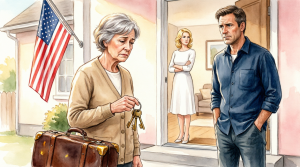
A choking sound escaped me, but no words formed. My chest hurt so much I had to close my eyes to keep from breaking down. At that moment, no one knew about the inheritance. Mason least of all. I could only think one thing. If he reacted like that when he thought I might die, what kind of man would he become if he knew I was about to have $38 million?
The next day, when the pounding in my head eased a little, I called Mason. I had practiced how to sound gentle, how to keep my voice steady. But even when he heard how weak I was, his voice stayed indifferent.
“Mom, I already know. They called from the hospital. It’s just an accident. Don’t make everything a big deal.”
“But I was unconscious,” I said, my voice trembling.
“But you’re awake now, right? I’m in the middle of something. I’ll stop by when I’m free.”
He spoke as though I had simply cut a finger chopping vegetables, not as someone who had nearly died. I hung up, my hands still shaking. I felt like I had stepped into another world, a world where a mother no longer had value beyond what she could offer.
During the six days I stayed in the hospital, neither Mason nor Chloe came. Not once. No calls. No messages. The nurses changed my IV bags more often than anyone checked on my well-being. I wasn’t even sure whether the tears I shed were from pain or heartbreak.
When I was discharged, the Florida sun was blazing as usual, but I felt cold to my bones. I braced myself on the taxi door, took a deep breath, and felt like someone entirely different. A woman who had just lost her last piece of innocence.
On that ride home, I made a decision. I would not tell Mason anything about the $38 million. Not a word. I needed to know what had changed him into someone who saw his own mother as a burden. I needed to know whether Chloe was influencing him or whether something darker had been inside him all along, something I had failed to see.
I needed to see Mason clearly, so clearly that no doubt could cloud my judgment. And only then would I decide whether my son deserved to know his mother had become a millionaire.
That night, when I returned to the small house I’d lived in for twenty-seven years, I removed the hospital bandage from my arm, set my bag down on the kitchen table, and looked around the familiar room. A chill moved through the air. I didn’t know what I would find, but I knew one thing for certain. My life had entered a new chapter.
And in this chapter, I was no longer the soft-hearted mother I used to be.
Two weeks after leaving the hospital, my home fell back into its familiar silence, the old air conditioner humming in the corner of the living room, the muted sounds of the neighborhood drifting through the screen window. I thought Mason would call at least once to ask how my recovery was going, but my phone stayed still on the table, the screen blank except for grocery store ads and pharmacy coupons.
I didn’t know what hurt worse, the bruises still fading on my chest or the absolute silence from the child I once believed would never turn his back on me.
On the fourteenth day, my phone finally rang. The caller wasn’t Mason. It was Chloe. Her voice came fast, clipped, as if making the call was an inconvenience.
“Evelyn, can you watch Lily for me Saturday afternoon? Mason and I have an important client meeting.”
I looked at my still-bandaged arm and the bruises running along my ribs.
“I’m still recovering, Chloe. The doctor told me to avoid any strain.”
Silence. Not the empathetic kind, the irritated kind.
“Oh.” Chloe let out a short, cold sound. “I thought you’d try a little. It’s just sitting with her. It’s not like you do anything all day.”
A tightness formed in my throat.
“I need to rest.”
Chloe exhaled sharply, muttered a forced thank-you, and hung up before I could respond.
In that moment, I realized they didn’t care about me at all. They only cared about what they could take. My time. My labor. My willingness. And if they knew about the $38 million, they would want far more.
That night, I stared out the window at the dew forming on the grass, my chest hollow. I wondered how long it had been since Mason genuinely asked how I was doing. How long since he hugged me just because he wanted to. I couldn’t remember.
But I wasn’t ready to give up on him. Not yet. I still believed people could be influenced by those they love. And in this case, that influence was Chloe: sharp-tongued, calculating, always steering the conversation toward expenses, financial burdens, and how older people should simplify their money to avoid causing trouble.
One afternoon, I decided to try something. I called Mason. He picked up on the third ring, sounding rushed.
“Mom, what’s wrong? I’m busy.”
I swallowed my hurt, keeping my voice steady.
“Mason, I have news about Aunt Margaret.”
Silence. Then, not concern for me or sorrow about her passing, but:
“Did she leave anything?”
My heart dropped. I answered slowly.
“Just an old house. It’s run-down.”
I heard Mason breathe out, a long, disappointed exhale.
“Oh. Well, that doesn’t help us.”
I didn’t respond. If I did, I would have cried. How could my worth be measured against the value of someone else’s inheritance?
“How’s your health?” Mason added, sounding polite but not sincere.
“Decent,” I said softly, ending the call before my voice cracked.
That call rearranged every suspicion in my mind into a clear picture. Mason wasn’t just distant. He was calculating. And he had changed after marrying Chloe. I replayed every vague remark she’d ever made about finances and responsibilities. Back then, I thought she was venting. Now I realized she had been planting ideas slowly, deliberately.
From that day, I began noting every odd detail, not for revenge, but for protection. A woman my age understands vulnerability in ways younger people never consider. I kept a small notebook, writing down dates, phrases, reactions. I wasn’t sure if I would need it, but having it gave me strength.
One evening, while preparing a simple dinner, chicken soup with carrots and a sleeve of saltines on the counter, I heard my phone vibrate across the kitchen counter. Mason had dialed someone but accidentally left his phone on speaker. I only heard it because I was near the sink. His voice, low but unmistakable.
“You’re right. Mom really is acting strange. She asked the same thing three times yesterday.”
Then Chloe’s sharper voice.
“I told you the accident weakened her. This is the perfect time to talk about reorganizing her finances before things get complicated.”
“Let’s wait,” Mason murmured. “Maybe see how she is for a bit.”
“Why wait? She lives alone. No supervision. A few more signs and we can request to help manage her assets. You know older people are easy targets.”
Something inside me went cold. The way she said older people sounded like she was describing prey. I stepped back instinctively, heart pounding in my ears. Mason didn’t defend me. He didn’t tell her I was fine. He let her words hang in the air.
I stood there for a long moment, staring at the warm kitchen lights reflecting on the counter like fractured memories. I once thought recording conversations was for paranoid people. Now I understood that when your own child begins viewing you through the lens of personal gain, you are no longer in a family. You are in a negotiation, and you are the weaker party.
I placed my hand on the cold countertop, steadying myself. What I heard was not random chatter. It was the start of a plan. I didn’t know what they intended, but I knew this. Mason and Chloe had begun preparing, and I had to prepare, too. Not because I wanted to fight my son, but because I refused to become a victim of the people I loved most.
Deep down, I sensed the truth. This was only the beginning of a storm forming on the horizon, a storm I would have to face alone.
The night I overheard Mason and Chloe’s conversation, I barely slept. Their words pricked into me like tiny needles, silent yet painfully sharp. I lay in bed, one hand on my chest, feeling each breath come faster than the last. I wasn’t sure what frightened me more, that Mason was planning something, or that I no longer recognized my own son.
Around two in the morning, I sat up and turned on the bedside lamp. The warm light fell on a row of family photos. Mason at seven years old, smiling wide as I taught him to ride a bike on our old cul-de-sac. Mason at his high school graduation, proudly holding my hand. Mason on his wedding day, shy and glowing while I cried tears of joy.
Looking at those moments made something in my chest ache deeply.
“How far have you gone, Mason?” I whispered.
I needed the truth. Not the version Mason might tell me, but the real truth. I needed to know what he and Chloe were planning, discussing, calculating. I needed to know how much of a threat they could become, and I needed proof.
The next morning, I called Aunt Margaret’s attorney, Mr. Steven Doyle, a patient man who always spoke gently, almost like family. When I told him a small part of what was happening, his voice dropped to a grave tone.
“Evelyn, let me connect you with someone. You shouldn’t face this alone.”
That was the first time I heard the name Robert Cain.
Robert arrived the following afternoon. He was in his fifties, hair flecked with gray, face stern yet eyes steady and kind, wearing a light blue shirt and a simple brown jacket. He didn’t look like the kind of investigator you see on television, but his presence radiated competence and calm.
“I’ve heard the outline from Mr. Doyle,” he said as we sat at the kitchen table. “But I’d like to hear it from you. Everything from the beginning.”
I breathed in slowly and began. The accident, the hospital, Mason’s cold reaction, Chloe’s phone call, the conversation I overheard. My voice trembled when I reached the part where Chloe suggested I might no longer be mentally sharp. Robert didn’t interrupt, didn’t react with shock. He simply listened, writing notes in a worn leather notebook.
When I finally stopped, he looked up.
“You believe they may try to gain control of your finances?”
“I don’t want to believe it,” I whispered, staring at my hands. “But I heard them. And if Chloe said it once, she’ll say it again.”
Robert nodded, his voice firm.
“You were right to call. If they have such intentions, we’ll need evidence. Evidence they can’t deny.”
I took an envelope from the cabinet, the one with photos of Mason and Chloe, one from their wedding, one from Christmas three years ago. I placed them on the table.
“I want you to investigate their finances. And…” I paused, then said each word clearly. “I want to know what they say when I’m not there.”
Robert didn’t ask further. He simply looked at me for a long moment, as if making sure I was strong enough to face the truth. Then he placed the photos into his file folder.
“I’ll begin right away. Keep everything normal. Don’t let them know you’re suspicious.”
I nodded, even as my throat tightened.
Three days later, Robert called me. His voice was brief.
“Evelyn, I need to see you tonight.”
All day, I paced through the living room, checking the clock countless times. When Robert arrived, Florida’s sky had already dimmed into early dusk. He set a thick document bag on the table and opened it. One by one, photographs were spread before me.
In the pictures, Mason and Chloe were sitting in an expensive restaurant in Winter Park, champagne on the table, both smiling brightly. The date in the corner: the second day after my accident, the day the doctor said I was still under complication observation.
This was the day I was in the ICU.
I touched the corner of the photo and it burned like a cut.
“That’s right,” Robert said. “They were celebrating, and according to the recording I obtained, it wasn’t just because of Mason’s new contract.”
I looked up, waiting. Robert took out a small recorder and pressed play.
Mason’s voice came on, tinged with pride.
“I didn’t think Mom would wake up that fast. This accident came at the right time.”
Then Chloe’s voice, sharp and precise.
“I told you this is the best chance for you to request guardianship. The weaker she looks, the easier things will be.”
I felt my heart drop into my stomach.
Robert turned the recorder off.
“There’s more.”
He played a second clip. This one was softer, like a busy café in the background.
Mason said, “She’s been forgetting things lately. Looks like she’s not as sharp anymore.”
Chloe replied, “Good. Just let a few small incidents happen. Who would know? She’s old. One forgotten moment, one confused moment, and that’s all the justification we need.”
I clenched my hands until my knuckles turned white.
“Small incidents,” I repeated, my voice rough. “They’re talking about creating false evidence.”
Robert looked at me with sympathy, but also honesty.
“I believe so.”
I didn’t cry. I thought I would. But instead, a quiet steel-like stillness slid into my chest. Not weakness. Something deeper. The sound of trust breaking. The words Mason once whispered as a child, “I’ll protect you forever, Mom,” shattered into sharp fragments inside me. The pain quickly hardened into resolve.
“I understand,” I said softly. “They don’t see me as family anymore.”
Robert nodded.
“They see you as a target.”
I thought Mason was just influenced by Chloe. I looked down at the photos. But no. He chose this path.
Robert stayed silent, letting me breathe. After a moment, he asked, “Do you want to continue, Evelyn? What we find next may be worse.”
I lifted my head. For the first time in weeks, my eyes didn’t tremble.
“I want to know everything. I need to know how far my son has gone.”
I pushed the stack of photos slightly away, as if that tiny distance might help me breathe.
“And I need your help, not just to defend myself, but to make sure they can’t harm me.”
Robert nodded, his expression firm.
“Then we’ll see this through.”
In that moment, I understood that my life had entered a new chapter. Not an easy one. Not a gentle one. But one I had no choice but to write myself, with clarity, strength, and the sharp awareness of a woman who had stood at the edge of death with no family beside her.
I looked toward the window where the streetlights cast a soft yellow glow. Family was no longer a place of safety. It had become a place I had to defend myself from. And from that moment on, I knew I was no longer the quiet, blindly trusting Evelyn. I was a woman who had been forced to stand up against the very son I had raised with my whole heart.
I sat in the living room for a long time after Robert left, my hands still resting on the photos showing Mason and Chloe celebrating on the very day I was in intensive care. Their bright faces. The champagne glasses touching. My son’s smile. It all felt like a blade pressed against the softest part of me.
But that piercing pain transformed into something unexpected.
Cold clarity.
If they saw me as a target, then I had to see them as opponents. Motherly love couldn’t protect me anymore. Only careful preparation could.
The next morning, I went to Aunt Margaret’s attorney’s office. Mr. Doyle was already waiting, and Robert arrived a few minutes later. We sat in a small meeting room with soft window light, though the air felt thick enough to slice. I told them everything Robert had uncovered. And when I finished, I spoke the sentence I never imagined I would say.
“I need a plan. A plan to protect myself from my own son.”
No one in the room was surprised, and that brought me a strange sense of relief. They didn’t see me as paranoid or frail. They saw me as a woman trying to take back control of her life after being pushed to the edge.
Mr. Doyle opened a new file.
“Evelyn, you have two categories of assets. Assets that must be protected absolutely, and assets that can be used as bait.”
Robert nodded.
“If they’re truly plotting, we need them to believe their plan is working. People make mistakes when they feel confident.”
I shivered slightly at the word bait, never imagining I’d use my own vulnerability to lure my son into a trap he dug himself. But the price of misplaced trust was this, and I was willing to pay it.
We divided the inheritance. Thirty-six million dollars were transferred into a special trust accessible only if a medical evaluation confirmed my full mental competency or if I personally approved access. No one, not even Mason with any potential power of attorney, could touch it. The remaining two million were used to purchase a new beachfront home on Key Biscayne, titled under an LLC known only to me and the attorney. It would not only be a refuge, but the starting point for my new life when the time came.
After signing the documents, a weight lifted from my chest, as if I had closed a door between Mason and the money that could destroy us all.
The next step was installing hidden cameras in my current house. Robert chose the spots himself: the living room, hallway, front and back door, and a small camera disguised inside a potted plant in the kitchen.
“Not to spy on them,” he said. “To document anything that happens when they visit.”
I didn’t object. The sacred trust between mother and child had cracked long ago, and my safety mattered more than old ideals.
The hardest part came next.
Acting.
I had to convince Mason and Chloe that my health was failing, that my memory was slipping, that I was confused. I had to play the very role I hated seeing in movies, the frail older woman. But now it was my only shield.
The first time I saw them after leaving the hospital was on a Sunday afternoon. Mason arrived first, Chloe next, carrying a pastry box from a chain bakery as a show of friendliness, though her eyes darted around like always, calculating.
“Mom, you look better,” Mason said, forcing a smile.
I returned a vague smile.
“Mason, what day is it again?”
He paused.
“Sunday, Mom.”
“Oh, I thought it was Wednesday.”
I let out a light laugh, subtle, believable, just enough to plant doubt.
I saw two opposite expressions in that moment.
Mason: his eyes dimmed. The corner of his mouth twitched, a mix of pity and confirmation. He wanted to believe I was weakening.
Chloe: her eyes lit up as though the missing piece of her puzzle had clicked into place.
She slid into the chair beside me, her voice honey-sweet in a way I had never heard.
“Evelyn, you should write things down from now on. It might help. You don’t need to push yourself. We can help.”
The false kindness in her tone made my skin crawl. She wasn’t offering help. She was guiding me into the box she wanted me placed in.
I pretended to think it over.
“Maybe I am getting forgetful. Yesterday, I forgot to turn off the stove.”
I let the sentence drift out slow and troubled.
Mason jumped on it instantly.
“Mom, that’s dangerous. Maybe I should look over your finances. I can organize everything so you don’t get scammed.”
I looked straight at him, the look of a mother who still loved her child but knew he was crossing a line. Then I nodded softly, as if considering it seriously.
“Let me think about it, Mason. I need time.”
Disappointment flickered across his face. Chloe pressed her lips together, hiding a smile she didn’t quite contain.
That night, I reviewed the footage. Chloe was snooping, checking the kitchen drawers, glancing at my filing cabinet. Mason stood near the table where I kept documents, his eyes filled with a mixture of greed and pressure. They were starting to believe I was truly declining, and that was exactly what I needed.
Over the next days, I released small signs: repeating a question, holding the wrong key, misnaming a dish. Not too often. Just enough to deepen their perception. Chloe became unnervingly warm. She hugged me lightly before leaving, asked if she should book my doctor appointments, even brought me a book titled Keeping Your Memory Sharp After 60 as a thoughtful little gift.
Mason slipped comments into every conversation.
“Mom, I just want to help.”
“Mom, my friend’s grandmother got scammed. It happens so easily.”
“Mom, someone trustworthy should manage your finances just in case you forget.”
Every word they spoke went into my notebook, the one hidden in the drawer of my nightstand. Not out of hatred, but because one day I might need it to defend myself.
I knew I couldn’t rush. Greed ferments on its own. I just had to wait for it to bubble over. Wait for the moment they thought they had already won. Wait for them to drop their guard. That would be when my trap, the trap they’d never expect, would close cleanly.
That afternoon, as the breeze from the small lake behind my house drifted in, scented with blooming wattle and cut grass, I was preparing a snack for Lily, Chloe’s daughter. She sat at the kitchen table, swinging her legs absently, nibbling apple slices from a Corelle plate.
Then she said something that made my spoon freeze in midair.
“You know, Dad and Mom said you’re kind of a little crazy after the accident.”
I slowly set the spoon down, my heart skipping a beat.
“What do you mean, sweetheart?” I asked calmly.
She shrugged.
“They said you forget stuff. And Mom said we have to be careful because old people forget important things.”
I sat beside her, keeping my tone gentle.
“Important things like what?”
Lily poked at her apples, then repeated something she had clearly overheard.
“Mom said we have to help you remember where you keep your money. Dad said it’s dangerous if you don’t remember. Mom said if you forget, we should help. Like find it.”
Her innocence was brutal, but it revealed everything.
Help her find where she keeps her money.
Not help me heal.
Not help me feel safe.
Money.
I smiled warmly at Lily.
“Thank you for telling me, sweetheart. You’re very kind.”
But when I turned to grab a napkin, my hand trembled. They had gone further than I thought.
By early evening, the Florida sky was painted a soft pink-orange. Lily and I were doing puzzles in the living room. I glanced at the wall clock: 6:15. Mason had said he’d pick her up at seven. I knew exactly what I needed to do.
When I heard the car pull into the driveway, I intentionally stood slowly, holding a glass of water and muttering under my breath. Mason and Chloe walked in with the same warm smiles I had grown accustomed to. Warm like a mask.
“Is it that time already?” I asked, sounding genuinely unsure.
Chloe jumped in before Mason could answer.
“Of course, Evelyn. It’s eight o’clock already.”
I knew perfectly well that if I said eight, they’d correct me, so I deliberately said something different.
“Oh, I thought it was a little after five.”
I looked around in mild confusion.
“I’m getting old. My memory just doesn’t keep up anymore.”
It lasted all of three seconds, but I saw two completely different reactions.
Mason: his eyes darkened, the corner of his mouth twitching, a conflicted look of pity and confirmation. He wanted to believe I was failing.
Chloe: her eyes flashed in a subtle way, a hint of satisfaction slipping out before she managed to hide it. Not a smile, just a blink slower than usual, but enough for me to notice.
The camera in the right corner of the living room captured everything.
I continued my performance.
“Where did I put my keys?”
I rummaged through my purse, then the drawer near the door. Every movement was calculated, just messy enough to look believable.
Chloe stepped closer, her gaze sweeping quickly across the document table, then the wooden cabinet against the wall, the one where I used to keep bank statements.
“Are you sure you’re all right?” she asked in a half-concerned, half-directive tone. “Maybe I should organize your paperwork so nothing gets misplaced.”
“No, that’s not necessary.”
I shook my head lightly, appearing more confused than resistant.
But only minutes later, when I pretended to walk into the kitchen to make tea, Chloe seized the moment and opened the wooden cabinet. Her hands moved fast, as if she had done this many times before. She lifted each bundle of documents, flipped through a few pages, then put them back almost exactly where they were.
Everything was recorded by the camera.
Every movement.
Every expression.
From the kitchen doorway, with my hair partly covering my face, I watched. The sight tightened my chest, but I didn’t stop her. This was what I needed. Concrete evidence of intentional behavior. No more guessing. No more vague comments. Actual actions.
When they left, Lily hugged me tightly before getting into the car.
“Don’t be sad, Grandma,” she said, her eyes clear and innocent.
Exactly like Mason’s used to be.
“Of course not, sweetheart,” I replied, smoothing her hair. “I’m just fine.”
But when the car door shut and the SUV disappeared down the street, my legs softened beneath me. I sat on the front step, arms wrapped around my chest. I wasn’t weak, not at all. But my heart had taken another cut.
Inside the house, I turned on the small monitor connected to the camera system. I replayed every moment. Chloe’s eyes. Her excitement at seeing me confused. Mason sighing with false pity. Chloe opening the cabinet to search for documents. No angle was obscured. The footage was so clear I could almost hear their thoughts.
I saved everything to a backup hard drive, then called Robert.
He answered after two rings, steady and calm as always.
“Evelyn, is there something new?”
“I have evidence,” I said, unable to hide the slight tremor in my voice. “Clear evidence. They’ve moved forward.”
Robert arrived in less than an hour. He reviewed each video frame by frame. His eyes narrowed in concentration. When the final clip ended, he switched off the screen and turned to me.
“Evelyn,” he said slowly, “this is enough to initiate phase two.”
My heart thumped hard in my chest. I knew what that meant. Not retaliation, but preparation for the decisive blow, the one that would collapse their entire plan by their own actions.
“From now on,” Robert continued, “just do exactly what we discussed. Don’t resist. Don’t avoid. Let them believe they’re winning.”
I nodded softly.
I was ready.
Not because I wanted to harm my son, but because I couldn’t allow him and Chloe to keep seeing me as easy prey. I was ready for the next stage, even knowing it wouldn’t be gentle. But my hurt had already hardened into determination.
I would see this through.
The phone rang on a gloomy afternoon, the sky tinted with a muted gray that matched the swirl of emotions inside me. Mason’s name lit up the screen. I let it ring a few extra seconds before answering, making my voice sound tired, slightly unfocused, exactly what they wanted to believe.
“Mom, we need to talk,” Mason began, his tone softer than usual. When people need something, they often become suspiciously gentle.
“What is it, son?” I asked, letting my voice tremble just a little.
“Mom, I think you should let me handle everything.”
Mason inhaled as if choosing words that sounded less like taking over and more like helping.
“I mean full power of attorney, so I can take care of your finances, bills, banking, everything that might stress you out.”
I stayed silent for a few seconds. That silence, I knew, made him think I was wavering. And right on cue, Chloe slipped into the call, her voice sweet enough to feel sticky.
“Evelyn, you’ve worked your whole life. Why keep struggling? Let Mason help. You just need to rest.”
I imagined the expression she must have: wide, concerned eyes and a practiced smile. But thanks to the camera footage, I already knew what her real expressions looked like.
“I think maybe we should talk in person,” I said slowly.
“Yes,” Chloe replied immediately. “Lunch tomorrow. We’ll pick you up.”
I ended with a line that nearly made me laugh because it sounded so perfectly fragile.
“Maybe I should let you two help.”
The next day, the weather was sunny with a soft sea breeze drifting inland. I wore a cream cardigan, simple and gentle, something that made me look like I was trying to care for myself despite being frail. Mason and Chloe arrived on time, wearing the triumphant smiles of people who believed victory was within reach.
We went to a family restaurant near the water. I ordered chicken soup. They ordered steak and pasta as if celebrating something.
Throughout lunch, Mason looked at me like a dutiful son, except the devotion was bent into self-interest. He repeated concerns about my memory, my stress, my need for protection. Chloe played the anxious caregiver, touching my hand lightly, asking how I slept, whether I had strange headaches since the accident.
They were good actors.
But I was better.
When Mason took a folder from his bag, I knew the pivotal moment had come. He set it on the table, pulling his chair closer.
“Mom, this is the power of attorney. You just need to sign here, and I’ll handle everything so your life is easier.”
I opened the file and slowly turned the pages. Legal terms. Small print. Dense paragraphs. It was all meant to overwhelm. They assumed I wouldn’t understand any of it.
What they didn’t know was that my attorney, Mr. Doyle, had already replaced the original documents with a harmless version. Blank forms with no legal effect whatsoever. My signature meant nothing.
I narrowed my eyes.
“It’s hard to understand. Something about beneficiaries… trust… authority…”
“Let me explain,” Mason said, eager but controlled.
He pointed line by line, simplifying everything into comforting lies. I nodded, slow and uncertain-looking.
“You’re at the signature page now, Mom,” he said softly.
I lifted the pen, letting my hand shake just slightly.
I signed.
When I finished the last stroke, I heard Chloe release a breath of pure, unguarded delight.
“Evelyn, you won’t have to worry about anything anymore,” she said like a gentle breeze. “We’ll handle it all.”
I smiled, a tired, grateful smile on the outside, but made of steel on the inside.
On the way home, Mason said the line I had predicted almost exactly.
“Tomorrow morning, I’ll go to the bank. The sooner the better.”
I nodded, touching my chest like an anxious old woman.
“Yes. Thank you, son.”
But in my mind, everything was already laid out like a map. I had cameras installed. I had audio recorders set up. I had cloud backups ready. I had already informed my attorney. And Robert would follow Mason from the moment he left for the bank.
At sixty-eight years old, I was fully prepared to watch the trap close around two people who had treated me as nothing more than a resource.
That night, I couldn’t sleep. Not out of fear, not anymore, but because of anticipation: sharp, cold, electric. I sat by the window, listening to distant waves from a late weather front moving inland and the ticking clock counting down the final hours. My hands trembled slightly around my jasmine tea, not from weakness, but from decades of motherly leniency finally giving way to resolve.
Tomorrow everything would be exposed.
Tomorrow they would learn I was no longer easily manipulated.
Tomorrow the trap they thought I had walked into would spring back onto them.
I leaned back and closed my eyes.
The reckoning was coming.
The next morning, sunlight filtered through the curtains in thin, warm strips across the floor. I sat in the kitchen holding a cup of hot tea, waiting for the inevitable. At exactly 8:12 a.m., my phone buzzed.
Mason’s name lit up.
I let it ring three times before answering, making my voice sound groggy, half-awake.
“Mom,” Mason panted, as if he’d run across the city. “Something’s wrong.”
I blinked slowly.
“What is it, son?”
“I’m at the bank. They said your account has six hundred dollars.”
His voice cracked.
“Six hundred?”
I paused just long enough before replying in the gentlest, most ordinary tone.
“Yes, that’s all I have.”
A dry, hollow sound came through the phone, a gasp mixed with disbelief. Then Mason’s voice jumped in pitch.
“That’s impossible. What about Dad’s insurance? Your savings? The old accounts? Your retirement funds? The joint account with Aunt Margaret? Where is all of that?”
“Son,” I said softly, “I’ve never had much. You know that. I live on my pension and Social Security.”
“Mom, stop.”
Mason’s voice sharpened into a near shout.
“Where is the real money?”
I heard Chloe in the background, tense and frantic.
“Ask her about the offline accounts. Ask about that trust from Aunt Margaret.”
I inhaled slowly.
“I don’t know what you mean.”
The silence that followed landed like a stone in deep water. Then Mason hung up without saying goodbye.
Less than an hour later, I heard a car screech into my driveway. The door burst open so hard it hit the wall. Chloe stormed in first, lips pressed thin, face pale like she’d been robbed. Mason followed, still clutching the crumpled bank papers.
“Mom,” he said quickly, voice strung tight. “Explain. Now.”
I looked at them with the most innocent expression I could muster, a look that hid a heartbreak so old it barely stung anymore. I had imagined my son rushing into my home many times, but never like this. Not out of love, but out of panic over money he believed belonged to him.
“Are you two all right?” I asked softly, which only made Chloe look ready to explode.
“All right?” She barked out a laugh sharp as glass. “You’re telling us you only have six hundred dollars. What about Aunt Margaret’s estate?”
“What estate?” I tilted my head, the perfect portrait of a confused older woman.
“Don’t play dumb,” Chloe stepped closer. “We know she left you something. You mentioned she was wealthy. Real estate. Investments. Savings. Where is it?”
I shrugged gently.
“Aunt Margaret left me an old run-down house. Maybe you thought it was something more.”
Mason stared at me as if I had slapped him.
“No way. No way. She only left a house?”
His voice trembled with disbelief.
“She was rich. She did real estate. She had multiple accounts. She had to leave a large sum. You’re lying.”
I shook my head, looking tired and a little sad.
“Mason, I don’t have anything big to hide.”
My son’s face contorted. I could see the heartbreak, the anger, the panic, all pulling at his features. Chloe grabbed his arm, but she too was shaking.
“He cut back his work to prepare to take care of you,” Chloe said, her voice rising with desperation. “We planned everything. You can’t say you have nothing.”
“Planned? Everything?” I asked quietly. “For me?”
Chloe’s eyes darted away for a split second, but I saw all the shamelessness beneath it.
Mason marched toward the kitchen table and slammed the bank papers down.
“Mom, Tom’s grandmother lost her memory. His family hid her assets and then took over through guardianship. We can’t help you if you won’t tell us what you really have.”
“Guardianship?”
I knew the word too well from the recordings Robert had shown me. I slowly sank into a chair.
“If I say I have no money, what were you planning to do?”
The room went still.
Chloe, usually the quickest to speak, said nothing. She turned away, jaw clenched, eyes reddening, not from sadness, but from the realization that their entire plan had collapsed in their hands.
Mason slammed his hand on the table, sending papers flying.
“Don’t act like you don’t know. You have money. You have to. No one gets old and only has six hundred dollars. No one inherits property and ends up with a broken-down house.”
I shrugged like an old woman who truly didn’t understand where this chaos was coming from.
“Mason, if I had money, I would have used it to help you long ago. Do you think I’d watch you struggle and do nothing?”
That made him take a step back. I knew it hit the place he didn’t want to face, because somewhere deep inside, a part of him still believed I was the mother who sacrificed everything for him.
The problem was, he didn’t want a mother anymore.
He only wanted his mother’s money.
Suddenly Chloe snapped.
“What’s that supposed to mean? You’re saying we wasted months for nothing? That the guardianship plan is pointless? That we’ve just been helping someone who has nothing?”
I nodded slowly.
“If you two were trying to help me, then maybe yes.”
Chloe’s face went pale. Mason looked like someone had drained the life out of him. He glanced around this tiny house, the old kitchen, the worn-out chairs, the walls that hadn’t been painted in over ten years. Everything in sight proved that whatever they believed about my secret assets or inheritance money had existed only in their imagination.
But their panic wasn’t because of the truth.
It was because their own plan had just crumbled into dust.
Chloe stepped closer to me.
“Evelyn, are you absolutely sure you don’t have another account? An overseas account? An investment fund? Stocks? A backup credit card? An old joint account?”
I looked straight into her eyes, steady, calm, and said, “No. I have nothing. What you see is all there is.”
Chloe stumbled back, her face twisting like someone had kicked out a cliff she thought was solid ground. Mason dropped into a chair, holding his head.
“God, all that work? Everything for nothing.”
“What work?” I asked softly, but enough to make veins rise on his neck.
He didn’t answer, but I had known the answer for a long time. In that moment, I understood their psychological collapse had only just begun. And the most terrifying thing for them wasn’t the idea that I had no money. It was the realization that every tactic they’d prepared to take guardianship and grab what they believed I had was now meaningless, to the point of being absurd.
I sat still, hands around my teacup, letting the warmth press into my palms. They thought they had seen through me, but they didn’t know. I was still holding the strongest card: thirty-eight million dollars they would never believe I was smart enough to hide.
I knew things wouldn’t end when Mason and Chloe left my house with ghost-white faces. People who stake their entire future on imaginary wealth don’t accept defeat easily. And just as I expected, not even twenty-four hours later, Mason called again. His voice wasn’t angry like the day before. It had shifted into a strained, pleading tone.
“Mom, I’ve been thinking. Maybe I rushed things when I had you sign that power of attorney. Maybe it’s better if you just keep everything the same. Can you call the bank and cancel it?”
I tilted my head, smiling even though he couldn’t see me. They must have stayed up all night talking, finally realizing that if I was truly poor, the power of attorney was useless. Worse than useless. It made them look desperate.
“Mason,” I said, intentionally hesitant, “I… I don’t know. I already signed it. Maybe it’s fine to leave it. You said it was to help me, remember?”
“No. No.”
Mason’s voice jumped, losing control.
“I mean, you don’t need it anymore. I think you’re healthy enough. Just cancel it. Okay?”
I let a few seconds pass, long enough for the panic on his end to deepen.
“No, Mason. I’ll leave it as it is. Less trouble.”
A long, defeated exhale came through the phone, and the call ended without even a goodbye.
After that day, Mason and Chloe began showing up at my house more often, three times a week, then nearly every other day. No more fake smiles. No more forced warmth. Only tension, frantic eyes, and increasingly invasive questions.
“Are you sure you don’t have another account?”
“Think again.”
“What bank?”
“What old program?”
“Which retirement fund?”
“Did you hide cash somewhere in the house?”
I kept playing my role, sometimes letting my hands tremble, sometimes repeating a question twice, sometimes looking straight at Mason and calling him by my ex-husband’s name. Chloe always reacted the fastest. Every time I said something that sounded off, she flashed a tiny victorious smile, the kind someone makes when they think evidence is piling in their favor. But she didn’t dare accuse me of memory loss anymore. Saying it aloud would be admitting they’d been building that narrative for months. She had to swallow her impatience and pretend to be concerned.
“Evelyn, are you sure you’re okay? Tell me again, what day is it today?”
I tilted my head.
“Thursday.”
“Tuesday,” Chloe corrected, her voice dripping with satisfaction.
She didn’t know the camera had captured her entire expression. All the files were copied to Robert in case they ever tampered with my devices.
One afternoon, Robert called.
“They’re borrowing high-interest money, Evelyn.”
I froze.
“Borrowing for what?”
“They believe they’re close to gaining control of your assets. When people think a large sum of money is coming, they take risks. According to my source, they’ve borrowed nearly forty thousand dollars to pay off old debts and to place a deposit on a project Mason is involved in.”
I closed my eyes. It didn’t make me happy, but it told me how desperate they were, and desperation would push them to recklessness.
“How far do you think they’ll go?” I asked.
“Until they face consequences or get what they want,” Robert replied bluntly. “All we need now is for them to say the one thing they shouldn’t.”
And they would.
I knew it.
People cornered by their own greed always reveal themselves.
In the following days, Mason and Chloe began arguing right in front of my house. Their voices carried across the yard loud enough for neighbors to pause mid-stride. Chloe couldn’t hold back anymore.
“You swore she had money. You’re the one who said Aunt Margaret was rich. You told me to pursue guardianship.”
“Well, you did it. And that old woman is obviously hiding something.”
“Hiding what? When the account has only six hundred dollars?”
A dog barked from the neighbor’s yard after a burst of shouting. A couple walking by slowed down, shaking their heads. I opened the curtain just slightly. Mason was gripping his hair, Chloe shoving him away, her eyes red with anger. The fight echoed across my driveway, each word ripping apart the polite façade they had worn for months.
My outdoor camera captured every second.
That night, they knocked on my door again, close to nine o’clock. I opened the door, truly exhausted this time. No acting needed.
“Evelyn,” Chloe said, voice trembling like she’d been crying, “you have to tell us the truth. Where are you keeping the money?”
I shook my head gently.
“I’ve told you everything.”
Mason pushed forward.
“Mom, please. We’re about to lose everything. Do you understand that? Lose the house, the car, the contracts.”
“What’s happening?” I asked, my tone airy as if genuinely confused.
“You know,” Mason shouted. “You’re doing this on purpose.”
That sentence cut into me like an old rusted blade. But the pain no longer tore me apart. It settled like stone: sharp, but no longer capable of breaking me.
I answered slowly.
“Mason, I don’t have money. Not a cent.”
Chloe let out a short, bitter laugh through tears.
“You think anyone believes that? You think you can fool us? You think we’re stupid?”
I looked at them with no fear, no pleading, just the firm steadiness I had never needed until now. After they left, I closed the door. The house was so quiet I could hear the first drops of rain tapping on the roof.
Near midnight, a faint sound outside woke me. I tapped the monitor connected to the cameras, and I saw them: Mason and Chloe, standing by my back door. Rain soaked their hair and clothes, but they kept whispering.
Chloe said, “She knows. She’s hiding it. We have to force it. No more options.”
“I’m exhausted,” Mason replied, sounding broken. “But if she doesn’t talk, we’re finished.”
I hit record. The wind made the footage shake, but the voices were clear.
“Tomorrow,” Chloe said, her voice stiff with anger, “I’m asking her again, and this time she will tell us. She’s not getting away from this.”
I stared at the screen, my hand still on the record button, surprisingly calm. I knew my life was about to turn a page. I knew the real confrontation was near, because now I was missing only one thing: a direct threat from their own mouths.
And I could feel it was very, very close.
I still remember the morning I decided to call the police. A rare Florida morning without strong wind, not too hot, and the birds on my roof sounded like they were urging me to act. For weeks, I had let Mason and Chloe show who they truly were. I had recorded every glance, every word, every breath steeped in greed. But now I knew I couldn’t face this alone.
I dialed Detective Marissa Cole, the investigator Robert recommended, someone who specialized in elder abuse cases. Her voice was low, steady, and calm, like a person who had heard a thousand cruel stories yet managed to keep her compassion.
“You said you have evidence,” she asked.
“I have plenty,” I said. “But I still need a clear threat, and I know it’s coming.”
“We’ll help, but you need to be careful.”
I gave a small smile.
“I’ve been careful all my life. Now it’s time to finish this.”
Within two hours, Detective Cole’s unmarked car pulled into my driveway. She wasn’t in uniform, just a blue blouse and khaki pants, looking more like a middle school principal than a police officer. Two plainclothes investigators came with her. I let them inside and handed over all my recordings, videos, and written transcripts of every conversation.
Detective Cole reviewed everything and nodded, her expression heavy, as if she felt some of my pain herself.
“You did the right thing,” she said. “All we need now is verbal evidence of a threat. One sentence is enough.”
“I think it’ll happen soon,” I replied.
“We’ll support you.”
She pulled a small device from her pocket, barely the size of two fingertips.
“This is a microphone. It clips inside your shirt. No one will notice. You just let the conversation unfold.”
“I’ve done much harder things than this,” I said, managing a faint smile.
She placed a hand on my shoulder.
“You’re braver than most people I’ve met.”
I didn’t respond. I just nodded. I had been preparing for this moment for weeks, and now it had arrived.
That afternoon, I called Mason with a slightly weakened voice, as if I truly were overwhelmed.
“Can you come by? I’m feeling a bit lost.”
I knew that if I cracked the door open, even a little, they would rush through. And just as expected, less than ten minutes later, Mason’s SUV screeched into my driveway. The door swung open hard enough to shake the front window. Chloe grabbed Mason’s arm and stormed inside, not bothering to say hello.
“Okay,” Chloe snapped, her voice sharp and trembling. “Say whatever you were going to say so we know what to do next.”
I stepped back slightly, letting my hand tremble as I set the teapot on the table. The microphone hidden beneath my third blouse button picked up every breath.
Mason leaned over the edge of the table, slightly lowering his face toward mine. There was no softness left in his eyes, not even a shred of the boy I raised.
“Mom,” he said through clenched teeth, “stop pretending.”
I widened my eyes.
“Pretending about what, son?”
“That money,” he hissed. “Where are you keeping it? Do you want us to go bankrupt? Do you think we can survive like this? Huh?”
I took another half-step back as if overwhelmed.
Mason stepped forward, voice rising.
“Tell us where the money is. Stop acting dumb.”
I heard Chloe suck in a hard breath. Then she slammed her hand on the table so hard the teacup rattled.
“We know you have money,” she shouted. “Don’t force us to use another way.”
For a moment, the room fell completely silent. I could hear the clock on the wall tick once. The microphone captured every word, each syllable like a blade.
I raised my hand to my chest and stepped back, genuinely shaking, not out of fear of them, but because the weight of this moment was overwhelming after everything I had endured.
“You, too,” I whispered. “Are you threatening your mother?”
Mason froze.
Chloe did too.
I watched their faces drain of color as if all the blood had been pulled out at once. Mason blinked, stepping back slightly, but the panic in his eyes didn’t retreat fast enough.
“Mom, that’s not what I meant. I just—”
Chloe cut in, scrambling to fix the mistake.
“What we mean is… is that you can’t keep lying anymore.”
But it was too late.
Far too late.
Both of them realized it in the exact same instant. Their words had crossed a line that could never be taken back.
I set my hand on the table to steady myself.
“If you came here to threaten me, then I think I should call—”
“Don’t,” Chloe shouted. “You are not calling anyone.”
I looked at her the way one looks at a stranger.
No.
At the way one looks at who they truly are.
The next morning, as I opened the window for the first sunlight, I heard police sirens approaching from afar. The sun was still low, the shadows of the trees stretching long across the walkway in front of the house. Then the siren stopped. Car doors opened. Police boots stepped onto the concrete.
I stood behind the curtain watching Mason and Chloe get out of their car just as Detective Marissa Cole approached.
“Mason Hart, Chloe Hart, you are under arrest on suspicion of elder financial abuse, attempted asset coercion, and threats against the victim.”
Chloe screamed.
“No, this is a mistake. That never happened.”
Mason turned toward me, his eyes full of pain, anger, and desperation all mixed together.
“Mom,” he cried. “Why did you do this? How could you betray me?”
I stepped onto the front porch, keeping my voice as calm as possible.
“I didn’t betray anyone, Mason. I only protected myself.”
Detective Cole gave a signal. Officers handcuffed them and guided them into the patrol car. Chloe cried, and Mason stared at me as if his entire world had collapsed. There was no responsibility left in them, no affection, only bitterness at their failed plan.
When the police car turned off the small road, the sirens gone but their echo still lingering in my chest, I stood on the porch as a cool breeze brushed through my hair. Not joyful. Not triumphant. Just the moment when a chapter finally closes quietly, firmly, and necessarily.
The first morning after Mason and Chloe were arrested, I woke feeling half my weight had been lifted, as if years of burden had finally been removed from my chest. But I knew the road ahead wasn’t finished. People like Mason and Chloe rarely accept consequences easily. I had to take the next step, leaving the old house, once my home, now only a place carved with scars of pain.
I moved out on the very day they were released pending their first hearing.
That afternoon, when the sun had just dipped, the doorbell of the old house rang loudly. Through the camera, I saw Mason and Chloe in the yard. Their faces were far more hollow than the day they were arrested. Chloe looked exhausted. Mason pulled taut like an overstretched wire.
Mason banged on the door so hard I thought the wood would crack.
“Mom! Mom, are you in there?”
No answer. No sign of life. Not a single breath.
After several desperate minutes of knocking, Chloe burst into tears.
“She’s gone, Mason. She really left.”
Mason pushed the door, finding the lock replaced, the curtains drawn up, the living room empty. No furniture. No personal belongings. No family pictures. No trace of life.
“No. No way,” Mason muttered.
Chloe gritted her teeth.
“She ran. She ran away from her responsibility.”
They didn’t know I wasn’t running away.
I was simply walking away from them.
A choice long overdue and absolutely necessary.
More than two hundred miles south, I stood in the living room of my new home, a small but elegant villa in Key Biscayne. Bright wood floors. Crisp white walls. Sunlight pouring through the large glass doors and stretching across the floor like a soft golden ribbon. In the distance, the sound of waves, steady as breath.
I had left a letter on the table of the old house before leaving. Robert sent me a photo of Mason opening it, his hands shaking so hard the paper wrinkled. The words were simple, but they were everything I needed to say.
Mason,
I need a new life, one without violence, without schemes, without greed. When you are ready to face everything you’ve done, my attorney will speak to you, not me. I wish you luck in finding yourself again.
Evelyn.
Chloe skimmed it and nearly screamed.
“A new life? Your mother abandoned us.”
But no. They had abandoned me long, long before I left that house.
A few days after settling into Key Biscayne, I signed papers giving my attorney full authority over all communication with Mason and Chloe. From then on, they could only go through Mr. Doyle, never me.
One soft blue afternoon, I signed the civil lawsuit filing: six hundred thousand dollars against Mason and Chloe for emotional damage, threats, and attempted elder abuse.
Robert stood beside me, leaning slightly.
“You’re sure?”
I looked at the lawsuit, then out the window at the shimmering ocean.
“I’m sure. It’s time they understood that consequences are real.”
Barely an hour after the lawsuit was submitted, Mason called. I hadn’t planned to answer, but a part of me wondered how his voice would sound now.
“Mom,” he said, breathless. “I just got the notice. You filed a civil suit for six hundred thousand. You don’t have the money to sue. You can’t do that.”
I set my teacup down, my voice calm in a way that surprised even me.
“But you do, Mason.”
Silence.
Then I heard Chloe shouting in the background.
“Ask her. Ask why she sued.”
Mason returned to the line.
“Mom, why are you doing this?”
I inhaled softly.
“Because I must protect myself. And because you need to understand that what you did cannot go unanswered.”
“But you’re… you’re my mother.”
“And you are the one who threatened me to take money you had no right to.”
There was nothing more to say. He hung up.
I didn’t cry. Didn’t rage. I only felt light, as if after months of suffocating weight, my heart finally settled back into its rightful place.
Life in Key Biscayne came to me gently, like a soothing melody. The neighbors were kind. Marlene, a house away, often brought apple pie. Mr. Richard next door loved orchids and always asked if he could water mine. People walking along the beach at sunrise greeted one another with soft smiles. I began to feel like I belonged.
In the mornings, I made coffee, opened the porch door, and watched the waves roll under the early sun. Seagulls flew low. Children laughed somewhere down the beach. The world was still beautiful, more beautiful now that there were no angry knocks on my door, no painful questions, no thick air heavy with ambition.
One afternoon, Robert called.
“Evelyn, I have news.”
“Good or bad?”
“That depends on how you see it,” he said, a faint bitterness in his tone. “Mason’s construction company just lost two major contracts. One pulled out because of the scandal. The other canceled because suppliers won’t work with someone under investigation for financial abuse.”
I paused. Not happy. Not sad. Just a hollow ache I didn’t have a name for.
“And Chloe?” I asked.
“She was fired from her assistant sales director position. Clients complained she was unprofessional and connected to the ongoing case circulating in the community.”
Robert paused, then added, “Justice is slow sometimes, but it has its way.”
I sat on the rocking chair on my porch, watching the waves fall over themselves, layer after layer, like life itself, always carrying us away from what once hurt and toward something quieter, kinder. I wasn’t happy that Mason and Chloe were struggling, but I understood that what they were facing was a lesson they had created for themselves.
Finally, with the salty sea breeze around me, I whispered to myself, “Yes. Justice comes slowly, but it comes at the right time.”
And I knew for the first time in years that the life ahead of me wouldn’t be defined by fear or betrayal, but by freedom, calm, and a new life, exactly as I promised.
I didn’t go to court that morning hoping to watch anyone suffer. I just wanted to close a chapter torn so deeply it could no longer be repaired. Key Biscayne was nearly an hour’s drive from the Miami-Dade courthouse, and the entire way there, I kept the window open so the ocean air could fill the car with the scent of freedom.
When I stepped into the courtroom, I saw Mason and Chloe already seated. They sat beside their attorney looking strangely small. No arrogance. No defiance. Only two people standing on the edge of a cliff carved by their own greed.
The judge read the sentence slowly, each word dropping into the courtroom like a stone.
“Mason Hart and Chloe Hart are sentenced to eighteen months of probation along with two hundred fifty hours of community service. The court acknowledges evidence of threats, intent to coerce assets, and emotional abuse toward an elderly victim.”
Chloe covered her face. Mason didn’t cry, but his eyes were sunken and red like someone who had lost his entire world.
Then the judge concluded:
“Mrs. Evelyn Hart suffered significant emotional harm. She is entitled to compensation. The court accepts the civil settlement negotiated by both parties: four hundred thousand dollars.”
I didn’t look at them. Didn’t gloat. Didn’t feel anger anymore, just a long, tired sadness that felt like an old, deep crack.
Two weeks after the hearing, I received an unexpected call from an unfamiliar number. I almost didn’t pick up, but something inside nudged me to.
“Mrs. Evelyn, is that you?”
A young girl’s voice, trembling.
“Yes, it’s me. Who is this?”
“This is Lily. My mom is Chloe.”
I stopped breathing for a second.
Lily. The twelve-year-old who was always quiet when I babysat her, whose eyes darted nervously whenever Mason and her mother argued. A child who had never done anything wrong.
“Lily, honey, is something wrong?”
Her voice shook harder.
“Did… did my parents try to hurt you? I heard them fighting. I heard them say really bad things.”
I closed my eyes. No elderly person should ever hear that question from a child, and no child should ever bear the shame of their parents’ actions.
“No, sweetheart,” I said softly. “They didn’t hurt me, and I’m safe.”
“But why did they do it? You… you don’t even have money?”
That question tightened something deep in my chest. I had prepared to lie for the rest of my life. But to this voice, this innocence that deserved the truth, I couldn’t. I shouldn’t.
“Lily,” I said, taking a breath, “the truth is, I do have money. More than you think.”
She fell silent for a few seconds.
“You… you have money?”
I told her slowly, carefully, gently about Aunt Margaret, the thirty-eight million dollars, why I hid it, and how Mason and Chloe had changed once their suspicions turned into obsession.
“I didn’t tell anyone,” I ended, “because I was afraid. Afraid of losing my son and afraid that greed could hurt not only me, but innocent people around us.”
Lily let out a shaky sigh.
“I… I didn’t know my mom was like that.”
I softened my voice without a trace of blame.
“You are not responsible for the actions of adults. Do you understand? None of this is your fault.”
A long silence passed before Lily whispered, “Are… are you mad at me?”
I let out a small laugh, my heart warming just a little.
“Never. I care about you very much.”
“But you won’t give my parents money, right?” Lily asked, as if she were afraid she might lose some fragile hope for her family.
“No,” I answered truthfully. “I will not support them, because that wouldn’t be good for anyone. But you…”
I continued, “you did nothing wrong. You still have your whole future ahead of you. And if you want, I can help you with college someday.”
On the other end came a small, choked sob.
“Mrs. Evelyn… really?”
“Really, sweetheart.”
Then suddenly Lily said, “Can… can I hug you?”
The question was so beautiful it felt like it lit up the whole room around me.
Two days later, Lily and her aunt came to Key Biscayne. As soon as she stepped out of the car, the girl ran to me and hugged me tightly, not out of guilt or pity, but out of something new growing between us, clean, gentle, and free of any agenda.
For the first time in many years, I felt that I had not lost everything.
Not everything withers.
Not every relationship is meant to die.
Some new bonds are soft, steady, and beautiful if we are brave enough to open our hearts.
That afternoon, as Lily sat on the front porch, her legs swinging to the rhythm of the ocean breeze, I looked at her and then at the bright blue horizon. The universe has a strange way of compensating us. It doesn’t return what we lost. It gives us what we need.
I lost Mason, but I found Lily. A different generation. A different heart. A different chance to love the right way.
And I realized that sometimes new beginnings don’t come from the people we once called family. They come from the people who choose to become family to us.
I never thought that at sixty-eight I would begin a new journey, not one to raise someone, not to endure someone, but to live for myself. But sometimes life pushes us to the very edge of pain so that we can finally see the path back to peace.
After the trial, after the sleepless nights, after the tears shed for things I could not keep, I sat on my porch watching the sea shift into a silvery blue and asked myself, “What will I do with the rest of my life?”
The answer came as gently as the waves.
I want people like me, older adults financially abused and pushed into despair by their own family, to have somewhere to hold on to.
And that’s how the Heart Foundation was born.
I remember the morning we launched it. The sky was so clear it looked deliberately painted. There was no big ceremony, no reporters, no champagne or applause, just me, Robert, and three new neighbors, people who had heard my story and said they wanted to help.
I looked at the sign, Heart Foundation, the letters painted ocean blue, and I felt like I was laying the first brick for people who had never had a voice.
“I’m not creating this foundation for gratitude,” I told them. “I’m doing it because I know what it feels like to have your own child treat you like a payout. I don’t want any mother or father standing alone in the dark ever again.”
Robert nodded, his eyes filled with a pride I had never seen from Mason.
“Evelyn,” he said, “this is something you should have done long ago. You’re making a bigger impact than you realize.”
I smiled, and the sea breeze lifted my hair like a soft stroke from life itself, reminding me that it’s never too late to begin again.
The months that followed drifted by in a peace I once believed I would never touch again. No more heavy late-night phone calls. No more threats or schemes. No more feeling like a burden.
In the mornings, I walked along the beach, letting the soft sand slip between my toes. At noon, I read under the shade of palm trees, listening to children playing by the neighborhood pool. In the afternoons, I made chamomile tea and let the last sunlight kiss my hands.
People say old age is when life starts fading.
But for me, old age is when I started truly living.
One day, as I was watering the lavender bushes by my porch, the building manager brought me an envelope.
“For you, Mrs. Hart,” he said, sounding slightly hesitant.
I recognized the handwriting immediately.
Mason’s handwriting.
I stood still for a moment before opening it.
Mom,
I don’t expect you to forgive me, but I want you to know I’m sorry. I let greed take me too far. I lost you, and I understand that’s the right price to pay. I hope you are at peace.
Mason.
I read every line, then folded the letter and placed it in the wooden box beside my bed. I didn’t cry. I wasn’t happy or hurt. I just felt a soft emptiness, like a gentle breeze drifting through an open room.
I forgave Mason.
But I would never return to the life I had.
Forgiveness doesn’t mean letting someone back in.
I was grateful he found clarity, but I was even more grateful that I found the courage to move on.
And then there were the special days when Lily came to visit. She ran through the gate, hugged me tightly, then jumped straight into the pool, laughing like wind chimes. Some afternoons we sat on the porch together, Lily with her vanilla ice cream and me with my strawberry, both of us watching the sea turn pink and orange at sunset.
“Mrs. Evelyn,” Lily said once, “it’s so peaceful here. I love coming here.”
I patted her head and smiled.
“Me too, sweetheart. When you’re here, my home feels brighter.”
Lily didn’t know it, but each time she hugged me, I felt my heart grow young again. The wrinkles didn’t vanish, but the way I saw the world softened and warmed. And I understood: blood doesn’t make a family.
Hearts do.
Sometimes on evenings when the wind is still, I sit on my porch and look at the water stretched out like a giant mirror. I think about the journey behind me, full of wounds, lies, betrayal, but also full of moments when I stood up, fought back, and refused to be extinguished.
And I realized this.
I didn’t lose.
I just finally found freedom.
And freedom isn’t loud. It’s the sound of the ocean. It’s a warm cup of tea. It’s a morning with no one pounding on my door. It’s the moment I no longer fear anyone. It’s loving without worrying about being used. It’s devoting the rest of my life to myself, to the people who deserve it, to Lily, to the elders who need the protection of the Heart Foundation.
Freedom is the most beautiful victory of my life.
And if you’re reading this story all the way to now, I want to tell you something I often remind myself. We are never too old to start again, to choose something better, to walk away from what hurts us. Maybe you’ve been hurt, too. Maybe you’ve been betrayed by family. Maybe you felt like you reached the end of the road.
But if I could do it, you can too.
I close this story on a breezy ocean afternoon, deeply grateful that I found the courage to rise. And I am grateful for you, for listening, for walking with me through this journey.