Part 1
My name is Claire Hartley, and three days ago, I turned eighteen old enough for the law to recognize my signature, but apparently still young enough for my family to believe I would sign anything they placed in front of me.At my birthday party, surrounded by neighbors, relatives, and family friends eating grocery-store sheet cake in our living room, my father pulled me aside near the kitchen and lowered his voice like he was giving me ordinary instructions. He smelled faintly of aftershave and coffee, and he wore the same careful smile he used when persuading customers at his building supply business that a cheaper product was “just as good.”
“When this is over,” he said, “you’re going to sign some papers for your Uncle Marcus. Just a formality, nothing to worry about.” I looked past him into the living room, where my younger sister Natalie laughed too loudly beside a cluster of cousins, wearing a new dress my mother had bought for my birthday party because, somehow, Natalie always needed something too. My mother stood near the mantel, straightening napkins nobody cared about, while Uncle Marcus watched me from the armchair with a beer in one hand and a folder tucked beside his leg.I smiled at my father.
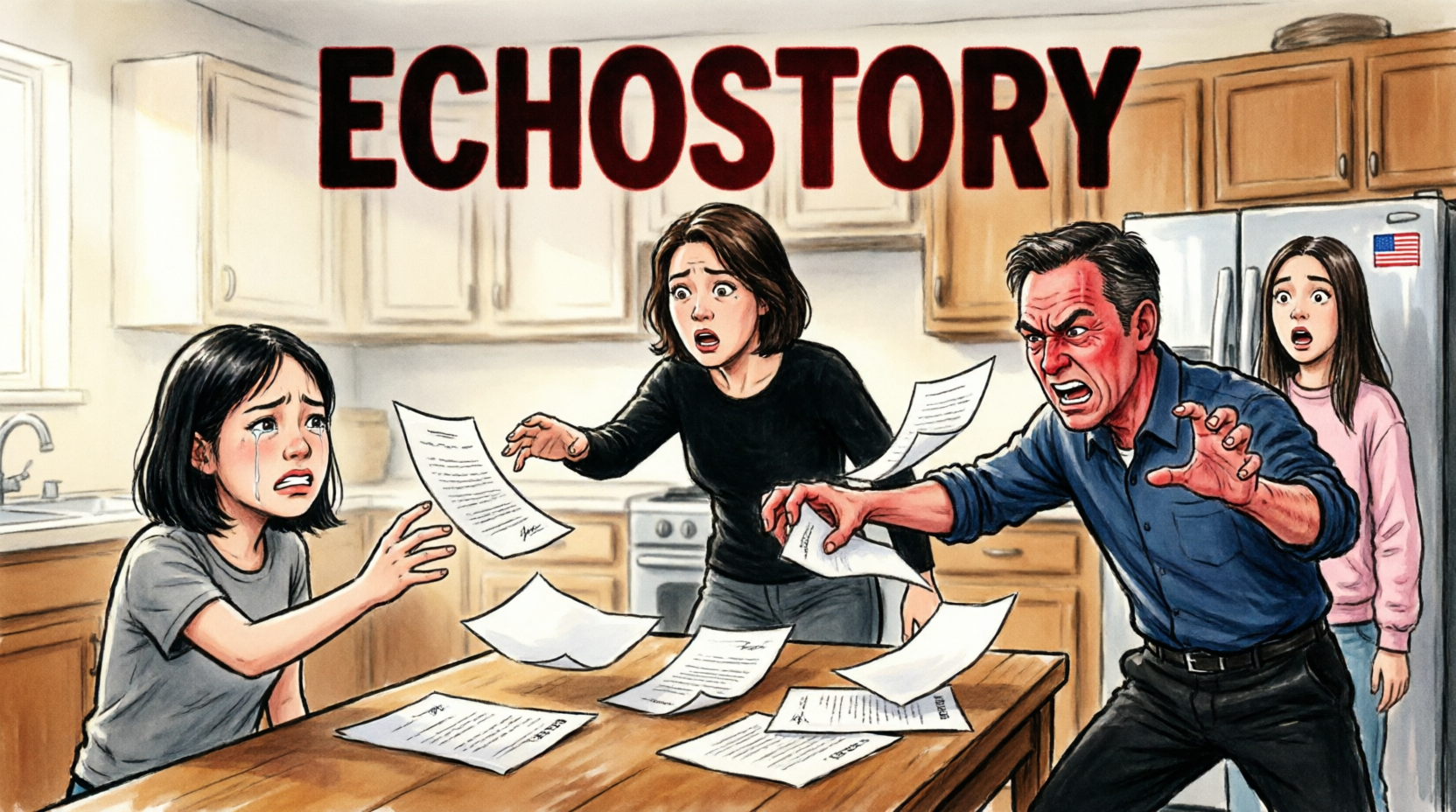
I nodded. “Okay, Dad,” I said. “Whatever you need.” Then I excused myself, walked upstairs to my bedroom, locked the door, opened my laptop, and did something I had been preparing to do for three months. I transferred my entire inheritance, nearly 2.3 million dollars in property, investments, and savings accounts my grandparents had left for me, into an irrevocable trust my parents did not know existed, could not access, and would discover the next morning when they tried to sell everything that had ever truly felt like home.
The next day, when my father and Uncle Marcus walked into the county recorder’s office with forged documents ready to sell the Pinewood Lake property to a development company, they learned the title had been locked under legal protection since midnight. My father’s face went white. Uncle Marcus, who had already signed a contract for $475,000, called his lawyer so loudly that the clerk behind the counter asked him to step outside.
But before I tell you what happened when they came home, you need to understand why I knew they would try.
You need to go back seven years, to a summer afternoon at Pinewood Lake, when my grandfather looked at me across a kitchen table he had built with his own hands and said something I did not understand until the night of my eighteenth birthday.
“Family isn’t always blood, Claire,” he told me. “Family is whoever shows up.”
I thought he was being sentimental.
He was not.
He was preparing me.
The summer I turned eleven, my grandfather Thomas Hartley picked me up in his old green Ford truck and drove me forty-three minutes out to Pinewood Lake. The cabin sat back from the water, surrounded by white oak trees so tall they blocked the worst of the afternoon sun and made the property feel like it belonged to another time entirely.
The porch sagged slightly on the left side. The screen door clicked without catching because the latch had been broken for as long as I could remember. Inside, the cabin smelled like wood smoke, old paperback books, cedar closets, and something faintly sweet that might have been pine sap warming in the window frames.
“Grab the other end,” Grandpa said, lifting a fence rail from the truck bed.
I grabbed it, and we spent the morning replacing rotted fence posts along the south edge of the property, the side that faced the hiking trail. He never rushed me. He showed me how to check wood for soft spots by pressing my thumb into the grain and feeling whether it gave.
“If it gives, it’s done,” he said. “You can’t trust it anymore.”
At eleven, I thought he was teaching me about fence posts.
Now I know he was teaching me about people.
Inside the cabin, my grandmother Eleanor had iced tea waiting and sandwiches on the kitchen table, the one Grandpa built the year they got married. She never asked what kind of sandwich I wanted because she already knew. Turkey, mustard, no tomato, extra pickles on the side.
Later, she sat with me on the porch while the lake turned from blue to silver beneath the moving sun. She read a paperback with a cracked spine, and I leaned against the porch railing, listening to cicadas and water lapping softly against the dock.
That evening, Grandpa wiped sawdust from his hands with a red shop rag and looked out across the property.
“This cabin stays in the family,” he said.
I nodded because that seemed obvious.
Then he added, “But family isn’t always blood, Claire. Family is whoever shows up.”
I did not understand the weight of it. I was a child. Family, to me, meant the people whose photos hung in the hallway and whose names appeared on Christmas cards. I had not yet learned that some people can share your blood and still circle what you love like buyers at an auction.
That whole summer, I returned to Pinewood Lake every weekend.
I learned where the water heater leaked, in the northeast corner of the basement near the old furnace. I learned which window stuck, the one in the second bedroom that needed to be hit with the heel of your hand before it would slide open. I learned how to bleed the bathroom radiator, check the chimney flue, winterize the pipes, and sweep pine needles off the roof because Grandpa said leaks always started in places you could not see from the ground.
In October, Grandma taught me to organize the bookshelves by color instead of author because she said it made the room feel warmer. Grandpa showed me the property markers, old iron stakes he had hammered into the ground forty years earlier, and walked me along the full perimeter, explaining where our land ended and state forest began.
I did not know then that he was already speaking to a lawyer about that property.
I did not know he was speaking about me.
Back home in Richmond, our house felt different. Not bad, exactly. Just colder in a way I had never known how to name. It was a three-bedroom house with a yard that needed mowing every summer, a two-car garage my father used as an office, and walls painted safe colors that made every room feel temporary.
Natalie, my younger sister, had the bigger bedroom with the bay window and walk-in closet. My parents had redecorated it the previous spring with pale purple walls, catalog furniture, and a vanity with round bulbs around the mirror. My room still had beige carpet from the previous owners and a bookshelf I had assembled myself from a kit.
At dinner one night, my father brought up the cabin.
“The place is just sitting there losing value,” Gregory Hartley said, cutting into his steak. “Property taxes alone are ridiculous. We should sell it and reinvest somewhere that actually appreciates.”
My mother nodded. “Your father understands real estate.”
I looked up from my plate. “Grandpa said the cabin stays in the family.”
My father laughed, not harshly, but dismissively enough to make my face warm.
“You were eleven, Claire. He was being nice. He didn’t mean it like that.”
The conversation moved on to Natalie’s dance recital. She had placed first in her division, and my mother had already ordered a trophy case. I had won the regional Science Olympiad two weeks earlier, and my certificate was still folded inside my backpack because nobody had asked.
After dinner, I cleared the plates like I always did.
On the kitchen counter, half hidden under the grocery list, I found a glossy business card.
Ridgeline Development Corporation. Premium lakefront acquisitions.
There was a phone number written in blue ink in the margin. I did not recognize the handwriting. It was not my father’s blocky print or my mother’s narrow script.
I put the card back exactly where I found it.
Upstairs, I sat on my bed and thought about Grandpa’s kitchen table, the one he had sanded smooth by hand, and Grandma placing my sandwich down without asking because love, real love, remembered small things. Then I thought about the business card downstairs and understood that someone had already started measuring my grandparents’ home in dollar signs.
Two years later, Grandpa died.
I was thirteen. The funeral was on a gray Tuesday in March, with damp grass, metal folding chairs, and a sky so low it felt like the clouds had come to watch us bury him. I sat in the second row holding his blue plaid handkerchief, the one that still smelled faintly like pipe tobacco even though he had quit before I was born.
At the reception afterward, in the church fellowship hall, I saw my father and Uncle Marcus standing near the dessert table. They were not eating. They were speaking in low voices, Marcus with a manila folder tucked under one arm while my father kept nodding.
I was close enough to hear one sentence.
Marcus said, “We should move on this before probate complicates things.”
They were talking about the cabin at my grandfather’s funeral.
I did not say anything. I was thirteen. I had no power, no legal voice, and no idea that Grandpa had already prepared for that exact moment.
Part 2….
Two more years passed.
I turned fifteen. Grandma Eleanor became sick in April and died in July, her body fading faster than her mind ever did. The last time I visited her in the hospital, she held my hand with a grip far stronger than anyone expected from someone so frail.
“The cabin is yours, Claire,” she whispered. “Don’t let them take it. Promise me you won’t let them take it.”
“I promise, Grandma,” I said. “I won’t let them take it.”
She squeezed my hand once, then closed her eyes.
After her funeral, another gray day with folding chairs and damp grass, my father sat at our kitchen table and told my mother, “Now we can finally sort out the property situation.”
He said it with relief.
Not grief.
Relief.
That same evening, Uncle Marcus called. I heard my father in the garage, pacing back and forth while his voice carried through the thin hallway wall.
“No, I agree,” he said. “Let’s get it moving. We’ve waited long enough.”
I stood outside the garage holding a glass of water, and something settled in my chest like a stone. My grandmother’s death was not a loss to them. It was a clearance sale. It was an opportunity they had been waiting to cash in.
I did not cry that night.
I made a different kind of decision, though I did not yet know how to act on it.
Between fifteen and almost eighteen, the cabin became my quiet rebellion. Every Saturday morning, I drove out to Pinewood Lake in the used Civic I had bought with money from my summer job at the library. I patched the porch screen, replaced weatherstripping on the back door, cleaned the gutters, and swept pine needles from the roof because Grandpa’s voice still lived in my head.
At home, the language changed.
The cabin stopped being Grandpa and Grandma’s place and became “the family asset.” My father said it at dinner like it had always been true. Marcus came by more often, sometimes with folders, sometimes with his laptop open to real estate comparison sites.
Once, I pushed back. “What about Grandma’s wishes? She wanted me to have the cabin.”
My mother set down her fork gently, the way she did before correcting me.
“Your grandmother was emotional at the end, sweetheart. This is a business decision. We have to be realistic.”
Business.
That was the word they used whenever they wanted to strip love out of something before selling it.
By the time I turned seventeen, my father became more direct.
“When you turn eighteen, we’ll figure this out as a family,” he said.
The way he said family, I knew he meant his way.
Then, one afternoon in November, I was alone at the cabin clearing out the hall closet because the door had started sticking. Behind a stack of old quilts, I found a sealed envelope with my name written on the front in Grandma’s handwriting.
Inside was a business card.
Margaret Brennan, Attorney at Law. Estate Planning and Trust Administration.
At the bottom, written in pencil, were four words.
Hartley Family Trust.
My hands shook, not from fear, but recognition. Grandma had left it where she knew I would find it, because she knew I would be the one cleaning closets, fixing doors, and showing up.
Not my father.
Not Marcus.
Me.
I slipped the card into my wallet. I did not call, not yet.
But three months before my eighteenth birthday, Margaret Brennan called me.
I was in my room working on calculus homework when my phone lit up with an unknown local number.
“Claire,” the woman said, “this is Margaret Brennan. I was your grandparents’ attorney. I need to speak with you before your birthday. There are things you need to know, and there isn’t much time. Can you meet me Saturday at my office downtown? Come alone.”
SAY “OK” IF YOU WANT TO READ THE FULL STORY — sending you lots of love ❤️👇 👇
My name is Claire Hartley and 3 days ago I turned 18. At my birthday party, surrounded by neighbors and family friends eating sheet cake in our living room, my father pulled me aside near the kitchen and whispered something that made my blood run cold. He said, “When this is over, you’re going to sign some papers for your Uncle Marcus.
Just a formality, nothing to worry about.” I smiled at him. I nodded. I said, “Okay, Dad. Whatever you need.” Then I excused myself, walked upstairs to my bedroom, locked the door, opened my laptop, and did something I’d been preparing to do for 3 months. I transferred my entire inheritance, nearly 2.3 million dollars in property, investments, and savings accounts into an irrevocable trust that my parents didn’t know existed, couldn’t access, and would discover the next morning when they tried to sell everything my grandparents had left me.
The next day, when my father and uncle walked into the county recorder’s office with forged documents ready to sell the lakefront property that had been in our family for 40 years, they learned that the title had been locked under legal protection since midnight. My father’s face went white. My uncle, who had already signed a contract with a development company for $475,000, called his lawyer.
Before I tell you what happened when they came home, I need to take you back 7 years to a summer afternoon at Pinewood Lake because that’s when my grandfather said something I didn’t understand until the night of my 18th birthday. That’s when he looked at me across a kitchen table he’d built with his own hands and said, “Family isn’t always blood, Claire.
Family is whoever shows up.” I thought he was being sentimental. I didn’t know he was preparing me. The summer I turned 11, my grandfather Thomas Hartley picked me up in his truck, the green Ford he’d been driving since before I was born, and we drove 43 minutes out to Pinewood Lake. The cabin sat back from the water, surrounded by white oak trees so tall they blocked the afternoon sun and made the whole property feel like it existed in a different time.
The porch side slightly on the left side. The screen door had a broken latch that clicked but didn’t catch. Inside it smelled like wood smoke and old paperback books and something sweet I could never quite identify, maybe the pine sap that stuck to the window sills or the cedar lining in the closets. “Grab the other end,” my grandfather said, lifting a fence rail from the bed of his truck.
I grabbed it. We spent that entire morning replacing rotted fence posts along the south edge of the property, the side that faced the hiking trail. He didn’t rush me. He showed me how to check wood for soft spots by pressing my thumb into the grain and feeling whether it gave. “If it gives, it’s done,” he said.
“You can’t trust it anymore.” Inside the cabin, my grandmother Eleanor had iced tea waiting and two sandwiches on the kitchen table, the one my grandfather had built the year they got married. She was reading on the porch when I came outside, and she patted the chair beside her without looking up from her book. We sat there together for maybe an hour, not talking, just watching the lake turn from blue to silver as the sun moved behind the trees.
“This cabin stays in the family,” my grandfather said that evening, wiping sawdust off his hands with a red shop rag. But family isn’t always blood, Claire. Family is whoever shows up.” I didn’t fully understand what he meant. I was 11. I thought he was being poetic, the way grandparents sometimes are when they’re talking about legacy and tradition.
He wasn’t being poetic. He was being precise. That whole summer I came back to Pinewood Lake every weekend. I learned where the water heater leaked, which was the northeast corner of the basement near the old furnace. I learned which window stuck, the one in the second bedroom that you had to hit with the heel of your hand before you could slide it open.
I learned how to bleed the radiator in the bathroom, how to check the chimney flue, how to winterize the pipes. In October, my grandmother taught me to organize the bookshelves by color instead of by author because she said it made the room feel warmer and more alive. My grandfather showed me the property line markers, old iron stakes he’d hammered into the ground himself 40 years earlier, and he walked me along the entire perimeter explaining where our land ended and state forest began.
I didn’t know then that my grandfather was already talking to a lawyer about exactly this property, about exactly me. Back home in Richmond, the air felt different. Our house was fine. Three bedrooms, a yard that needed mowing every week in summer, a two-car garage my father used as an office for his building supply business.
Fine. Not warm, just fine. My younger sister Natalie was nine, and she had the bigger bedroom, the one with the bay window and the walk-in closet. It had been redecorated the previous spring with pale purple walls and furniture from a catalog. My room still had the beige carpet from the previous owners and a bookshelf I’d assembled myself from a kit.
At dinner one night, my father brought up the cabin. “The place is just sitting there losing value,” Gregory said, cutting into his steak. “Property taxes alone are killing us. We should sell it and reinvest somewhere that actually appreciates.” My mother nodded. “That makes sense. Your father knows real estate.
” I said, “Grandpa told me the cabin stays in the family.” My father laughed, not a mean laugh, but worse, a dismissive one, the kind of laugh that tells you your opinion is charming but irrelevant. “You were 11, Claire. He was being nice. He didn’t mean it like that.” Nobody asked me anything else. The conversation moved on to Natalie’s dance recital.
She placed first in her division. “Very impressive.” My mother had already ordered the trophy case. I had won the regional Science Olympiad 2 weeks earlier. The certificate was still in my backpack. After dinner, I cleared the plates like I always did. On the kitchen counter, half hidden under the grocery list, I found a glossy business card.
Ridgeline Development Corporation. Premium lakefront acquisitions. There was a phone number written in blue ink in the margin. I didn’t recognize the handwriting. It wasn’t my father’s blocky print or my mother’s narrow script. I put the card back exactly where I’d found it. Upstairs I sat on my bed and thought about my grandfather’s kitchen table, the one he’d built by hand, the one where my grandmother sat my sandwich down without asking what I wanted because she already knew.
I thought about that business card downstairs. Someone was already measuring my grandparents’ home in dollar signs, calculating its value, planning its sale. I thought about that for a long time. My grandfather Thomas died 2 years later. I was 13. The funeral was on a Tuesday in March, gray sky, damp grass, metal folding chairs that sank into the lawn under our weight.
I sat in the second row holding his handkerchief, the blue plaid one that smelled faintly of pipe tobacco even though he’d quit smoking before I was born. At the reception afterward, in the fellowship hall of the church, I noticed my father and his brother Marcus standing by the dessert table, not eating, just talking in low voices.
Marcus had a Manila folder tucked under his arm. My father kept nodding. I was close enough to hear one sentence. Marcus said we should move on this before probate complicates things. They were talking about the cabin at my grandfather’s funeral. I didn’t say anything. I was 13. I had no power, no voice, and no idea that my grandfather had already accounted for this exact moment.
2 years passed. I turned 15. My grandmother Eleanor got sick in April and died in July. She held my hand the last time I visited her in the hospital, her grip surprisingly strong for someone so frail. “The cabin is yours, Claire,” she whispered. “Don’t let them take it. Promise me you won’t let them take it.” I promised.
“Grandma, I won’t let them take it.” She squeezed my hand once and closed her eyes. After her funeral, another gray day, same folding chairs, my father sat at our kitchen table and said to my mother, “Now we can finally sort out the property situation.” He said it with relief, like something heavy had been lifted off his shoulders.
That same evening, Marcus called. I could hear my father on the phone in the garage, pacing back and forth. He said, “No, I agree. Let’s get it moving. We’ve waited long enough.” His voice was lighter than it had been in weeks. I stood in the hallway holding a glass of water, and I realized something that settled in my chest like a stone.
My grandmother’s death wasn’t a loss to them. It was a clearance sale. It was an opportunity. I didn’t cry that night. I made a different kind of decision. I just didn’t know yet how to act on it. Between 15 and almost 18, the cabin became my quiet rebellion. Every Saturday morning, I drove out to Pinewood Lake in the used Civic I’d bought with money from my summer job at the library.
I patched the porch screen. I replaced the weatherstripping on the back door. I swept pine needles off the roof because my grandfather had taught me that’s where leaks start, in the places you can’t see from the ground. At home, the conversations shifted. The cabin stopped being Grandpa’s place and started being the family asset.
My father said this at dinner like it had always been true. Marcus showed up more often, every other Sunday, sometimes with folders, sometimes with his laptop open to real estate comparison sites. I tried once to push back. I said, “What about Grandma’s wishes? She wanted me to have the cabin.” My mother set down her fork gently, the way she does before correcting something.
“Your grandmother was emotional at the end, sweetheart. This is a business decision. We have to be realistic.” Business. That was the word they used for everything that used to be about love. By the time I turned 17, my father started being more direct about the timeline. “When you turn 18, we’ll figure this out as a family,” he said.
The way he said family, I knew it meant his way. One afternoon in November, I was alone at the cabin, clearing out the hall closet because the door had started sticking. Behind a stack of old quilts, I found a sealed envelope with my name written on the front in my grandmother’s handwriting. Inside was a single business card.
Margaret Brennan, attorney at law. Below her name in small print, it said estate planning and trust administration. At the very bottom, written in pencil, it said Hartley Family Trust. My hands shook, not from fear, but from recognition. My grandmother had left this here for me to find. She knew I would be the one cleaning closets.
She knew I would be the one who showed up. Not my father. Not Marcus. Me. I slipped the card into my wallet. I didn’t call, not yet. I wasn’t ready. But 3 months before my 18th birthday, Margaret Brennan called me. The call came on a Thursday evening in February. I was in my room working on calculus homework when my phone showed an unknown number with a local area code.
“Claire, this is Margaret Brennan. I was your grandparents’ attorney.” Her voice was steady and professional, like someone who had rehearsed this conversation. “I need to speak with you before your birthday. There are things you need to know, and there isn’t much time. Can you meet me Saturday at my office downtown? Come alone.
” I went alone. Margaret Brennan’s office was in a brick building on 4th Street, second floor, above an insurance agency. She was in her late 50s with silver hair and reading glasses on a chain around her neck. Her office was small and organized, and it smelled like old paper and coffee. She sat across from me and opened a folder.
“Your grandparents hired me 6 years ago,” she said. “They established an irrevocable trust. The cabin, the savings accounts, and an investment portfolio. Total value approximately $2.3 million. All of it is held in the trust. You are the sole beneficiary.” I felt the room tilt slightly. My grandparents had left me everything.
But they’d transferred it into the trust while they were still alive, which meant legally it never entered their estate. It couldn’t go through probate. “Your father and uncle have no legal claim to any of it.” She slid a document across the desk. It was a trust summary with my name on the second line. “The title to the cabin was recorded under the trust name at the county recorder’s office 6 years ago.
Your father doesn’t know that.” “Why didn’t they tell him?” I asked. Margaret paused. She took off her glasses. “Your grandfather said, and these are his exact words, ‘My sons will try to sell that cabin before the funeral flowers wilt.’” The room was very quiet. I stared at the paper with my name on it. “There’s something else,” Margaret said.
“Someone has been making inquiries at the county recorder’s office about the cabin’s title within the last 6 weeks. Someone is preparing to make a move.” I started paying attention after that meeting. Not obviously, just quietly. The next Sunday, Marcus came over for dinner. Afterward, he and my father disappeared into the garage.
The door was open just a crack. I stood in the hallway where I could hear them. Marcus said, “I already signed the purchase agreement with Ridgeline for 75, but we need clean title before closing.” My father said, “How do we get it clean?” Marcus said, “Quick claim deed. Dad’s gone, Mom’s gone. We’re the legal heirs.
We quick claim the property to ourselves, record it, and sell.” My father asked, “Is that legal?” Marcus said, “It’s a standard real estate transfer between heirs. Nobody’s going to question it. It happens all the time.” Then there was a pause. My father said quieter, “What about Claire?” My chest tightened. Marcus answered fast, like he’d already thought about it.
“She’s 17, Greg. She can’t do anything. And by the time she’s 18, the sale will be done, closed, finished. She’ll be upset for a while, but she’ll get over it. We’ll give her a cut, maybe 50 grand for college. She should be grateful.” I stepped back from the garage door. My hands were cold. Marcus had already signed a purchase agreement for $475,000 for a cabin he didn’t own on land held in a trust he didn’t know existed.
That night I sat on my bed and texted Margaret two words. “They’re accelerating.” Her reply came 3 minutes later. “I expected that. Come see me Saturday. We’ll prepare everything you need.” I closed my phone and stared at the ceiling. In the next room, Natalie was watching something on her laptop, laughing. Downstairs, my parents were loading the dishwasher, talking about weekend plans like nothing was happening.
And somewhere in Marcus’s folder, there was a contract that was already worthless. He just didn’t know it yet. Saturday at Margaret’s office, she laid out the timeline on a yellow legal pad, drawing lines between dates like a battle plan. “The cabin title is already under the trust,” she said. “If Marcus tries to file a quick claim deed, the county recorder should reject it because the chain of title won’t match.
The property hasn’t been in your grandparents’ personal names for 6 years. But if he submits additional documentation, like an affidavit of heirship or falsified death certificates, he could create what’s called a cloud on title. That won’t give him ownership, but it could tie the property up in litigation for a year or more, and meanwhile Ridgeline could sue him for failing to deliver.
You have to act first. You have to act on time.” She tapped the calendar. “The moment you turn 18, you become a legal adult. You can formally accept the role of successor beneficiary. Once you sign, I file something called a lis pendens, a public notice of legal interest, at the county recorder’s office first thing the next morning.
That freezes the title. Nobody can record anything against it.” I asked what I needed to do. She said, “Show up, sign one document, I’ll handle everything else.” I asked if I should tell my parents. Margaret took off her glasses and looked at me for a long moment. “Your grandfather specifically asked me to protect you, Claire, not to negotiate with them.
Those were his instructions.” I drove home. My father was in the kitchen, cheerful, humming while he made coffee. He said, “Hey, kiddo. Good news. I’m throwing you a birthday party, whole family, Saturday night. It’s a big one, 18.” He smiled. My mother smiled. Even Natalie clapped. I smiled, too. My father was planning my birthday party.
My uncle was planning to sell my grandmother’s cabin. And I was sitting at the kitchen table smiling because in 9 days, I was going to let them think everything was going exactly according to their plan. I want to be honest with you about something. Sitting in my room that night, knowing what was coming, was one of the hardest things I’ve ever done.
Part of me wanted to walk downstairs and just say it. Dad, I know what you’re planning. I know about Marcus and Ridgeline and the quick claim deed. But Margaret was right. If I tipped them off, they would find another way around it. They would accelerate harder. They would pressure me in ways I couldn’t predict.
I had to stay quiet. I had to wait. So, here’s what I want to ask you, and I really mean this. Have you ever had to stay silent to protect yourself, even when every part of you wanted to speak up? Have you ever had to pretend everything was fine while you were preparing for something that would change everything? Tell me in the comments because I read every single one, and I need to know I’m not the only person who’s been in that position.
5 days before my birthday, my mother sat down next to me on the couch. She was using her let’s have an adult conversation voice, soft, practiced, slightly rehearsed. “Now that you’re almost 18,” Diane said, “there are some family decisions we need to make together.” Together. The word landed wrong. She continued.
The cabin costs money to maintain, taxes, insurance, repairs. Your father’s business has been struggling, and if we sell, we could pay off debt and set up college funds for you and Natalie, both of you equal. I said Grandma wanted me to keep it. My mother’s expression shifted, a flash of impatience quickly smoothed over.
Your grandmother was very sentimental at the end, Claire, but sentiment doesn’t pay property taxes. My father walked in right on cue, like they’d planned this. I’ve already talked to a buyer, he said. Good price, fair deal, everyone benefits. Who’s the buyer? I asked. He blinked. A development company, Marcus knows them.
What company? A longer pause. Richline something. They’re reputable. They’ve done projects all over the state. I said think about it. My father patted my shoulder. That’s my girl. He walked away satisfied, like he’d just closed a negotiation. Later that night, Natalie knocked on my door. She was in pajamas, hair still wet from the shower.
She sat on the edge of my bed picking at a thread on the comforter. Mom and Dad keep talking about the cabin at night after I’m supposed to be asleep, she said. They sound different. Different how? I asked. Like they’re excited, but also nervous. Like they’re planning something big. She looked at me sideways.
Is something going on? I pulled the blanket over her feet. Don’t worry about it, Nat. She nodded, but she didn’t look convinced. I had said I’ll think about it. That wasn’t a yes. They knew it. Which is why they kept pushing. Three days before my birthday, Marcus showed up unannounced. He caught me in the driveway as I was coming back from the grocery store.
Casual clothes, big smile, leaning against his car like he just happened to be in the neighborhood. Marcus sold real estate for a living. Nothing he did was accidental. Hey, kiddo, he said. Got a minute? Just want to talk, uncle to niece. We sat on the front steps. He leaned forward, elbows on his knees, very sincere.
Here’s the thing, Claire. That lake lot, just the land alone, is worth 475. I can get us a deal with a buyer I trust. Fast close, clean paperwork, no hassles. And what do I get? I asked. 50,000 cash for college. I let the number hang in the air. 50 out of 475. Marcus smiled like I’d said something cute. You’re 18, Claire.
50 grand is a lot of money for someone your age. Most kids would jump at that. You could go anywhere, do anything. I asked whose name was on the deed. The smile froze for just a second, a flicker behind the eyes, a tiny adjustment, then it was back. Your grandparents, but they’re both gone now. Passes to your dad and me as next of kin. That’s how inheritance works.
That’s not how it works. I knew it. He should have known it. He sold houses for a living. But he was counting on me not knowing. I said I’ll think about it. Marcus stood up, brushed off his jeans. Don’t overthink this one, Claire. Opportunities like this don’t wait. You’ve got to move when the market’s right. He [snorts] drove away.
Before he even reached the end of the street, he was on his phone. I could see his mouth moving through the driver’s window. That night, I texted Margaret again. They’re pushing hard. She replied, “Stay the course. Three more days. Don’t let them see you react.” Three more days. I could do three more days. But let me tell you what I did the night before my birthday, because this is the part that still makes my hands shake when I think about it.
The night before I turned 18, I drove to the cabin alone. The road was quiet. Pinewood Lake sat flat and dark under a half moon, and the oak trees along the bank looked like cutouts against the sky. I parked in the gravel clearing my grandfather had leveled himself 20 years ago. I walked up the porch steps, the second one still creaked, and I sat in the chair next to the one that used to be his.
The air smelled like rain and pine resin. I checked my email. Margaret had sent the full document package. The acceptance of successor beneficiary form, the beneficiary designation confirmation, a one-page summary of trust terms, everything formatted, flagged with sticky note tabs, ready for my signature. At midnight, I would be 18.
At midnight, I could sign. And at 8:00 the next morning, Margaret would file the lis pendens and lock the title before Marcus and my father even woke up. I read each document twice. Then I closed my laptop and I listened to the lake. My grandfather used to sit right here and say, “Patience isn’t weakness, Claire. It’s timing.
” I always thought he was talking about fishing. He wasn’t. The tears came without warning. Not a collapse, not a breakdown, just a quiet overflow that I let happen. I cried because I wish this were different. I wish my father had been the kind of man who took me fishing at this lake instead of calculating its resale value.
I wish my mother had asked what I wanted instead of telling me what was practical. I wished I didn’t have to sign a legal document at midnight to protect myself from the people who were supposed to protect me. But wishes don’t hold up in court. Trust documents do. I wiped my face. I locked the cabin door. I drove home.
I lay down in bed and set my alarm for 11:45. In 6 hours, I would turn 18. In 7 hours, my family would find out the cabin was never theirs to take. 11:50 at night. My bedroom door was closed. The house was silent. My father and mother had gone to bed an hour ago. Natalie’s light went off at 10:00. I opened my laptop and connected to the video call.
Margaret appeared in her home office, reading glasses on, a desk lamp lighting a stack of papers beside her. Ready? She asked. Ready, I said. When the clock hits midnight, you are a legal adult in every sense that matters, she said. I’ll walk you through the signing now. We’ll backdate the timestamp to midnight exactly, and I’ll file everything first thing in the morning.
She went through it one more time, clear and precise. The acceptance of successor beneficiary form was a single page that confirmed I was formally receiving the trust my grandparents created. From that moment forward, every decision about the trust assets ran through me and Margaret as co-decision makers. She said, “First thing tomorrow morning, 8:00 a.m.
, I go to the county recorder’s office and file the lis pendens. That’s a public notice that there’s a legal interest pending on the property. Once it’s recorded, no one can sell, transfer, or encumber the title while it’s active.” I asked, “What if they’ve already filed something?” She said, “Then whatever they filed will be flagged.
The chain of title will show the trust recorded 6 years ago, not your father. Any conflicting document gets kicked back.” I looked at the signed paper in my hand. My name in ink. My grandparents’ names in print above mine. Margaret’s voice softened just slightly. This isn’t a trick, Claire. This is your grandfather’s last gift. You just had to be old enough to accept it.
The clock on my laptop read 12:03 a.m. I was 18. I was the legal beneficiary of the Hartley Family Irrevocable Trust. And downstairs, in the garage, in Marcus’s folder, the quick claim deed he’d prepared was already a dead document. He would find that out in about 9 hours. Now, I need to tell you what was happening across town at the exact same time, because I didn’t know this until later, until after everything fell apart and the county clerk told Margaret, and my father eventually admitted it during one of our harder conversations.
But here’s what happened that same night while I was signing my acceptance form. Marcus was at his kitchen table printing documents. A quick claim deed. A one-page form that transfers property rights from one party to another without any warranty of ownership. Legitimate when used correctly. Criminal when the person signing it has no rights to transfer.
He called my father at 11:30. Everything’s ready, he said. We file at 9:00. The recorder’s office opens at 8:00, but I want to make sure Claire’s distracted with birthday stuff first. My father asked, “Are you sure about this?” Marcus said, “They’re dead, Greg. We’re next of kin. It’s simple.” It wasn’t simple.
It was forgery dressed up in real estate language. Marcus also had a second document open on his laptop. A purchase agreement with Ridgeline Development. Purchase price $475,000. Closing date 30 days after the quick claim deed was recorded. If Marcus couldn’t deliver clean title within that window, he would owe Ridgeline a $47,000 penalty plus damages.
He’d signed that agreement 2 months earlier before my grandparents title had even been fully searched, before he’d verified the property was in the estate at all. He assumed it was. He assumed nobody had planned otherwise. Marcus had bet nearly half a million dollars on a piece of paper that didn’t belong to him.
He just didn’t know it yet. And in 9 hours, when he walked into the county recorder’s office with his quick claim deed and his confident handshake, he was going to find out that the entire chain of title told a different story. My birthday party started at 4:00 in the afternoon. The living room was full. Maybe 25 people.
Neighbors, some of my parents’ friends from church, two of my father’s old business contacts, Natalie’s best friend’s family. Rose Kimball from the property next to the cabin was there, too, sitting near the window with a glass of lemonade and sharp, watchful eyes. There were balloons, a banner that said happy 18th in silver letters, a sheet cake from the bakery on Main Street.
I smiled. I thanked everyone. I opened small gifts. A journal, a gift card, a picture frame. In my jacket pocket, folded into a neat square, was the signed acceptance form for midnight. I didn’t touch it. I didn’t need to. It was already done. My father stood up near the cake table and tapped his glass with a fork.
The room went quiet. “I just want to say Claire is officially an adult today,” he said. “Diane and I are so proud of her.” He paused, looking around the room. “And as a family, we have some exciting plans for the future.” He looked at me and smiled. Every face in the room turned toward me. “Thanks, Dad,” I said.
Nothing more. My father waited a beat, then laughed it off and raised his glass. The room followed. Conversation resumed. From the corner of my eye, I saw Marcus by the front door checking his phone, typing something fast with both thumbs. Rose caught my arm as I passed by the window. She leaned in close, smelling like lavender hand cream.
“Your grandmother would want you to know something,” she said quietly. “I saw your uncle at the cabin last week with two men in suits. They were walking the lot line with a measuring tape. Marcus brought the buyers to the property before he even had the title. That’s how confident he was.” After the cake was cut and the plates were passed around, my father stood again.
This time his voice was louder, more deliberate, the voice of a man who’s been waiting for an audience. “Before we wrap up, I want to share something with everyone,” he said. He put his hand on my mother’s shoulder. “Our family has been going through a tough time financially. Some of you know about the business.
It’s been hard.” Sympathetic murmurs from the neighbors. “But Thomas and Eleanor, my parents, they left us something. The cabin out at Pinewood Lake. And as a family, we’ve decided to sell it to secure everyone’s future.” I felt the words land on my skin like cold water. He was announcing it in front of 25 people like it was settled.
He looked right at me. “Claire understands,” he said. “She knows this is what’s best for all of us. Sweetheart?” The room waited. Every eye found me. Neighbors who’d known me since I was small. Rose with her lemonade. Natalie half hidden behind the couch. My mother added, smiling, “It’s what responsible families do.
We sacrifice for each other.” I set my fork on my plate. The sound was the only noise in the room. “I never agreed to sell the cabin, Dad.” My father’s smile stayed fixed, but the muscles around his jaw tightened. “She’s kidding,” he said, “birthday nerves.” “I’m not kidding.” Marcus stepped forward from the doorway. “Come on, Claire.
This isn’t the time or place.” I picked up my glass of water, took a slow sip, and set it down. “You’re right, Uncle Marcus. This isn’t the time.” I held his gaze. “The time is 8:00 a.m. tomorrow morning.” Silence. Marcus’s phone buzzed in his pocket. He didn’t check it. No one in the room moved. The guests started leaving after that.
Polite goodbyes, tight smiles, the kind of exit people make when they can feel a storm building inside someone else’s house. Within 30 minutes, the living room was down to family. My father, my mother, Marcus, Natalie, me. My father closed the kitchen door. The fluorescent light buzzed overhead. He pulled out a chair, sat down, folded his hands on the table like a man about to deliver terms.
“Here’s what’s going to happen, Claire,” he said. His voice was low and deliberate. “Tomorrow morning, Marcus and I go to the county office. We file the paperwork. The cabin sells. You get your share, a fair share, and we move on as a family.” “What’s my share?” I asked. “50,000.” “Out of how much?” My father didn’t answer.
Marcus, leaning against the doorframe, filled the gap. “Don’t make this harder than it needs to be.” I looked at my father. “And if I say no?” His jaw set. “If you fight this, you’re on your own. No more help with college. No more living under this roof.” The kitchen was very quiet. The faucet dripped once. “You’re threatening to kick me out on my 18th birthday,” I said.
My father leaned forward. “I’m asking you to be part of this family.” I pushed back from the table. Stood up. My voice was steady even though my hands weren’t. “I am part of this family, Dad. I’m the part that keeps promises.” I walked past Marcus, past Natalie, who was sitting on the stairs with her knees pulled to her chest, and I went upstairs.
I closed my door. I sat on the bed and breathed. My father thought his deadline was 9:00 a.m. at the county recorder’s office. He didn’t know Margaret’s deadline was 8:00. Let me tell you what it felt like sitting on my bed that night holding the acceptance form I’d already signed at midnight. My father had just threatened to kick me out of my own family if I didn’t hand over a cabin that was legally mine.
My mother said I didn’t love them. My uncle was planning to file a forged deed first thing in the morning. And all I could think was my grandmother was right. She knew exactly who they would become when money was on the table. She planned for it years before it happened. If someone you loved ever prepared something to protect you even after they were gone, I want to hear about it.
Tell me in the comments, because that’s what kept me strong that night. Knowing my grandparents saw this coming. Knowing they loved me enough to build a wall I could stand behind. At 8:00 a.m., the county recorder’s office opened. The fluorescent lights flickered on. A clerk in a blue cardigan unlocked the front counter.
Margaret Brennan was the first person through the door. She was wearing a gray blazer and carrying a leather folder. She approached the counter and presented two documents. A certified copy of the Hartley Family Irrevocable Trust and a Lis Pendens notice. She asked for them to be recorded against the Pinewood Lake property.
The clerk reviewed the paperwork, checked the existing title records, stamped it recorded. Done. From that moment forward, anyone who pulled the title on the cabin would see notice of pending legal interest. Hartley Family Irrevocable Trust. Margaret Brennan, trustee. Claire Hartley, beneficiary. At 8:14, Margaret called me.
“It’s done,” she said. “The Lis Pendens is recorded. The property is flagged. Whatever they bring in will be rejected on chain of title grounds.” I was sitting at the kitchen table eating cereal. My father was upstairs getting dressed. My mother was making coffee. Normal morning sounds. Water running. A closet door.
The clink of a belt buckle. At 8:30, my father and Marcus came downstairs together. My father was wearing a button-down shirt, his business shirt, the one he wore to meetings when the store was still doing well. Marcus had a folder tucked under his arm. Same folder as always. “We’ll be back by lunch,” my father said, grabbing his keys.
I looked up from my bowl. “Good luck,” I said. My father paused in the doorway and looked at me. Something in my voice, maybe, or something in my face. Then he turned and walked out. I rinsed my cereal bowl, dried it, set it in the cabinet, and I waited. I’ll never know exactly what their faces looked like, but I know what happened because Margaret stayed at the recorder’s office on purpose.
She wanted to see it. 9:05 a.m. Marcus approached the counter. He slid the quick claim deed across with a confident nod. My father stood behind him, hands in his pockets, looking around the room like they’d be in and out in 10 minutes. The clerk took the document, typed the parcel number into the system, read the screen, typed again, then stopped.
I can’t record this document, sir. Marcus leaned forward. Excuse me? The property title is held under the Hartley Family Irrevocable Trust, she said. It was recorded in 2017. There’s also a lis pendens filed this morning. That’s impossible, Marcus said. My parents own that property. The clerk glanced between them.
Sir, the deed was transferred to the trust 6 years ago. The chain of title is clear. This quick claim doesn’t match the current ownership record. My father stepped up beside Marcus. There’s no trust, he said. Our parents never mentioned a trust. The clerk said, “I’d recommend you speak with the trustee listed on the filing.
Margaret Brennan.” Marcus’s hand went flat on the counter. His face drained. Margaret’s name, the name on the business card they’d found in my bag last week, was now on a public record they couldn’t erase. My father turned to Marcus slowly. You said this was simple. I didn’t know about any trust, Marcus said. You’re a real estate agent, Wade, my father said.
How did you not check the title first? Marcus opened his mouth, closed it, opened it again. The clerk said evenly, “Gentlemen, I’ll need you to step aside if there’s a disagreement.” Margaret, seated in the waiting area near the door, watched them leave. She didn’t say a word. She didn’t need to. The call came at 9:22.
I was sitting on the porch watching the neighbor’s sprinkler arc back and forth across the lawn. What did you do? My father’s voice was tight, shaking. I could hear traffic behind him. He was in the parking lot. I accepted what grandpa and grandma left me, I said. That’s all. You went behind our backs with some lawyer we’ve never heard of.
Margaret Brennan has been the trust attorney for 6 years, Dad. You just never asked. A beat of silence. Heavy breathing. This is my parents’ property, Iris. I’m their son. They chose to leave it to me. I kept my voice even. Not because they didn’t love you, but because they didn’t trust you with it. The silence that followed was the longest of my life.
I counted the sprinkler rotations. Three full arcs before he spoke again. We’ll fight this. You can try, I said, but the trust is irrevocable. That means even I can’t dissolve it. There’s nothing for anyone to undo. You don’t know what you’re talking about. I do, Dad. I’ve had 3 months to learn. He hung up. No goodbye.
Just a click and dead air. I set the phone on the porch railing. My hands were shaking. Not from anger, not from fear, from the weight of saying those words to my own father. From knowing that the man who taught me to ride a bike when I was 6 was the same man who just tried to sell my grandmother’s home out from under me.
I sat there until the shaking stopped. It took a while. Then my phone buzzed again. An unfamiliar number. A man’s voice, brisk and corporate. Miss Hartley, this is Carter Briggs from Ridgeline Development. We need to talk. Carter Briggs spoke the way developers do. Fast, factual, already calculating his next move before the current sentence ends.
We have a purchase agreement with Marcus Hartley for the Pinewood Lake property. He guaranteed clean title. We’ve just been informed there’s a lis pendens on the parcel. That’s correct, I said. Can you explain the situation, Mr. Briggs? My uncle does not own that property, I said. He never did. The cabin and the land have been held in an irrevocable trust since 2017.
I’m the sole beneficiary. A pause. The sound of papers shifting. He represented himself as the heir. I understand, I said, but representation doesn’t create ownership. I’d recommend you discuss this with him and possibly with your own attorney. Another pause, longer this time. Miss Hartley, is there any possibility of a sale? We’d be prepared to make a competitive offer directly to the trust.
The property is not for sale. Understood, he said. His voice hardened slightly. Then we’ll be pursuing our remedies against Mr. Hartley. I gave him Margaret’s number. Within the hour, Margaret confirmed to Ridgeline’s legal team what I’d already told Carter. The trust was valid. Marcus had no authority. The purchase agreement was executed based on misrepresentation of ownership.
Ridgeline’s response was immediate. They were pursuing Marcus for breach of contract, the $47,000 penalty clause, plus damages. That afternoon, Margaret called with one more piece of information. Her voice was careful, but direct. Claire, the quick claim deed Marcus tried to file, it included a notary stamp. I had the recorder’s office pull a copy before they rejected it.
The stamp doesn’t match any registered notary in the county. It appears to be forged. I closed my eyes. That’s a felony, isn’t it? In this state, yes. My uncle didn’t just try to steal my cabin. He committed a crime to do it. My father came home at 2:00 in the afternoon. He moved through the front door like a man carrying something invisible and very heavy.
My mother was already in the kitchen, arms crossed, face blotched from what I guessed was an hour of angry crying. I was at the dining table. I didn’t get up. My father sat down across from me. He stared at the table for a long time. I’m going to lose this house, Claire. His voice was flat, emptied out. The bank is on me for 190,000.
The store is gone. That cabin was supposed to be our way out. I know you’re struggling, Dad. I’m sorry about the business. Then help us. The cabin was never your way out. It was grandpa and grandma’s gift to me. A gift? He almost laughed. For what? You’re 18. What does an 18-year-old need with a lakefront cabin? It’s not about what I need.
It’s about what they wanted. My mother stepped in from the kitchen doorway. They were old, Claire. They weren’t thinking clearly at the end. They were thinking clearly enough to hire a lawyer 6 years before they died. My father slammed his palm on the table. I’ll contest the trust. A voice came through my phone.
I’d called Margaret before my father walked in and left the line open on speaker. Not to trap him, to save time. Mr. Hartley, Margaret’s voice was steady and professional. Contesting an irrevocable trust that was established 6 years before the grantors’ deaths, with full legal capacity documented and witnessed, will cost you more in legal fees than the property is worth.
I’d strongly advise against it. The kitchen was silent. The faucet dripped. My father looked at me. Really looked. And for the first time I saw something I’d never seen in my father’s eyes before. Not anger. Recognition. Over the next 3 weeks, the consequences fell like dominoes, and each one made a sound. Ridgeline Development filed a civil suit against Marcus Hartley.
Breach of contract, misrepresentation of title, demand for the $47,000 penalty, plus an additional 63,000 in damages and legal costs. Their attorney sent the complaint by certified mail to Marcus’s apartment. He signed for it on a Tuesday. The county district attorney’s office received a referral from the recorder’s office regarding the forged notary stamp.
An investigator was assigned. Marcus’s real estate license was suspended pending the outcome, which meant his income, such as it was, stopped. Word travels in a small town. Not because I said anything. I didn’t. But court filings are public record and Ridgeline’s lawsuit named the Pinewood Lake property by parcel number.
The neighbors at the lake read the local paper. They talked. By the second week, the story had made its way through the Rotary Club, the church parking lot, the checkout line at the grocery store. Marcus called me once. I answered. Claire, please, can you ask your lawyer to drop the lis pendens? If the title is cleared, I might negotiate something with Ridgeline, reduce the penalty.
The lis pendens protects my property, Uncle Marcus. It stays. Your grandparents would be ashamed of you. I let the sentence sit for a moment. Then I said quietly, “My grandparents are the ones who set this up. They chose this. They chose me. So, I don’t think shame is what they’d feel.” He hung up. My father didn’t contest the trust.
Margaret was right. The legal fees alone would bury him and the case would go nowhere. An irrevocable trust established by mentally competent grantors, witnessed, notarized properly, recorded years before their deaths is about as airtight as state law gets. Instead, my father did what he should have done 2 years ago.
He sold the building supply store at a loss, but enough to negotiate a repayment plan with the bank. The house stayed, barely. The savings didn’t. My mother went back to work for the first time in a decade. She took a position in a pharmacy on Lincoln Avenue, the same chain where she’d worked before Natalie was born.
She didn’t talk about it much. When neighbors asked, she said she wanted to stay busy. Nobody believed that, but nobody pushed. The town knew. Not every detail, but enough. Thomas Hartley’s sons tried to sell his cabin and the granddaughter stopped them. That’s the version that circulated. Some people thought I was brave.
Some people thought I was cold. I didn’t correct either group. My father and I didn’t speak for 2 weeks after that morning. The house was quiet in a way that felt permanent, like the silence had weight. Rose Kimball brought me pie one afternoon. Apple, still warm. “Your parents made their choices,” she said, setting the tin on the porch railing.
“But they’re still your parents. Don’t carry their shame. That’s theirs.” I nodded. Then Natalie called one evening. She was at a friend’s house. Voice small. “Claire?” “Yeah.” “I don’t understand everything that happened, but I’m sorry they put you through this.” My throat tightened. “Thanks, Nat.” “Are you okay?” “I’m getting there.
” I drove to the cabin on a Saturday morning in late April. The dogwoods along the lake road were blooming, white and pale pink against the dark water. I unlocked the front door with the same key my grandfather gave me when I was 14. “In case you ever need to get in when we’re not here,” he’d said. I didn’t know then that he meant permanently.
The cabin smelled the same. Pine and old books and that sweet faint something I’d never been able to name. I think now it might be the wood itself. Decades of sun and rain soaked into the walls. I walked through every room. The kitchen table my grandfather built, still solid, still level. My grandmother’s bookshelves organized by color.
The bedroom where she read to me when I was small. The porch where my grandfather and I watched the lake turn gold. In the desk drawer by the window, I found an envelope. My name on the front in my grandfather’s handwriting. Margaret told me it would be there. She’d been saving it for after the trust was settled.
I opened it carefully. It was a letter, one page, written in blue ink. His handwriting getting looser toward the bottom, the way it always did when he was tired. He told me he knew his sons would try to sell the cabin. He didn’t blame them. Gregory was his boy and he loved him. But Gregory never understood the difference between something that has value and something that’s valuable.
He said he chose me not because I was perfect, but because I was the one who asked whether the roof needed patching before I ever asked what the place was worth. The last line said, “Take care of it. It took care of you first.” I folded the letter. I sat on the porch. I breathed. Margaret called me the following week.
“Good news,” she said. “The lis pendens can be withdrawn now that there’s no active threat to the title. Once it’s cleared, the property record will show the trust as sole owner. Clean, no encumbrances, no clouds.” “And Marcus?” “He settled with Ridgeline, paid the $47,000 penalty out of a personal loan. The deal is dead.
As for the forged notary stamp, the district attorney’s office is reviewing the case. He could face a misdemeanor charge, possibly a felony, depending on how the investigation goes. And his license is suspended indefinitely. He can petition for reinstatement, but not while there’s an active criminal referral.
” I sat with that for a moment. I didn’t feel satisfaction. I felt the kind of exhaustion that comes after a long illness. Not sick anymore, but not quite well, either. “There’s one more thing,” Margaret said. “In the trust documents, your grandparents designated a separate educational fund. $50,000 earmarked specifically for your college expenses.
It’s been accruing interest for 6 years. The current balance is just over 61,000.” My eyes stung. $50,000. The same number my father offered me as my share of the sale. The same number Marcus dangled like a bribe. My grandparents had already set it aside, quietly, without telling anyone. “Claire, are you there?” “Yeah,” I said.
My voice cracked just barely. “I’m here.” “Your grandparents would be proud.” “I just kept a promise, Margaret.” I enrolled at Ridgemont Community College that week. Environmental science with a minor in forestry. The campus was 22 minutes from the cabin, closer than my parents’ house. I filled out the housing forms.
Under current address, I wrote the cabin’s address for the first time. It felt like coming home because it was. I asked my father and mother to meet me at the coffee shop on Birch Street. Neutral ground. Not the house, not the cabin, somewhere public, somewhere calm. They arrived together. My father was wearing a flannel I hadn’t seen in years, one of my grandfather’s.
My mother had her purse clutched tight against her side, the way she holds things when she’s nervous. We ordered. I waited until the cups were on the table. “I love you,” I said. “Both of you. I need you to know that because what I’m about to say might not sound like it.” My mother’s jaw tightened, but she nodded.
“The cabin is not for sale. Not now. Not ever. I won’t be made to feel guilty for keeping a promise I made to Grandma, a promise she trusted me to keep because she didn’t think anyone else would.” My father stared into his coffee. “I’m not cutting you out of my life,” I continued. “But if we’re going to have a relationship, it has to be built on respect.
Not on what I can give you financially. Not on guilt. Not on the idea that I owe you something because you’re my parents.” My mother started to speak. “We just wanted what was best for Then start by being honest about what happened,” I said. “You tried to sell something that wasn’t yours. You threatened to kick me out.
You went through my bag.” She closed her mouth. My father still hadn’t looked up. When he finally spoke, his voice was rough. “I don’t know how to fix this.” “You don’t have to fix it today,” I said. I stood. I left enough cash for all three coffees. “I’ll call you Sunday.” He nodded. One small nod. I walked out into the sunlight.
It’s the most I can hope for right now. And that’s enough. Natalie showed up at the cabin on a Sunday afternoon in May. She was carrying a pizza box and wearing the same oversized hoodie she’d had since eighth grade. “I brought lunch,” she said. “Hope you like pepperoni.” “Always.” We sat on the porch with paper plates on our laps and the pizza box between us.
The lake was still. A heron stood in the shallows near the dock, perfectly motionless, waiting for something below the surface. Natalie ate slowly. She wasn’t here for pizza. “I didn’t know about any of it,” she said finally. “Mom and Dad never told me. I know. Was I part of the problem? I looked at her. 15, thin-shouldered, still growing into whoever she’ll become.
She didn’t choose any of this. She didn’t ask to be the favorite. She didn’t know the attention they gave her was taken from somewhere else. You were a kid, Nat. We both were. She nodded. Pulled a piece of cheese off her slice and set it on the edge of her plate. It’s really beautiful here, she said, looking out at the water.
Grandma used to say the same thing every single time she sat in that chair. Natalie glanced at the empty chair next to mine. Grandpa’s chair, the one with the armrest he sanded smooth. Can I come back sometimes? Anytime. She leaned her head against my shoulder just for a moment. Then she sat up and took another bite.
We didn’t talk about our parents. We didn’t talk about trusts or lawsuits or forged documents. We talked about her school project, about the heron, about whether the dock needs new planks this summer. The cabin didn’t just protect property. It made space for something new to start. Early June, 6:00 in the morning.
I’m on the porch with a cup of coffee watching the mist lift off Pinewood Lake. The oaks are sharp against a pale sky. A loon calls somewhere out on the water. Two long notes, then silence. I didn’t win against my family. There’s no winning when the people who hurt you are the people who are supposed to protect you.
You don’t get a trophy for surviving something that should never have happened in the first place. But I kept a promise. And for the first time in my life, I’m standing somewhere that belongs to me. Not because I fought for it, but because two people loved me enough to plan for exactly this. They saw the storm before I did.
They built the shelter before I knew I’d need one. My grandparents couldn’t stop my parents from being who they are. They couldn’t make my father less desperate or my mother less afraid. They couldn’t keep Marcus from chasing money that wasn’t his. But they could make sure I had ground to stand on. Literally. I think about the letter in the drawer, about my grandfather’s words.
The difference between something that has value and something that’s valuable. This cabin has both, but only one of them can be measured, and my family spent 2 years focused on the wrong one. I sip my coffee. The mist clears. The lake turns blue. If you’re listening to this and you feel like nobody’s in your corner, I want you to hear me.
Sometimes the people who protect you aren’t the ones standing in front of you. Sometimes they plan for you years ago, quietly, without telling anyone. And sometimes all you have to do is show up, sign the paper, and keep the promise. Peace doesn’t come from revenge. It comes from standing on something solid and knowing you build your life on it.
That’s my story. If it made you feel something, anger, relief, hope, or even just a little less alone, then it did what I hoped it would. Now, I have a question for you. If you could protect one thing in your life, a place, a person, a promise, what would it be? Tell me in the comments. I read everyone. And if this story stayed with you, share it with someone who needs to hear it.