The last time I saw Marissa, it was raining. Not dramatic movie rain. Just a cold, steady drizzle that made the grocery store parking lot shine under the lights. I was loading bags into my trunk while Nora sat in the car arranging a new pack of colored pencils by shade because order soothed her. “Emily.” I knew her voice before I turned. Marissa stood three spaces away, thinner than before, hair pulled back, call center badge still clipped to her jacket. She held no box, no boyfriend’s hand, no excuse I could see. My body still tightened. That told me enough.
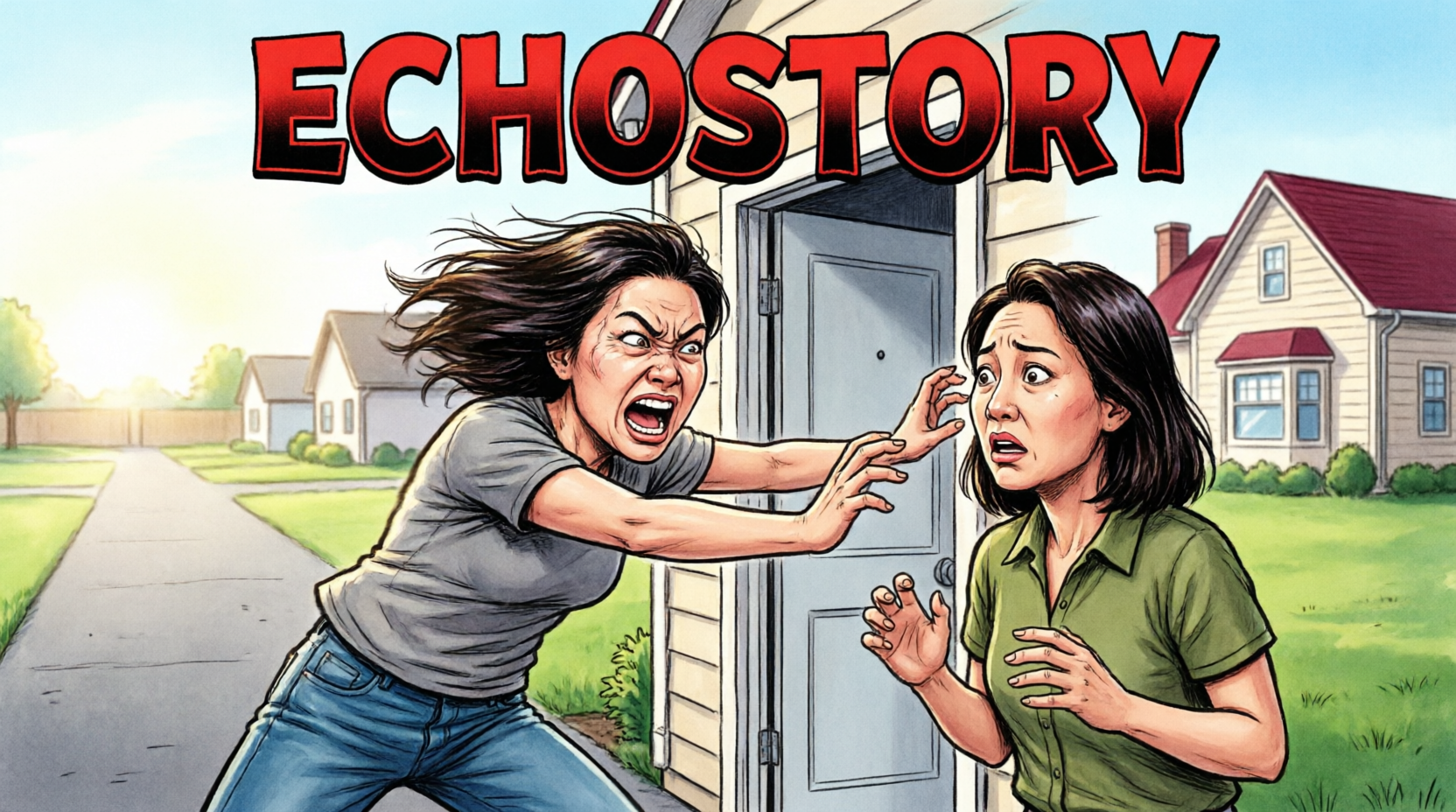
“Marissa,” I said.
She glanced toward the car. “Is Nora there?”
“Yes.”
“I won’t go near her.”
“Good.”
Rain dotted her face. She wiped it away, then laughed once without humor. “You look like you’re ready to call the cops.”
“I’m ready to protect my peace.”
She nodded slowly. “I deserved that.”
I waited.
Old Emily would have filled the silence for her. Made it easier. Offered a bridge.
New Emily let her stand on her own side of the water.
“I’m paying the restitution,” she said.
“I know.”
“Dad told me you sold the Corolla.”
“Yes.”
Her mouth twisted, but she swallowed whatever came up. “Probably smart.”
Another silence.
“I broke up with Paul.”
I did not react.
“He was using me,” she said.
I kept my face still.
She smiled sadly. “Yeah. I know. Rich coming from me.”
A car rolled past, tires hissing through puddles.
Marissa looked toward Nora’s window but did not step closer. “How is Jason?”
“You should ask Mom and Dad.”
“He doesn’t want to talk to me much.”
“He’s hurt.”
Her eyes filled. “I know.”
I believed that she did know.
That did not change my answer to the question she had not asked yet.
“I’m not here to ask for money or the car or anything,” she said. “I just wanted to tell you I started counseling. Court-ordered at first, but I kept going.”
“That’s good.”
“I’m trying to understand why I do this. Why I take and take and then act offended when people notice.”
The honesty sat between us, fragile but real.
“I hope you figure it out,” I said.
Her face crumpled a little.
“Do you think someday…” She stopped.
“No,” I said gently.
She looked down.
“I’m glad you’re getting help,” I continued. “I hope you become someone Jason can trust. I hope you build a life that doesn’t depend on draining other people. But you and I are not going back.”
Tears slipped down her cheeks, blending with rain.
“Ever?”
“I don’t know what twenty years from now looks like. But I know now. And now, the answer is no.”
She nodded, crying silently.
“I miss you,” she whispered.
For a moment, I saw us as girls.
Sharing a bedroom. Whispering after lights out. Marissa teaching me how to curl my hair with a straightener. Me helping her study because she always waited until the night before. The old love flickered, not dead exactly, but far away, behind glass.
“I miss who I thought we were,” I said.
That was the truest thing I had.
She covered her mouth.
Then she stepped back.
“Tell Nora…” She stopped herself. “No. Don’t. That’s not fair.”
I nodded once.
“Goodbye, Marissa.”
“Bye, Em.”
I got into the car.
Nora looked up from her pencils. “Was that Aunt Marissa?”
“Yes.”
“What did she want?”
“To say she’s trying to get better.”
Nora considered that while rain tapped the roof.
“Are we going to see her?”
“No.”
She nodded, then went back to sorting pencils.
No relief. No grief. Just acceptance.
Children adapt to the shape of safety when adults finally stop making them hug harm.
By spring, Jason had moved back with Marissa part-time under rules my parents helped enforce. Counseling continued. Restitution continued. His relationship with Nora stayed limited and supervised, not because I hated him, but because trust grows at the speed of proof, not apology.
Sometimes he came to Mom and Dad’s Sunday dinners.
Sometimes we did.
Sometimes Nora said yes.
Sometimes she said no.
Every answer was respected.
That became the real happy ending: not everyone holding hands around a table pretending hurt had evaporated, but a family finally learning that access could be earned, paused, or denied.
Nora kept drawing.
Her fox in armor became a whole series. The fox gained friends: a rabbit with a shield, a crow with a lantern, a bear who carried maps. Her art teacher entered one piece in a youth showcase downtown. Nora wore a blue dress and her old sneakers to the opening. My parents came. Jason came with Dad and stood quietly near the back.
The drawing showed the fox standing in front of a small house while a storm broke around it. In the window, a rabbit painted stars on the walls.
The title card read: The Guard Who Learned Home Was Worth Defending.
I read it and had to step into the hallway for a minute.
Nora found me there.
“Are you crying?”
“No.”
“Your face is wet.”
“Humidity.”
She rolled her eyes.
I hugged her, and she let me.
Later, Jason approached her near the snack table.
“I liked your fox,” he said.
“Thanks.”
“It’s better than anything I can draw.”
Nora tilted her head. “You could practice.”
He smiled a little. “Maybe.”
That was it.
No grand reconciliation. No instant cousin friendship. Just two kids standing near cookies and lemonade, one learning not to cut others down, the other learning she did not have to make herself smaller to be safe.
On the drive home, Nora leaned her head against the window.
“Mom?”
“Yeah?”
“Thank you for taking the car back.”
I glanced at her.
She was watching the city lights smear across the glass.
“It wasn’t really about the car, was it?” she asked.
“No,” I said. “It wasn’t.”
She nodded.
“I think it was about you remembering you could say no.”
My throat tightened.
From the back seat, her framed drawing rattled softly against the cardboard box around it.
“Yes,” I said. “I think you’re right.”
Part 12
Two years after the Amazon email, I bought Nora a real drafting table.
Not a cheap folding desk. Not a wobbly craft table from a clearance aisle. A solid wooden drafting table with an adjustable top, side drawers, and a small brass lamp that made her room glow like an artist’s studio at sunset.
She cried when she saw it.
Then she pretended she wasn’t crying because she was twelve now and had a reputation to maintain with exactly no one.
“Mom,” she whispered, running her fingers over the smooth edge. “This is too much.”
“No,” I said. “It’s exactly enough.”
Her room had changed since those days when she erased drawings until the paper tore. The walls were covered now: foxes, dragons, city skylines, portraits of Mrs. Chen’s cat, a watercolor of my parents’ backyard, and one surprisingly emotional sketch of a waffle. She had won two local art contests and started selling greeting cards at a small craft fair, where she carefully labeled prices in pencil and nearly fainted when a stranger bought four.
She was still sensitive.
Thank God.
The world had tried to make that sound like weakness. Jason had mocked it. Marissa had dismissed it. Even I, for too long, had treated Nora’s quietness like something I needed to toughen instead of protect.
Now I knew better.
Sensitivity was how she saw colors other people missed. How she noticed when someone’s smile was fake. How she drew sadness without making it ugly. How she knew, before I did, that our family peace had been built on her silence.
My life was quieter too.
I had a new Amazon account, a locked-down credit card, separate streaming passwords, and a deep spiritual commitment to two-factor authentication. The Corolla was long gone. In its place, my garage held storage bins, Nora’s old school projects, and a used treadmill I kept promising to use.
Marissa kept paying restitution.
Not perfectly, but consistently enough that the court stopped sending warning notices. She stayed in counseling. She worked. She found a small apartment across town. Mom said she had not dated anyone in a year, which was presented like evidence of emotional growth and maybe it was.
I was glad.
From a distance.
That distance remained.
Some relatives thought I was harsh. Aunt Linda cornered me at a funeral once and said, “You only get one sister.”
I said, “That’s what made it so important for her not to steal from me.”
Aunt Linda avoided me after that.
Fine.
Jason changed more visibly.
At fifteen, he was taller, quieter, and awkward in the way boys get when they are embarrassed by their own former cruelty. He worked weekends with Dad mowing lawns and doing small repairs. Half his pay went toward restitution by his own choice after the court stopped requiring it from him directly.
He and Nora were not close.
But they were civil.
Sometimes, at family dinners, he asked about her art. Sometimes she answered with more than one word. Once, he sent her a link to a digital drawing tutorial and wrote, This looks like your dragon style but cooler. She replied, thanks.
For them, that was practically a parade.
One Sunday afternoon, Mom hosted lunch for Dad’s birthday. Not the chaotic old version where Marissa arrived late and I paid for whatever she forgot. A smaller version. Slower. Boundaried.
Marissa was not invited because I would be there with Nora.
Mom had asked me first. She asked now. That still mattered.
After cake, Jason found me on the porch.
The air smelled like cut grass and charcoal. Dad was inside arguing that store-bought cake was fine if you put ice cream next to it. Nora was in the living room showing Mom a sketch on her tablet.
Jason stood beside the porch rail, hands in his hoodie pocket.
“Aunt Emily?”
I looked at him.
He had not called me that in a long time.
“Yeah?”
“I know I said sorry before.”
“You did.”
“I know that doesn’t fix it.”
“No.”
He nodded.
His face was older now, but I could still see the boy in my kitchen, smirking with orange juice on his lip. I could also see the boy on my parents’ porch, holding gel pens like a peace offering he did not deserve to have accepted.
“I’m still sorry,” he said. “Not because Grandpa made me say it. Just… I am.”
The old me might have rushed to comfort him.
The new me told the truth.
“I believe you.”
His eyes lifted.
“That doesn’t erase it,” I added. “But I believe you.”
He nodded again, blinking fast.
“Thanks.”
He went back inside.
I stayed on the porch a while, watching clouds move across the afternoon sky.
I did not forgive Marissa.
People expect that sentence to taste bitter.
It doesn’t.
It tastes like clean water.
I hope she becomes better. I hope she and Jason build something honest. I hope she learns how to love without using need as a crowbar. But I do not give her access to my money, my home, my daughter, or the tender parts of my life.
That is not revenge.
That is architecture.
A locked door is part of a safe house.
Nora came out a few minutes later with frosting on her sleeve.
“Jason apologized again?”
“He did.”
“Are you okay?”
I smiled. “You asking me that now?”
She shrugged. “You ask me all the time.”
Fair.
“I’m okay.”
She leaned beside me against the railing.
“Do you think Aunt Marissa will ever be normal?”
I considered that.
“I think normal is overrated. I hope she becomes honest.”
Nora nodded.
“That would be better.”
We stood together while laughter rose from inside the house. Mom scolding Dad. Dad denying cake theft. Jason saying something too low for me to catch. The sounds of a family that was not fixed exactly, but no longer pretending broken things were whole.
On the way home, Nora put her feet on the dashboard until I gave her the look.
She sighed dramatically and lowered them.
Then she said, “You know what’s weird?”
“What?”
“When Jason called me art freak, I thought maybe I should stop drawing.”
My hands tightened slightly on the wheel.
“But now,” she continued, looking out at the road, “I think maybe people attack the thing they can’t take from you.”
I did not speak for a moment.
The evening sun cut through the windshield, turning everything gold. Nora’s new sketchbook sat in her lap. She had drawn a fox on the cover in silver marker.
“You’re pretty wise for twelve,” I said.
“I know.”
There she was.
My girl.
Still soft. Still sharp. Still herself.
When we got home, she went straight to her drafting table. I made tea, changed into sweatpants, and opened my laptop to check bills. The house smelled like peppermint, pencil shavings, and the lemon candle Nora liked.
No one had my passwords.
No one had my card.
No one had my permission to make my daughter smaller.
Before bed, Nora taped a new drawing to the fridge. It showed the fox, the rabbit, the crow, and the bear standing around a glowing table covered in maps. Outside the window, a storm raged, but inside the little house, every lock shone bright.
At the bottom, she had written: Safe is something you build.
I stood in the kitchen long after she went upstairs, staring at those words.
Two years earlier, I thought the story began with an Amazon order.
It didn’t.
It began with every little thing I let slide because I was afraid of being called selfish. Every bill I paid to avoid a fight. Every insult I minimized because Marissa was “struggling.” Every time I taught Nora, without meaning to, that peace mattered more than truth.
The Amazon order was only the alarm.
The Corolla was only the first door I closed.
The real ending was this: my daughter drawing again under a warm lamp, my home quiet without being tense, my bank account mine, my kindness no longer available for theft.
So no, I did not let it go.
I let go of them.
And in the space they left behind, Nora and I built something better than family obligation.
We built peace with locks on the doors, art on the walls, and no apology accepted until it came with change.